🔥🔥Book introduction: The Kowloon Walled City is in turmoil, and Wu Jinxuan holds a golden needle. He started a business with RMB 47,000, and his love is destined to be with Chu Hong for the rest of his life. 🌿Sworn brothers stand side by side, and the Wu family is famous in Hong Kong. 🌿Build an empire with trillions of funds, and show your magical power to dominate all fields. 🌿Safety of victory in the financial crisis, the Wu family dominates the world at its peak. 🌈🌈
Rush! Rush! Rush! A book about traveling through time as a woman and wandering into the futures and stock markets! Everyone said yes after reading it! There is no system, accumulate funds bit by bit, and fight against foreign capital!
There is no bloody branch line in the whole process, the main line focuses on short-term trading, card changes, and risk control by dividing warehouses. The plot is real and not exaggerated. The more you follow it, the more addictive it becomes.
Lin Yu, an ordinary person who originally knew nothing about the stock market, stepped into this field full of opportunities and challenges by chance. At first, like many investors who were new to the stock market, he experienced numerous setbacks and failures. However, he did not give up because of this. Instead, he gradually mastered the laws of the stock market and investment skills by virtue of his intelligence and perseverance.
The stock market asks about the secrets of finance: the practice of finding certainty in chaos. In the legends of the world, there is always a "stock god" holding a secret book, changing the clouds and rains between the rise and fall of red and green. Some people say that "after a sharp fall, there will be a sharp rise", some believe that "there is a mystery behind the deviation between volume and price", and some even compare the stock market to the hunting ground of "shepherds" and "sheep". However, when we get rid of the fog of K-line charts and enter the real financial world, we will find that this is never a world of "metaphysics" to win, but a practice about cognition, discipline and human nature. 1. The Speculator's Puzzle: People Drowning in "Muddy Waters" Those who are new to the stock market are always attracted by the legend of huge profits from short-term games. In a certain stock bar, the "law" of "falling today and rebounding tomorrow" is regarded as a guideline, as if it holds the key to opening the door to wealth. However, in 2024, a certain AI concept stock shattered this illusion with cruel trends: it fell 15% for three consecutive days and then rebounded 8%. Just as retail investors followed the trend and bought the bottom, the stock price plummeted 20% again. This is not an accident, but the norm in a weak market - a rebound in a downward trend is like a wild flower on the edge of a cliff, which looks delicate but is actually a trap to lure prey. The speculative thinking of "fishing in troubled waters" essentially equates investment with gambling. In 2024, the single-day turnover of a certain new energy stock tripled due to favorable policies, and retail investors flocked in. Little did they know that the data on the Dragon and Tiger List had already shown traces of the withdrawal of hot money. When the stock price fell to the limit the next day, the pursuers were shocked: the so-called "incremental funds" may be a trap set by hot money. The "sudden rise" when trading volume is low is even more of a danger signal. The "fishing line" trend of a certain unpopular stock in 2025 shows that it is just a cover-up used by the main force to induce long shipments. The tragedy of speculators is to use "survivor bias" to replace objective laws and use "linear thinking" to fight the chaos of the market. When they see a stock rebound after a sharp fall, they think that "a sharp fall will lead to a sharp rise" is an iron law, but they ignore that more stocks fall into long-term decline after a sharp fall; they envy the short-term huge profits made by hot money speculation, but they cannot see the blood and tears of countless retail investors who have been harvested in chasing the rise and the fall. 2. The evolution of the market: When "shepherds" also start looking for new pastures. Once upon a time, institutions were regarded as the "shepherds" in the stock market, while retail investors were the "sheep" left to be slaughtered. But times have long since changed: the number of natural person investors in A-shares will decrease by 5% year-on-year in 2024, and the delisting rate of individual stocks under the registration system will increase to 52. The traditional strategy of "harvesting retail investors" is unsustainable. Data from the first quarter of 2025 shows that large-cap blue-chip stocks account for 68% of public fund stock positions. Even "shepherds" are giving up speculation in small-cap stocks and turning to value investments. The market's "self-evolution" is even more reflected at the technical level: quantitative trading will account for more than 20% of the turnover in 2024, and algorithmic models are replacing manual traders; regulators' real-time monitoring of abnormal transactions has sharply increased the risks of "sheep hunting" methods such as bankrolling and insider trading. Today's stock market is no longer a hunting ground for "zero-sum games", but a battlefield for professional competition. The relationship between institutions and retail investors has also evolved from "predator and prey" to "surfer and wave" - whoever can better understand the laws of the market can survive the fluctuations. This evolution is both a challenge and an opportunity for ordinary investors. When "shepherds" no longer rely on the dividends of "sheep" and when the market bids farewell to barbaric growth, the era of real value investment is beginning. Those "no one cares" stocks that were once ignored may contain pearls that were misjudged by the market: In 2025, a certain consumer stock suffered a short-term decline due to industry policy adjustments, but due to an increase in gross profit margin for two consecutive quarters, it finally realized its value in the wave of consumption recovery. 3. The practice of a wise man: establishing certainty in uncertainty A true stock market wise man never indulges in predicting short-term rises and falls, but focuses on building his own investment system. They understand that the market is unpredictable, but risks can be controlled. Just like a sailor does not try to control the waves, but can resist the storm by adjusting the course and controlling the position. Giving up predicting and focusing on response is the first step. The grid trading method is an effective tool: buy a fixed amount every time it falls by 5%, sell every time it rises by 8%, replace emotions with discipline, and accumulate chips amid fluctuations. In March 2025, when the market plummeted 4% in a single day due to overseas conflicts, those investors who retained 30% of their cash positions got a good opportunity to buy high-quality assets at the bottom. Exploring the expected difference is the way to advance. When everyone is chasing hot topics, wise men will sneak into areas that "no one cares about": discover companies with continuous profit growth by studying financial reports, and capture signals of technological breakthroughs through industry research. In 2024, the technological breakthrough of a certain technology stock was not reported by mainstream media, but was discovered by careful investors through company announcements, and ultimately reaped excess returns when the technology was implemented. Treating time as a friend is the ultimate wisdom. Statistics show that in the past 10 years, the winning rate of A-share stocks held for one year was about 60%, and the winning rate of holding stocks for three years was over 70%. Short-term fluctuations are noise, while long-term value is the essence. As Buffett said: "If you are not willing to hold a stock for 10 years, then don't hold it for 10 minutes." 4. The ultimate answer to financial exploration: Investment is the realization of cognition. The essence of the stock market is a place where "cognition" is transformed into "wealth". Your understanding of the macroeconomics, your judgment of industry trends, and your assessment of corporate value will ultimately be reflected in the profit and loss of your account. Those who try to get rich by speculating in troubled waters are essentially using gambling thinking to challenge the randomness of the market; while real investors are constantly improving their cognitive dimensions by learning industry chain knowledge, studying financial statements, and tracking policy trends. This is a practice with no end. When you no longer worry about "whether tomorrow will rise or fall", but focus on "whether the moat of this company is wide"; when you no longer chase the "night before the storm" rumors, but analyze "the long-term impact of policies on the industry"; when you no longer envy the short-term profits of the "stock god", but stick to the "vague correctness", you have truly stepped into the door of the financial world. The world is still noisy, and the K-line is still fluctuating, but wise men have long understood: the stock market has never been a mythical field of "getting rich overnight", but a touchstone of "cognitive realization". In this chaotic water, only by keeping a clear mind and respecting the laws of the market can we make steady progress on the road of "asking" and "exploring". The market is risky, so be cautious when entering the market - this is not a slogan, but a survival rule that countless people have acquired with real money. I hope that every investor can keep his true heart amidst the fluctuations, find the true meaning in the hustle and bustle, and make investment a by-product of cognitive improvement rather than a victim of human weakness.
The protagonist has an infinite money system, and directly transforms into an invincible retail investor in the stock market, leading retail investors to harvest capital, and the protagonist becomes the largest shareholder of various companies by constantly buying stocks.
Reborn to make money + hard-core anti-fraud, this urban novel is full of fun points! With the memory of his past life, the male protagonist makes decisive attacks in the capital market, but then turns around and engages in extreme competition with the fraud group. It is a two-pronged battle between business game and human nature. The single heroine setting is extremely comfortable, come to Shuhuang Plaza and take it away!
These books are pretty good.
1This book is a comfort to stock traders.
2Everyone who trades in stocks will love to read it
3Learned a lot of basic stock knowledge
[Love] No system, not brainless, all accumulated experience [Love] ① The protagonist has smoothed the edges in his life for the stability of his family, but he still cannot withstand the blow of society. He was divorced. In order not to be looked down upon, he used his experience in the stock market to summarize Zongheng! ! ! [Top post] ②The protagonist grows from a small leek to a big leek, has wins and losses, is saved by others at the last moment of his life, and is completely awakened in the dilemma of life and death. He uses his own actual situation to show everyone a different story! ! ! [Top post] ③The protagonist is reborn. He has no system and only brings advanced knowledge. He uses what he learned in his previous life to develop quietly in the stock market in this life! ! ! [Top post]
🍇① Through the story of Teacher Wang, a grassroots employee, the book shows how to grow from a novice in the stock market to a financially free investment master. With wisdom, courage and persistence, Teacher Wang achieved a substantial increase in personal assets and lived an ideal life. 🌿 🍇A practical book that guides stock investment in comic form. By reading this book, readers can master the knowledge and skills of stock investment in a relaxed and pleasant atmosphere, and lay a solid foundation for achieving financial freedom. 🌿
This is real cowhide. The author posted the Shandong Mining Machine yesterday. I bought it at the limit price. It immediately became popular. Today I made nearly 20 points.
 Hong Kong Island, What the Hell Is It About Working Hard to Become the Richest Man?
2kReads6.3Score103Shelves
Hong Kong Island, What the Hell Is It About Working Hard to Become the Richest Man?
2kReads6.3Score103Shelves
 Joke About Entanglement
2Reads5.8Score—Shelves
Joke About Entanglement
2Reads5.8Score—Shelves
 Who Among the Stock Gods Is the Most Sinister?
3.6kReads8.9Score503Shelves
Who Among the Stock Gods Is the Most Sinister?
3.6kReads8.9Score503Shelves
 Rebirth in 2010 Opens the Perspective, Can't Bear to Look at It
2.5kReads8.6Score363Shelves
Rebirth in 2010 Opens the Perspective, Can't Bear to Look at It
2.5kReads8.6Score363Shelves
 The Soul Is Transformed into a Woman and Becomes the Richest Man
102Reads—Score—Shelves
The Soul Is Transformed into a Woman and Becomes the Richest Man
102Reads—Score—Shelves
 Life Review 2012
14Reads5.8Score—Shelves
Life Review 2012
14Reads5.8Score—Shelves
 Patristic Apocalypse
21Reads5.8Score—Shelves
Patristic Apocalypse
21Reads5.8Score—Shelves
 Starting with 100,000 Yuan, Enlightenment Begins with Stock Trading
540Reads5.8Score—Shelves
Starting with 100,000 Yuan, Enlightenment Begins with Stock Trading
540Reads5.8Score—Shelves
 I Became the Richest Man in the World by Speculating in Stocks in a Rented House
9Reads5.8Score—Shelves
I Became the Richest Man in the World by Speculating in Stocks in a Rented House
9Reads5.8Score—Shelves
 Rebirth 1991
231Reads8.2Score—Shelves
Rebirth 1991
231Reads8.2Score—Shelves
 Started with a Debt of 170,000, and Started with Ten Times Leverage
8.1kReads8.7Score557Shelves
Started with a Debt of 170,000, and Started with Ten Times Leverage
8.1kReads8.7Score557Shelves
 Invest in Life
—Reads6.7Score—Shelves
Invest in Life
—Reads6.7Score—Shelves
 Rebirth: I Am the Stock God
78Reads8.5Score—Shelves
Rebirth: I Am the Stock God
78Reads8.5Score—Shelves
 Become a Master in Stock Trading
—Reads5.8Score—Shelves
Become a Master in Stock Trading
—Reads5.8Score—Shelves
 While in College, He Has Become the Richest Man in the World!
100Reads5.8Score—Shelves
While in College, He Has Become the Richest Man in the World!
100Reads5.8Score—Shelves
 Ye Sheng Fengyun
6Reads—Score—Shelves
Ye Sheng Fengyun
6Reads—Score—Shelves
 Rebirth of Stocks: the Legend of Yunfei
124Reads—Score—Shelves
Rebirth of Stocks: the Legend of Yunfei
124Reads—Score—Shelves
 The Road to Counterattack in the Stock Market
1Reads—Score—Shelves
The Road to Counterattack in the Stock Market
1Reads—Score—Shelves
 The Sea Breeze Clears the Poplar Trees
13Reads—Score—Shelves
The Sea Breeze Clears the Poplar Trees
13Reads—Score—Shelves
 Secret Decoding
4Reads5.8Score—Shelves
Secret Decoding
4Reads5.8Score—Shelves
 Become a Major Shareholder by Stock Trading? Just Raise Your Card When You Are Trapped?
3.2kReads5.8Score117Shelves
Become a Major Shareholder by Stock Trading? Just Raise Your Card When You Are Trapped?
3.2kReads5.8Score117Shelves
 A Guide to Human Enlightenment and Becoming an Immortal
1.1kReads5.8Score138Shelves
A Guide to Human Enlightenment and Becoming an Immortal
1.1kReads5.8Score138Shelves
 South Korea! from Common People to Plutocrats
10.7kReads6.8Score236Shelves
South Korea! from Common People to Plutocrats
10.7kReads6.8Score236Shelves
 The Day I Came Down from the Rooftop, I Opened My Heavenly Eyes
1.8kReads5.8Score213Shelves
The Day I Came Down from the Rooftop, I Opened My Heavenly Eyes
1.8kReads5.8Score213Shelves
 2018, Don't Try to Lie to Me Again
3Reads—Score—Shelves
2018, Don't Try to Lie to Me Again
3Reads—Score—Shelves
 Meiyu 1990: I Am the Capital
10Reads5.8Score—Shelves
Meiyu 1990: I Am the Capital
10Reads5.8Score—Shelves
 The Strongest Accountant in History: I Reported to the Leader at the Beginning
101Reads8.5Score—Shelves
The Strongest Accountant in History: I Reported to the Leader at the Beginning
101Reads8.5Score—Shelves
 I Am a Fake Stock God
—Reads—Score—Shelves
I Am a Fake Stock God
—Reads—Score—Shelves
 I Was Aggressive in Stock Trading and Later Became the Richest Man
101Reads5.8Score—Shelves
I Was Aggressive in Stock Trading and Later Became the Richest Man
101Reads5.8Score—Shelves
 Currency Circle: Top Traders
2Reads5.8Score—Shelves
Currency Circle: Top Traders
2Reads5.8Score—Shelves
 The Low-Key Tycoon Who Returns to Life
4.7kReads8.3Score196Shelves
The Low-Key Tycoon Who Returns to Life
4.7kReads8.3Score196Shelves
 Stock God: Sweeping Wall Street
1Reads5.8Score—Shelves
Stock God: Sweeping Wall Street
1Reads5.8Score—Shelves
 Rebirth of the Stock Market: I Am in Charge of the Ups and Downs in This Life
7Reads5.8Score—Shelves
Rebirth of the Stock Market: I Am in Charge of the Ups and Downs in This Life
7Reads5.8Score—Shelves
 Reborn Investment Tycoon
2.3kReads7.2Score101Shelves
Reborn Investment Tycoon
2.3kReads7.2Score101Shelves
 Stock Trading: I Make the Decision for Retail Investors
—Reads7.1Score—Shelves
Stock Trading: I Make the Decision for Retail Investors
—Reads7.1Score—Shelves
 Rebirth: Rise from the Stock Market
7Reads—Score—Shelves
Rebirth: Rise from the Stock Market
7Reads—Score—Shelves
 My Dongguan Dream: Sister Mei
229.2kReads8.5Score6.4kShelves
My Dongguan Dream: Sister Mei
229.2kReads8.5Score6.4kShelves
 Rebirth in 2010, Starting with Financial Investment
1Reads—Score—Shelves
Rebirth in 2010, Starting with Financial Investment
1Reads—Score—Shelves
 The Stock God on the Assembly Line
—Reads—Score—Shelves
The Stock God on the Assembly Line
—Reads—Score—Shelves
 Stock Market Heroes
58Reads—Score—Shelves
Stock Market Heroes
58Reads—Score—Shelves
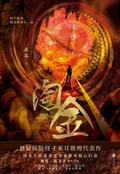 Gold Rush
7.9kReads9.6Score1.2kShelves
Gold Rush
7.9kReads9.6Score1.2kShelves
 Memoirs of My Ten Years of Trading
384Reads—Score108Shelves
Memoirs of My Ten Years of Trading
384Reads—Score108Shelves
 My Days in the Stock Market
67Reads6.4Score—Shelves
My Days in the Stock Market
67Reads6.4Score—Shelves
 Dong
—Reads—Score—Shelves
Dong
—Reads—Score—Shelves
 Rebirth 91, This Time I Want to Be a Doctor
18.3kReads8.7Score1.6kShelves
Rebirth 91, This Time I Want to Be a Doctor
18.3kReads8.7Score1.6kShelves
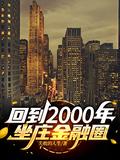 Return to 2000 and Dominate the Financial Circle
7kReads7.5Score447Shelves
Return to 2000 and Dominate the Financial Circle
7kReads7.5Score447Shelves
 Stock Market Wizard
4.9kReads8.4Score422Shelves
Stock Market Wizard
4.9kReads8.4Score422Shelves
 Stock Trading Brings Me to Nirvana and Rebirth!
250Reads7.1Score—Shelves
Stock Trading Brings Me to Nirvana and Rebirth!
250Reads7.1Score—Shelves
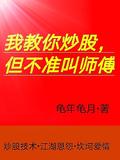 I'll Teach You How to Trade Stocks, but You're Not Allowed to Call Me Master.
1.8kReads8.8Score351Shelves
I'll Teach You How to Trade Stocks, but You're Not Allowed to Call Me Master.
1.8kReads8.8Score351Shelves
 Rebirth Part 1: Entering Myanmar a as Deep as the Sea
2Reads—Score—Shelves
Rebirth Part 1: Entering Myanmar a as Deep as the Sea
2Reads—Score—Shelves