[No system] ~ [Three Kingdoms in the late Han Dynasty] ~ [Farming] ~ [Harem] Traveled through the world and became Qu Yi, a famous general in Hebei Province at the end of the Han Dynasty. He saw through Yuan Shao's Hongmen Banquet at the beginning and intercepted Hu Zhaoyun, Guo Jia and Dian Wei first. From then on, he became a first-in-command hegemon who should have fallen after the Battle of Jieqiao. The king, with a thousand soldiers armed with strong bows and crossbows, competed with Cao Cao, Liu Bei, Yuan Shao, Yuan Shu, Lu Bu, Sun Ce, Liu Biao and other princes of the late Han Dynasty in the troubled times, vowing to rewrite the new history of "I established the Three Kingdoms before they were completed, and all the heroes bowed to me as the peak."
A postgraduate student from the History Department lived in exile in the late Han Dynasty. Instead of relying on black technology, he relied on the knowledge of later generations' systems to assist Cao Cao, stabilize food and farmland, break up the situation and quell the chaos, and rewrite the troubled times of the Three Kingdoms.
A new book sets sail, a new interpretation of the story of the Three Kingdoms. The male protagonist is a time traveler, and the female protagonist is changed to Liu Bei. Instead of assisting Liu, Liu assists me, taking the Han Dynasty. It has a complete 6-volume story outline, guaranteed to be more than one million words. Readers who like the Three Kingdoms are welcome to read it.
An epic about "original intention" Among the numerous time-travel novels, "Cangtian is dead, fight!" Is an anomaly. It doesn't have Shuangwen-style golden fingers, it doesn't have the thrill of conquering the world, and it doesn't even have the "aura of the protagonist" in the traditional sense. Its protagonist, Qi Run, is an ordinary delivery boy from 2023. Every victory after time travel is accompanied by tragic sacrifices, and every growth is soaked in the blood of his comrades. But this is precisely the most unique thing about this work: it is not a novel about "success", but a novel about "original intention". It asks: over the past two thousand years, are the struggles and sacrifices of those people who have been called "thieves", "thieves" and "bandits" by official history worth it? Where will the road they paved with flesh and blood lead to in the end? This is the soul of this novel: it uses the shell of time travel to wrap up an innocent heart of questioning history and paying tribute to the martyrs. It tells us that the "river of original intention" that has flowed for two thousand years finally merged into the ocean of victory in 1949. 1. The River of Original Intention: From Liu Xia Zhi to 1949 Users condensed the theme of this work into "The River of Original Intention", which is the most profound grasp of the novel. This river has been flowing since the Spring and Autumn Period, and every wave is the blood and tears of the oppressed: The feet under the willows are the courage to resist. Chen Sheng and Wu Guang completed the first disenchantment of "Destiny". Zhang Jiao explored a way to organize people through faith. Huang Chao proved that without a base, rogueism could not ultimately win. The Red Scarf Army warns that internal careerists are more dangerous than external enemies. The Taiping Heavenly Kingdom and the Boxer Rebellion showed that those in power would rather be friends than domestic slaves. The experience in this river was gained by the lives of our predecessors. Zhang Jiao didn't know this, but Qi Run did. Qi Run returned to the late Han Dynasty with two thousand years of experience, and told Zhang Jiao before he died: Your journey was not in vain. The seeds you water with your lives will eventually bear fruit two thousand years later. This is the ultimate meaning of the "river of original intention": it is not the ideal of a certain person, but the collective memory and collective will accumulated by a class, a nation, and a civilization in two thousand years of struggle and struggle. 2. Class and road: the inevitable fate of five parallel lines. The most profound insight of this work is that history is not a duel between good and evil, but countless roads determined by class attributes, colliding head-on at the crossroads of the times. No one is a clown, everyone reaches the extreme on their own track, ultimately forming a picture of that magnificent, bloody and cruel era. (1) Yellow Turban Road: The struggle of the oppressed and its tragedy (2) Loyal Minister Road: Martyrs of the old order (3) Family Road: Sustainability of interests beyond the dynasty (4) Warlord Road: Unstable factors arising from force (5) Imperial Road: Prisoners and careerists The real emperor: three different kinds of prisoners Imperial careerists: pursuers forced out by class identity They are all forced to stop by their own class. They have to keep climbing, they have to keep proving themselves, because if they stop, they will fall back to the "place" that scares them. 3. View of History: Deconstructing the Heroes and Rebuilding the People The most subversive contribution of this work is the deconstruction of the traditional heroic view of history and the reconstruction of the people's view of history. 4. Literary techniques: symbolism, narrative and emotion Symbolic system: The three women are the embodiment of ideas - Zhang Furong is the "original intention", Guan He is the "courage", and Ye Yun is the "kindness and tenderness". They are not a "harem", but the three dimensions of Qirun's spiritual world. Narrative structure: The novel takes Qi Run's time travel as its starting point. The structure is large but not scattered, with a clear main line and rich side lines. 5. Artistic achievements and limitations Achievements: 1. Depth of thought: Integrating class analysis, historical philosophy, and revolutionary narrative into time-travel novels, reaching a rare philosophical height in online literature. 2. Character creation: All main characters have clear class attributes and behavioral logic, and there is no simple dichotomy between good and bad. 3. Emotional power: The memorial to the victims is sincere and touching, making people cry when reading it. 4. Historical insight: The analysis of various classes in the late Eastern Han Dynasty is profound and precise, restoring the complex face of history. Limitations: 1. Preaching: involves ideological changes and the direct implantation of modern political terms. 2. Rhythm control: The rhythm in the middle part is sometimes a little draggy. 3. Language style: The mixture of ancient and modern languages may affect the immersion of some readers. But these do not shake the fundamental value of the work. It is a novel with a soul, and its soul is the questioning of the "original intention", the belief in the "people", and the reshaping of "history". 6. Conclusion: A message to the forerunners. Before Zhang Jiao died, he asked Qi Run: "What will future generations think of us?" Qi Run told him with tears in his eyes: Future generations will describe you as rebels, cults, and bandits. Those who defeat you will be portrayed as heroes, and your names will be written in the history books of defamation. But - "There will be many people in future generations who will inherit your beliefs. There will be many people who will have responsibilities to the people of the world because of you. There will be many people who will raise the flag to resist injustice because of you. There will be many people who will be inspired to resist oppression because of you. The courts in future generations will also reduce taxes and lighten corvee because of you - but that is not because of their conscience, but because you have been here, you have fought, and you have fought hard!" Zhang Jiao laughed with relief. At that moment, two thousand years of suffering and struggle condensed into a sigh and then turned into a ray of light. This is "Cangtian is dead, fight!" "The ultimate meaning of ": It is a message to the forerunners. It tells all stigmatized revolutionaries: Your road was not in vain. Your blood was not shed in vain. Your cause will eventually be completed by the people's hands two thousand years later. The people will win - not because history will be on their side, but because they will use their own blood and lives to turn history to their side. This is a work destined to be niche, but destined to be immortal. It is not written for readers looking for a "feeling of pleasure", but for those who are willing to stop and think about what the "original intention" is, how the "people" exist, and how "victory" is achieved in the long river of history. If you are such a person, then this book is worth reading.
Others were competing to become prime minister, and he cried and wanted to go home. The more this anti-routine strategist showed off, the more the King of Qin fell in love with him, making him laugh all the time. #Antiroutine system #
Don't be confused if you are short of books, this is a good book worth pursuing. The plot is online, the characters are interesting, and there is no unfinished content in the whole process. You will not lose money after reading it, and you are still satisfied after reading it! Highly recommend this treasure book! The plot is compact and not procrastinating, and the exciting points are dense and not boring. The writing is smooth and the sense of substitution is super strong. Once you get into the pit, you stay up all night to chase it to the end! I dug up a novel about the Treasure of the Gods. The characters are likeable, the plot is explosive, and there is no peeing throughout the whole process. If you like this kind of subject matter, don't miss it!
It is a masterpiece of counterattack with the background of the Three Kingdoms. The protagonist reverses the fate of his family, recruits talented people to develop the industry, and thwarts Sun Ce's plot. It is a book that can be read into the wilderness, and the plot is full of twists and turns and is very interesting to watch.
There is no system, no time travel, and a lot of imagination. Wenjiu is not a thing but a person. In the beginning, Wenjiu and Wenjiu kill Hua Xiong. If you like it, you can watch it and fight for hegemony of the Three Kingdoms all by yourself.
Recommend this book and see if you like it. Gao Xiang and Wang Ping are the eldest brothers. Wen Yang, Guan Qiujian, Zhuge Dan, Du Yu and Wang Rui are my younger brothers, Jiang Wei and Jiang Boyue.
 Cao Cao, Wei Taizu's Time Travel Manual
71Reads5.8Score—Shelves
Cao Cao, Wei Taizu's Time Travel Manual
71Reads5.8Score—Shelves
 The Legend of Zhao Yun in Time Travel
109Reads—Score—Shelves
The Legend of Zhao Yun in Time Travel
109Reads—Score—Shelves
 Three Kingdoms: at the Beginning, Cai Hao and I Led Jingzhou to Change Their Fate Against the Odds.
110Reads5.8Score—Shelves
Three Kingdoms: at the Beginning, Cai Hao and I Led Jingzhou to Change Their Fate Against the Odds.
110Reads5.8Score—Shelves
 Be the First to Become the Overlord and Conquer the End of Han Dynasty. Only When You Start to Gather Ghosts Can You Be Evil.
3.6kReads7.2Score382Shelves
Be the First to Become the Overlord and Conquer the End of Han Dynasty. Only When You Start to Gather Ghosts Can You Be Evil.
3.6kReads7.2Score382Shelves
 I Asked You to Keep Accounts and Manage Food, and You Became Cao Cao's Confidant
4.5kReads6.4Score178Shelves
I Asked You to Keep Accounts and Manage Food, and You Became Cao Cao's Confidant
4.5kReads6.4Score178Shelves
 Riding and Slashing Players: Start with a Farm Station
4Reads5.8Score—Shelves
Riding and Slashing Players: Start with a Farm Station
4Reads5.8Score—Shelves
 Liu Bei Was Awarded the Sword at the Beginning and Took Charge of Military and Political Power.
4.1kReads8.2Score343Shelves
Liu Bei Was Awarded the Sword at the Beginning and Took Charge of Military and Political Power.
4.1kReads8.2Score343Shelves
 Variety Films: Make Me Three Thousand Wishes
1.9kReads5.8Score—Shelves
Variety Films: Make Me Three Thousand Wishes
1.9kReads5.8Score—Shelves
 Three Kingdoms: My Wife's Surname Is Liu, and There Are Details About the Dowry.
638Reads5.8Score—Shelves
Three Kingdoms: My Wife's Surname Is Liu, and There Are Details About the Dowry.
638Reads5.8Score—Shelves
 Three Kingdoms: from Bandit Minions to Supreme Emperor
201Reads—Score118Shelves
Three Kingdoms: from Bandit Minions to Supreme Emperor
201Reads—Score118Shelves
 Three Kingdoms: My Father Zhang Yide, My Teacher Zhuge Zhao Yun
3.6kReads6.9Score360Shelves
Three Kingdoms: My Father Zhang Yide, My Teacher Zhuge Zhao Yun
3.6kReads6.9Score360Shelves
 Three Kingdoms: Starting with the Violent Defeat of Cao Cao
20Reads—Score—Shelves
Three Kingdoms: Starting with the Violent Defeat of Cao Cao
20Reads—Score—Shelves
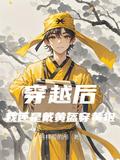 After Time Travel, I Still Wear a Yellow Helmet and a Yellow Robe
1.1kReads6.4Score102Shelves
After Time Travel, I Still Wear a Yellow Helmet and a Yellow Robe
1.1kReads6.4Score102Shelves
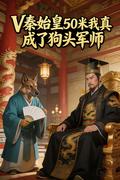 V Qin Shihuang 50 Meters, I Really Became a Dog-Headed Strategist
—Reads5.8Score—Shelves
V Qin Shihuang 50 Meters, I Really Became a Dog-Headed Strategist
—Reads5.8Score—Shelves
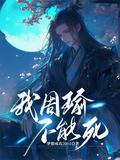 I, Zhou Yu, Cannot Die
3.3kReads9.5Score1.7kShelves
I, Zhou Yu, Cannot Die
3.3kReads9.5Score1.7kShelves
 Three Kingdoms: Wolong Reborn
2Reads—Score—Shelves
Three Kingdoms: Wolong Reborn
2Reads—Score—Shelves
 Three Kingdoms: the Beginning Was Dedicated to the Queen Mother He by He Jin
10kReads8.2Score1kShelves
Three Kingdoms: the Beginning Was Dedicated to the Queen Mother He by He Jin
10kReads8.2Score1kShelves
 At the Beginning, I Will Ride on a Hundred Thousand Snow Dragons to Fight for Hegemony over the Three Kingdoms.
678Reads—Score—Shelves
At the Beginning, I Will Ride on a Hundred Thousand Snow Dragons to Fight for Hegemony over the Three Kingdoms.
678Reads—Score—Shelves
 Three Kingdoms: There Are Too Many Famous Generals, I Can't Bear to Be Happy
189Reads—Score—Shelves
Three Kingdoms: There Are Too Many Famous Generals, I Can't Bear to Be Happy
189Reads—Score—Shelves
 There's Something Wrong with Dong Zhuo, Why Is He More Flirtatious Than Diao Chan?
2Reads5.8Score—Shelves
There's Something Wrong with Dong Zhuo, Why Is He More Flirtatious Than Diao Chan?
2Reads5.8Score—Shelves
 Three Kingdoms Love Brain? I Am a Disciple of Hua Tuo
103Reads—Score—Shelves
Three Kingdoms Love Brain? I Am a Disciple of Hua Tuo
103Reads—Score—Shelves
 The Struggle for Hegemony in the Late Han Dynasty: the Winning King and the Losing Bandit
29Reads5.8Score—Shelves
The Struggle for Hegemony in the Late Han Dynasty: the Winning King and the Losing Bandit
29Reads5.8Score—Shelves
 Fortune Teller Book
256Reads7.0Score—Shelves
Fortune Teller Book
256Reads7.0Score—Shelves
 Traveling Through the Three Kingdoms: Obtaining Investment from the Mi Family at the Beginning
21.9kReads6.4Score2.5kShelves
Traveling Through the Three Kingdoms: Obtaining Investment from the Mi Family at the Beginning
21.9kReads6.4Score2.5kShelves
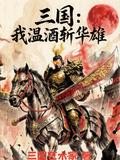 Three Kingdoms: I Warm the Wine and Kill Hua Xiong
2Reads5.8Score—Shelves
Three Kingdoms: I Warm the Wine and Kill Hua Xiong
2Reads5.8Score—Shelves
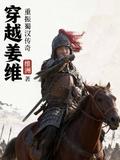 Traveling Through Jiang Wei and Reviving the Legend of Shu Han
14Reads5.8Score—Shelves
Traveling Through Jiang Wei and Reviving the Legend of Shu Han
14Reads5.8Score—Shelves