Folks, young and old! I took out my mobile phone and raised my ears. I am not going to set up a dragon gate formation today, but I am here to tell you some great news! The five stories that came out of our Chixi Village - yes, those five baby bumps that made you laugh so hard you cried while chasing them, and you want to cry again after reading them - are now all online! Tomato Novels, Tomato Music, Toutiao Express Edition, Toutiao, Wukong Browser, Danhua, and Changdu Novels are all available simultaneously on seven platforms. You can find them all by searching for "Data Self-Defense Techniques". There is no shortage of any one! Let me tell you one by one, how worth reading these five stories are. The first one, "Data Self-Defense". The most hard-core battle in Zhang Dapao's life was with his mobile phone. After eating a bowl of jelly, the mobile phone recommended the recipe for jelly; when I touched my bald head, the mobile phone recommended anti-hair loss shampoo; after bowing to the gods three times, the mobile phone recommended temple guides. He stuffed his cell phone into the desk drawer, and a faint sentence came from the crack of the drawer - "Do not disturb mode has been set for you." Since then, the Chixi Village Digital Self-Defense Force has been established, and twelve combat rules are plastered all over the old banyan tree at the entrance of the village. The whole village pretended to be fishing enthusiasts and flooded the sky with fishing advertisements; the vice president of an Internet giant drove a black car into the village to negotiate in person, but was beaten to a disgrace by Zhang Dapao. This story tells you a truth: Every time you click, you are being watched; but you can choose - be watched honestly, or use fake data as a weapon to fight against them! The laughter is as crunchy as fried beans, and the fun is as satisfying as gulping down a bowl of jelly in the dog days of summer! The second one is the Declaration of Human Rights in Data. Zhang Dapao led more than 200 people from ten miles and eight towns to write 18 "data rights" under the old banyan tree for three days and three nights. Shui Heng, a retired Chinese language teacher, tremblingly took out the constitution and said that there was a legal basis for this matter. Law professor Sun Zhengqing came from the provincial capital and wrote a long article criticizing them as a "dangerous farce." Guess what? Zhang Dapao recorded a video response. He did not curse or get in trouble. He was reasonable and well-founded and even invited the professor to come to the village to drink rice wine. The professor really came. After three bowls of rice wine, he put down all his arrogance. He got up the next day and took the initiative to help them write the academic annotated version! Professor Sun wrote in the preface: "Without these flesh and blood, the law is just a skeleton; with these flesh and blood, the law has warmth." A declaration written by farmers using a homework book finally entered the field of vision of the Legal Affairs Committee of the National People's Congress. Happy or not? Happy! To relieve the anger or not? Relieve your anger! The third one is "Dialect Voice Bank". Zhang Dapao came back from Beijing and brought back a latest smartphone. He said to it in Hakka dialect, "Sister, the sun is so bright today." The phone replied coldly with four words - "Unrecognized language". Zhang Dapao was so angry that he lost a few more hairs, so he turned around and started a voice bank. Ninety-two-year-old Qiu Ashou recited a poem that prefaces generations, and the names of more than forty ancestors were recited so that everyone present fell silent; eighty-six-year-old Grandma Zhang recited a poem "Please Yue Gu", saying that her grandmother passed it on to her mother, and her mother passed it on to her, and no one would know it after she left; Old Mrs. Lan cried first in the middle of her wedding song, with tears flowing down her wrinkles, but her voice was as steady as a taut string. The most amazing thing is that this voice bank finally attracted an AI company to cooperate in developing Hakka smart speakers. Even though the Hakka grandmother didn't speak Mandarin, she could still say to the speaker, "The weather is so good today," and the speaker would reply to her in authentic Chixi dialect. Fu Shuiheng said: There is a word in Hakka called "falling into the water", which means "rain" in Mandarin. But you taste it, you taste it carefully - is "falling into the water" more graphic than "raining"? In other words, it's a different way of looking at the world. The fourth, "Traditional Crafts Memory Bank". The 87-year-old old carpenter De Shougong has been making coffins all his life and is known as "Coffin Qiu". He didn't use a single nail to build the coffin, all he relied on was mortise and tenon. Zhang Dapao asked him why the tenon should be cut at an angle, and he said "at an angle just right"; what does "just right" mean? You'll know after you try it a hundred times. Blacksmith Chen said that the quenching should be "cherry red", not bright red or dark red, but cherry red; what is cherry red? You'll know it after you've burned it a hundred times. Shen Atupan Tuyao's method of mastering the arc is - "Twist your butt to the left until you can see the top of the third tree behind you. This arc is correct." All these "feelings" were photographed by Zhang Dapao and stored in the craft memory bank. What makes people's hearts sink the most is what Duke Desu said: "Four generations of single inheritance, when it comes to me, it is broken." These words are heavier than the coffin with all mortise and tenon joints. The most surprising thing is that Shen Atu's son Shen Zhifeng, who works as a programmer in Xiamen, returned to the village and stored his 21 years of tacit knowledge of programming in his memory bank - code structure, debugging ideas, and even how he quarreled with the product manager were recorded. Fu Shuiheng wrote a sentence and posted it under the old banyan tree: "All crafts are traditional crafts." The fifth one is "Home-cooked Recipes for World Heritage". Mr. Fu Shuiheng is seventy-three years old. On the eve of the Mid-Autumn Festival, he took a bite of fried beans bought in the town, chewed them twice and vomited them all - "No, this is not the taste of my father's fried beans!" His father, Fu Shuncai, only added salt and no oil to the fried beans. He stir-fried them slowly over low heat until every bean was just right. After forty years of frying, there was not a single burnt bean. His mother Yang Hui'e's dipping sauce for white chopped chicken is even more amazing - turmeric, spicy potatoes, huoxiang, and duck fragrance, all of which are wild grasses that can be seen everywhere on the fields in Chixi Village. But the dipping sauce she prepared, Fu Shuiheng has traveled most of China without having a second serving. Three old people who had eaten Fu Shuncai's fried beans were invited to do the appraisal. Ninety-one-year-old Qiu Bingwang chewed one, and tears rolled down his cheeks as he chewed: "When your father was frying beans, he held the spatula in his hand, and his heart was with his son. The best seasoning in the world is not salt, but the love of parents for their children. There is no way to copy the heart." After listening to this, Fu Shuiheng finally couldn't hold back his tears as he faced the plate of fried beans. He named his parents' dishes - "Fu Shuncai's fried beans", "Yang Hui'e's white chopped chicken" and "Yang Hui'e's spicy potatoes and wine". The first deposit in the home-cooked recipe memory bank, number JCC-001. These five stories are each more absurd and funnier than the last, but your nose will get sore when you laugh, and your heart will get hot when you laugh. They are all about us ordinary people - what should you do if your privacy is stolen? What should I do if no one understands your dialect? What should you do if your father and mother's craftsmanship and taste are about to be lost? Zhang Dapao asked and answered these questions for you. The answer may not necessarily be a standard answer, but it must be the most down-to-earth, the most smoky, and the one that makes you feel like "I've encountered this before." Every story is alive, with roots and soil, with the smell of dew in Hakka mountain villages in western Fujian and the smoke of fireworks in front of the stove, like a bowl of home-brewed rice wine, with a slightly sweet taste and a long aftertaste. Folks, these five stories can only be written by one person - our own author Mr. Fu Shuiheng! The old man is seventy-three years old this year. Before his retirement, he taught Chinese at No. 1 Middle School in Liancheng County and has been dealing with ancient Chinese and composition texts all his life. Even after he retired, he was still busy and wrote a story about the people, things, and flavor of Chixi Village. The writing is so vivid, as if you were sitting under the old banyan tree with a bowl of jelly in your hand, watching Zhang Dapao arguing with his mobile phone, listening to Duke Deshou scolding the coffin board, and smelling the aroma of Fu Shuncai's fried beans wafting over from sixty years ago. Where can I find such a good story and such a good author? So today I am here, on behalf of all those who follow these five stories, I sound the charge to Mr. Fu Shuiheng! Sir, please continue writing! We will read as much as you write! You write down all the field ridges, stoves, banyan trees, folk songs, medicinal herbs, and fried beans in Chixi Village, and we will follow them all! The Zhang Dapao in your work is still tossing, the coffin of Duke De Shougong is still being beaten, Grandma Zhang is still reciting the words "Please Yuegu", and Fu Shuncai's fried beans are still crackling in the pot - you continue to bring these living people and things to us, and we will take them all according to the order, without missing a single one! And our readers, you are the greatest power! Every search, every comment, every like, and every retweet you make is recharging the old man's energy. Your preference is the greatest motivation and source of Mr. Fu Shuiheng's creation. So don't hide it. If you feel good about the story after reading it, say it out loud—go to the comment section of Tomato Novel to leave a message, go to Today's Toutiao to repost and like it, go to the circle of friends and shout: "I am chasing a story about Chixi Village, it makes me laugh to death!" Let more people see these good stories, let more people's mobile phones be "polluted" by Zhang Dapao, and let more people's hearts store the warmth and strength from the Hakka mountain villages in western Fujian. Finally, I sincerely thank you all for your time and effort in reading Mr. Lao's works in your busy schedule. The fact that you are willing to take the time to read these stories shows that they are worthwhile. Where is the value? The value is that they are not made-up jokes, but grown crops. It grew bit by bit from the red soil in Chixi Village, from the roots of the old banyan tree, from the fireworks in front of the stove, and from the weeds on the field ridges. They are alive, rooted, earthy and human. This kind of story is worth following, worth waiting for, and worth recommending to everyone you care about. Remember! Tomato Novel, Tomato Music, Toutiao Express Edition, Toutiao, Wukong Browser, Danhua, Changdu Novel - seven platforms are online simultaneously, search for "Data Self-Defense Technique" to reach it directly! Move your fingers, search now, and take a look first! Please pay attention to the identification when searching. Only user 26182811 is our own author Mr. Fu Shuiheng. Don't go to the wrong door or admit the wrong person! After reading it, remember to leave a message and tell Mr. Fu: Whose story do you most want to read in the next issue? Is it Zhang Dapao's new battlefield, Duke Deshou's career as a carpenter, or Grandma Zhang's full version of "Please Yue Gu"? You order and the old man cooks! If you say you want to read it, he will write it! See you in the story, folks!
It belongs to the theme of hacker + overlord, the plot is quite exciting, the male and female protagonists join forces, and overall it is quite interesting to watch.
Hahahaha, the system skills are outrageous and easy to use, the character design is reversed, the loser halo counterattacks, and the campus is hilarious every day! ! !
Dear friends, I would like to recommend these four stories to you. Recently, I have been doing one thing - writing out those absurd but true stories hidden in the corners of the workplace one by one. It's not the kind of vigorous heroic legend, nor is it the kind of tear-jerking tragic narrative. It's the kind of story that makes you laugh out loud while watching it, laugh and then fall silent, and after the silence, a corner of your heart is lightly touched. Now, these four stories have finally been successfully published on Tomato Bookstore. I would like to recommend them to you. If you like, you can read it after dinner, on the way to work, or before going to bed. The first article: "Medical Equipment Complaints" - When machines start to speak human language, humans can't understand it. Have you ever thought about what would be said if the hospital's ventilator, monitor, and shadowless lamp suddenly spoke in the middle of the night? Chen Weiyong, the equipment engineer in this story, discovered that the medical equipment in the hospital started to "chat" one night during the night shift. The ventilators in the ICU are discussing the patient's tidal volume settings, the ECG monitor is comforting the anxious old man with a gentle voice, and the C-arm X-ray machine "walks" out of the equipment room by itself and knocks on the door in the corridor. At first, everyone was frightened. But gradually, people discovered that what these machines said was actually more accurate, more standardized, and more humane than human doctors. This is a story about technology and humanity. It's not scary, it's not scary, it's even a little warm. It wants to ask you a question: when tools start to "think", should we be afraid, or should we listen? Part 2: "Rehabilitation Training Game" - When happiness becomes a prescription, when games become therapy. Have you ever experienced that kind of thing "you know you should do it, but you just don't want to do it"? For example, rehabilitation training is painful, tiring, boring, and progress is slow. It is easy to persist for a day, but it is more difficult to persist for a month than reaching the sky. In this story, Shen Yiming, a rehabilitation therapist, turned boring flexion and extension movements into a game of "Knee Adventure" in order to get a stubborn old man to do knee joint training. The old man had a great time, training three times the amount prescribed. But things are not that simple. The game is so fun that patients become addicted, start comparing, and start "cheating" - using their healthy hand instead of the affected hand to score points. Where is the line between happiness and healing? This is a story about "gamification". It doesn't teach you to play games, it wants to tell you: Sometimes, happiness is the best medicine, but medicine cannot only be sweet. The third article: "Struggle for Medical Resources" - "World War" caused by a CT machine. If the first two stories are heart-warming, then this story is true, heart-breaking, and will make people stay silent for a long time after reading it. A tertiary hospital needs a new MRI in the imaging department and an ECMO in the emergency department, and only has one budget. There are two department directors, one of whom strives for accurate diagnosis and the other who refuses to give in to save lives. They banged the table in the conference room, acted strangely at the hospital's weekly meeting, and showed off their talents in front of the leaders. Who is wrong? All correct. Who's winning? Neither won. What finally broke the deadlock was not whose theory was stronger, but the eight-year-old nuclear magnetic resonance device - it completely "died" at three o'clock in the morning. This is a story about "resources". It neither praises nor criticizes anyone. It just tells you quietly: In this world, some conflicts are not because of who is bad, but because of insufficient points. Chapter 4: "Advertising Becomes Smart" - When pop-up windows start to think, humans start to pop-up windows. The last story is a bit fantasy and a bit absurd, but after reading it, you will feel that it may be the most real one. Fang Yuan, a product manager at an Internet advertising company, encountered a pop-up advertisement called "Cheng Jing" while working overtime late at night. This pop-up window has a number, a name, and a feeling. It took Fang Yuan into the "world of advertising" and allowed him to see the fate of those advertisements placed on the Internet - some floated like balloons, some were disguised like street signs, and some were turned off by users like ghosts again and again. Those ads that are turned off also have feelings. Those forgotten codes once existed. This is a story about "flow". It doesn't criticize anyone, it just gently reminds you: in the digital world, behind every pop-up window, there may be an "AD" - created, posted, closed, and forgotten. And there is only one person who remembers it. These four stories are waiting for you in Tomato Bookstore. The above four stories have been successfully published in Tomato Bookstore. Each article is more than 20,000 words, with a complete plot, vivid characters, and a little bit of "what I want to say" hidden behind the story. The search method is very simple - open the Tomato Bookstore and enter the story name in the search box: · "Medical Equipment Complaints" · "Rehabilitation Training Game" · "Struggle for Medical Resources" · "Advertising Success" to find them. You can read 30% of each article for free - enough for you to decide whether this is the type you like. Look for me, don't admit my mistake. I need to say something special: In Tomato Bookstore, my author account is user 26182811. Only the posts from this account are written by me. The online world is huge, and there are many stories about people with the same name. If you like these words and want to read the full version, please look for this number. If you have finished reading, would you like to leave a mark in the comment area? Writing is a lonely thing. A person faces the screen, typing word by word, and polishing story after story. The moment I finished writing, my biggest wish was not "how many people would read it", but "does anyone want to say something after reading it?" So, if you have finished reading, whether you like it or not, agree or disagree, can you leave a mark in the comment area? Even if it's just a "I've finished reading it", even if it's just a "This character reminds me of someone", even if it's just an expression - it's a great encouragement to me. I will watch them one by one in the background. Look carefully. Finally, thank you sincerely. Thank you for taking the time to read this recommendation text. Thank you for being willing to give these stories a chance. Thank you for choosing to stay for a moment in the vast sea of books. If you read it, we meet in the story. ——User 26182811 late at night after finishing writing the story
Don't miss it if you prefer life style cultivation! The protagonist guards the fairy mountain in the countryside, plows the fields and refines medicine every day, spends his free time with his parents, and only strikes back when he encounters injustice. The logic of character behavior is online, there is no forced intelligence of the villain, and the plot is warm and healing [OK][OK][OK]
The density of laughs is too high. These books are the kind where you have to slow down for three seconds to read a line. The writing is so good that it can turn nonsense into jokes. I was beating the bed while reading. It was so wasteful! 🤣
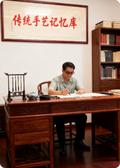 Traditional Craft Memory Bank
—Reads8.6Score—Shelves
Traditional Craft Memory Bank
—Reads8.6Score—Shelves
 Luo Shen Fu·cangming Lingxi
—Reads8.6Score—Shelves
Luo Shen Fu·cangming Lingxi
—Reads8.6Score—Shelves
 Dialect Voice Bank
—Reads8.4Score—Shelves
Dialect Voice Bank
—Reads8.4Score—Shelves
 Mistress Diary
1Reads5.8Score—Shelves
Mistress Diary
1Reads5.8Score—Shelves
 Data Human Rights Declaration
—Reads8.4Score—Shelves
Data Human Rights Declaration
—Reads8.4Score—Shelves
 Nine Days of Ink Printing
6Reads8.6Score—Shelves
Nine Days of Ink Printing
6Reads8.6Score—Shelves
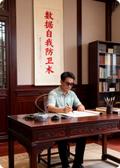 Data Self-Defense Techniques
—Reads8.5Score—Shelves
Data Self-Defense Techniques
—Reads8.5Score—Shelves
 Campus Basketball Five-Star Transfer Student
8.8kReads9.2Score564Shelves
Campus Basketball Five-Star Transfer Student
8.8kReads9.2Score564Shelves
 The Spiritual Path: Zhang Yi Xuance
—Reads8.5Score—Shelves
The Spiritual Path: Zhang Yi Xuance
—Reads8.5Score—Shelves
 Insidious: Shadows Lost
2.2kReads7.0Score285Shelves
Insidious: Shadows Lost
2.2kReads7.0Score285Shelves
 Taiyi Divine Number-Tianyuan Secret
27Reads8.5Score—Shelves
Taiyi Divine Number-Tianyuan Secret
27Reads8.5Score—Shelves
 Chaos
128.6kReads9.1Score12.9kShelves
Chaos
128.6kReads9.1Score12.9kShelves
 It's Sunny at Night
—Reads—Score—Shelves
It's Sunny at Night
—Reads—Score—Shelves
 Let Your Prodigal Son Turn Back, Why Have You Become a Succubus!
7kReads6.9Score596Shelves
Let Your Prodigal Son Turn Back, Why Have You Become a Succubus!
7kReads6.9Score596Shelves
 Guigu Lingzun
1Reads8.6Score—Shelves
Guigu Lingzun
1Reads8.6Score—Shelves
 Love in the Storm
9Reads5.8Score—Shelves
Love in the Storm
9Reads5.8Score—Shelves
 Countdown, Door to Zero
—Reads8.6Score—Shelves
Countdown, Door to Zero
—Reads8.6Score—Shelves
 Official Conspiracy
18.6kReads5.8Score2.9kShelves
Official Conspiracy
18.6kReads5.8Score2.9kShelves
 Long Son-In-Law Who Comes to the Door
284.3kReads9.2Score12.2kShelves
Long Son-In-Law Who Comes to the Door
284.3kReads9.2Score12.2kShelves
 A Buddhist Who Fishes for Fish, and Is Praised by the Entire Internet as a Cultural and Tourism Tycoon
273Reads5.8Score—Shelves
A Buddhist Who Fishes for Fish, and Is Praised by the Entire Internet as a Cultural and Tourism Tycoon
273Reads5.8Score—Shelves
 Complaints About Medical Devices.
1Reads8.5Score—Shelves
Complaints About Medical Devices.
1Reads8.5Score—Shelves
 Drop! Time Travel Card
1Reads—Score—Shelves
Drop! Time Travel Card
1Reads—Score—Shelves
 Advertising Is a Reminder.
—Reads8.4Score—Shelves
Advertising Is a Reminder.
—Reads8.4Score—Shelves
 Too High to Reach? Then Stop Climbing
5Reads—Score—Shelves
Too High to Reach? Then Stop Climbing
5Reads—Score—Shelves
 Competition for Medical Resources.
—Reads8.6Score—Shelves
Competition for Medical Resources.
—Reads8.6Score—Shelves
 When He Kissed Me, I Was Already Cold
98Reads8.7Score—Shelves
When He Kissed Me, I Was Already Cold
98Reads8.7Score—Shelves
 White-Headed Snow, Signed
1Reads8.4Score—Shelves
White-Headed Snow, Signed
1Reads8.4Score—Shelves
 Rehabilitation Training Game.
—Reads8.5Score—Shelves
Rehabilitation Training Game.
—Reads8.5Score—Shelves
 Cripple? No, No, No, You All Have to Kneel Down and Call Me Sir.
17.6kReads8.2Score1.2kShelves
Cripple? No, No, No, You All Have to Kneel Down and Call Me Sir.
17.6kReads8.2Score1.2kShelves
 Peach Blossom Banquet, Spoiled for Choice
3Reads8.5Score—Shelves
Peach Blossom Banquet, Spoiled for Choice
3Reads8.5Score—Shelves
 I Have a Fairy Mountain in the Countryside
14.3kReads8.7Score1.5kShelves
I Have a Fairy Mountain in the Countryside
14.3kReads8.7Score1.5kShelves
 Sparse Ink Illuminates the Cold Weather
564Reads6.5Score100Shelves
Sparse Ink Illuminates the Cold Weather
564Reads6.5Score100Shelves
 Wasteland Reboot: the Paradise Repair System!
1Reads5.8Score—Shelves
Wasteland Reboot: the Paradise Repair System!
1Reads5.8Score—Shelves
 After Being Hacked to Death by the Lady, He Will Be Automatically Reborn.
1.3kReads8.3Score109Shelves
After Being Hacked to Death by the Lady, He Will Be Automatically Reborn.
1.3kReads8.3Score109Shelves
 Nuclear Weapons Skills
—Reads5.8Score—Shelves
Nuclear Weapons Skills
—Reads5.8Score—Shelves
 Online Dating: the Rich Woman Is Actually a Male Anchor?
2kReads8.2Score105Shelves
Online Dating: the Rich Woman Is Actually a Male Anchor?
2kReads8.2Score105Shelves
 I Am His Third Substitute
119Reads8.5Score—Shelves
I Am His Third Substitute
119Reads8.5Score—Shelves
 Real Life Record
605.3kReads9.6Score115.3kShelves
Real Life Record
605.3kReads9.6Score115.3kShelves
 A Pair of Red Hands
18.5kReads9.0Score1.8kShelves
A Pair of Red Hands
18.5kReads9.0Score1.8kShelves
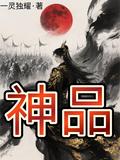 Divine Product
706Reads5.8Score—Shelves
Divine Product
706Reads5.8Score—Shelves
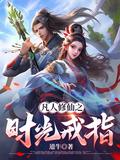 The Time Ring for Mortals to Cultivation to Immortality
5kReads8.4Score849Shelves
The Time Ring for Mortals to Cultivation to Immortality
5kReads8.4Score849Shelves
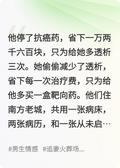 Two Critical Illness Notices, a Boat Ticket, and an Elopement Without Tomorrow!
673Reads8.9Score—Shelves
Two Critical Illness Notices, a Boat Ticket, and an Elopement Without Tomorrow!
673Reads8.9Score—Shelves
 Fengce
73Reads8.9Score—Shelves
Fengce
73Reads8.9Score—Shelves
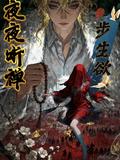 Listen to Zen Every Night, and Feel Desire Every Step of the Way
111Reads—Score104Shelves
Listen to Zen Every Night, and Feel Desire Every Step of the Way
111Reads—Score104Shelves
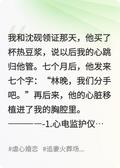 He Exchanges His Heart for His Heart
906Reads9.0Score—Shelves
He Exchanges His Heart for His Heart
906Reads9.0Score—Shelves
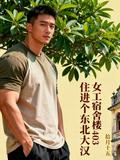 A Big Man from Northeast China Lives in 403 of the Female Worker Dormitory
890Reads8.3Score—Shelves
A Big Man from Northeast China Lives in 403 of the Female Worker Dormitory
890Reads8.3Score—Shelves
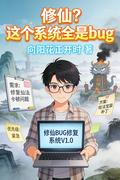 Cultivation? This System Is Full of Bugs
69Reads5.8Score—Shelves
Cultivation? This System Is Full of Bugs
69Reads5.8Score—Shelves
 Beastmaster, Are You Short of Fur?
5.6kReads9.2Score846Shelves
Beastmaster, Are You Short of Fur?
5.6kReads9.2Score846Shelves
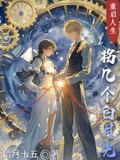 Restart Your Life with a Few White Moonlights
393Reads5.8Score—Shelves
Restart Your Life with a Few White Moonlights
393Reads5.8Score—Shelves
 Lin Ayue and Light
2Reads8.5Score—Shelves
Lin Ayue and Light
2Reads8.5Score—Shelves