There is no mention of Daliao, Jin, Yuan, Meng, Dali, and Tubo. Is it because there is insufficient information and a lack of historical data? Are the nine-year compulsory education textbooks different? Don't you want to look up local chronicles?
In the seventeenth year of Chongzhen, a history student traveled through time with the soul of Emperor Chongzhen. It's not a great article, it's not systematic, and there are relatively few golden fingers. Have a clear understanding of the situation in the late Ming Dynasty, focusing on the management of the late Ming Dynasty and the struggle for hegemony among various forces.
In "I Became a Son-in-Law in the Southern Tang Dynasty", the author placed a bowl under the city wall of Shouzhou in the Southern Tang Dynasty for people to watch.
Five-star recommendation for several unsystematic historical travel masterpieces that you can't put down. The first new work: describes the late Ming Dynasty, when natural disasters occurred frequently, the court was incompetent, the treasury was empty, the borders were in turmoil, people's livelihood was in decline, and internal and external troubles occurred. At this time, the time traveler Zhu Youjian was born and watched how the last Han emperor managed to survive step by step in the treacherous and treacherous palace, then went to Longyou in Xindi to build his power secretly, and finally turned the world around and ruled the world. The highlight of the book is that the characters are vivid and vivid, and they are not just a tool to promote the development of the plot. Each one has flesh and blood, sorrow and joy, plans and calculations, online IQ, reasonableness, analysis of human nature, concealment of wisdom, hidden edge, saving one's life, integrity... Use cognition as a knife to break the thieves in the heart and break the trap of others. The second and third books: profound historical background, reasonable plot advancement, rigorous logic, fighting against the odds, guarding the capital, attacking and establishing slaves, stabilizing the border, destroying thieves, fighting the officials and gentry, suppressing the rule of officials... Natural disasters and military disasters and the barriers of officials and gentry have become the shackles of fate. Use wisdom to cut the locks, and take fate as the bet; when the laws of survival and human weakness are intertwined into a network, use conspiracy to break the network, use the game as a chess, and win the half of the sky, then you will be a true hero. In short, there are turmoils in the temples and palaces, scheming for power, traveling through time and space, exploring the legends of emperors, making up for the regrets of the dynasty, showing the charm of history, rising and falling, and the wheel of history is rolling forward.
The only shortcoming of this excellent book set in the Song Dynasty is that this novel is challenging. If you are not calm enough, you may not be able to read it, but after reading it, you will find it difficult to let go. There is no shortage of ideas and excitement, and there are no clichéd routines. Authentic and sophisticated.
⭐⭐⭐In the first book, he became a sickly scholar. He went to Beijing with the prince at the beginning and made many suggestions. He slowly became a master of the Ming Dynasty. ⭐⭐⭐In the second book, he became the brother-in-law of the Ming Dynasty prince Zhu Biao. He was dragged to practice Taoism for ten years and went crazy after returning. ⭐⭐⭐In the third book, he became Zhu Yuanzhang's nephew. He was very wicked and was eventually named the King of De.
Going against the routine, not brainless. Su Dun took out a few pieces of paper from his sleeves, which were densely written with words. "I was in Hangzhou before. I read hundreds of books and found a few pieces of evidence. Not many, just nine." He spread the paper on the old cases next to him, "But I think the direction is right." Su Dun pointed to the first piece and said in a calm tone: "Look at the sentence in "Dayu Mo" that 'the human heart is in danger, the Dao is only small, but the essence is only one, and the Yunzhi Juezhong' is quoted in "Xunzi Jieye Pian", but Xunzi said it was quoted from the "Tao Jing", not the "Shang Shu"." "And 'Yunzhi Juezhong' should come from the Analects of Confucius. Yao said, "The calendar of heaven is in your hands, and if you are willing to hold on to it, the world will be poor, and the fortune of heaven will last forever." "The Analects of Confucius said, 'Shun also ordered Yu', but what Shun said to Yu in "Dayu Mo" is completely different from what Yao said to Shun." "The so-called sixteen words of Yu Ting are simply made up." He raised his head and glanced at everyone, waiting for them to be shocked, excited, or "enlightened" as written in later novels. However - Fan Xun raised his head and said disapprovingly: "Maybe Xunzi remembered it wrong?" Su Dun was stunned. Zhao Mingcheng nodded along, with a serious look on his face: "I saw before that "Xunzi·Junzi Pian" quoted "One person is happy, and the people rely on it", and said it was from the "Biography"." "Actually, this sentence comes from "Shangshu·Lu Xing"." "The source of this quotation must be misremembered by Xunzi." Su Xingchong also said: "Pre-Qin books are all bamboo slips, and it is not easy to read them. The scholars cited the scriptures and most likely wrote them from memory. Without reading and checking, the words may not be accurate." Su Dun's mouth twitched. Huh? Is there something wrong with your reaction? Too calm? Too rational? Shouldn't we exclaim "Oh my God, this is fake" and then people will be angry and share the same hatred? Why are all of them so... Calm? However, it makes so much sense, I am speechless! Li Qingzhao remained silent, just lowered his head and read the original text copied by Su Dun carefully. She stared at those lines of words for a long time, then suddenly raised her head, with a hint of weirdness in her eyes: "The original text of "Xunzi: Uncovering" is: 'In the past, when Shun ruled the world, everything was accomplished without edicts. When he was in danger, his glory was full; when he raised a little, his glory was unknown.' Later, he quoted the "Tao Jing": "The danger of the human heart, the weakness of the Taoist heart, and the number of dangers can only be known by a wise gentleman." She looked at Su Dun with a strange light in her eyes - a look that doubted her IQ: "You don't think it's the same sentence just because 'the human heart is in danger, the Tao's heart is small' and 'the human heart is in danger, the Tao's heart is small' are very similar?" Su Dun was displeased and replied stiffly: "These two sentences are exactly the same, how come they are not plagiarism?" "But these two sentences have completely different meanings!" Li Qingzhao talked eloquently: "Xunzi first said that Shun was 'in danger' and 'nurturing the subtlety' - this means that Shun advocated using a single-minded heart to explore the subtle principles of things." "Then he quoted the "Tao Jing" that "the human heart is in danger, the Tao heart is subtle". He quoted the sentence from the "Tao Jing" in order to explain the 'danger' and 'micro' mentioned by Shun earlier." "The key point of this sentence is in the last sentence - 'The number of dangers is small, only a wise gentleman can know it'. It is talking about the 'ji' (sign) between 'danger' and 'micro', which only a 'wise gentleman' can detect." She paused, and spoke in a clear voice: "But the key point of the sixteen words in "Dayu Mo" is also at the end, 'Wei Jing Wei Yi, Yu Zhi Ju Zhong', which is to use the 'Jing Yi' skill to 'Zhi Zhong'." "The themes and philosophies of the two sentences are fundamentally different. One talks about detecting signs, and the other talks about adhering to the middle way." "Just because these eight characters are somewhat similar, do you think it is plagiarism?" Fan Wei continued: "Even if it is plagiarism, it may be that the Dao Jing copied Dayu Mo, and then was recorded as the Dao Jing. There are too many such things." He thought for a while and gave an example: "For example, the sentence 'Without indifference, one cannot achieve clear aspirations, without tranquility, one cannot reach far', which comes from "Huainanzi Zhushu Xun" of the Western Han Dynasty. More than three hundred years later, Zhuge Liang quoted it in "The Book of Commandments", and now everyone thinks it was Zhuge Liang who said it." "There is also 'the courage to be big but the heart to be small, the wisdom to be round but the action to be square', which also comes from "Huainanzi Zhushu Xun", Sun Simiao quoted it, and now everyone thinks it is Sun Simiao's words." Zhao Mingcheng added: "This is also the case in "Xunzi" itself. The section about three years of mourning in "Xunzi: Rites", from 'three years of mourning, what' to 'the same thing in ancient and modern times', the entire paragraph was included in the Book of Rites and became the 'Three Years Questions'." "Now when people quote these sentences, they definitely think they come from the "Book of Rites", not "Xunzi"." Su Xingchong also nodded: "As for what Yao said when he surrendered to Shun, it is different from what Shun said when he surrendered to Yu. Isn't it strange?" "Two generations of holy kings faced different world situations, so they had to explain themselves differently." Su Dun was confused by everyone's words. Didn't those books of later generations say that the "Sixteen-Character Heart Biography" was the core evidence for Yan Ruochu's falsification of "Gu Wen Shangshu"? Didn't it mean that as soon as this piece of evidence came out, the Neo-Confucianists were speechless? How come you can't even convince a few seven- and eight-year-old children here?
This year's book club is the cutest, don't miss it if you pass by. [No System] + [Big Infrastructure] + [Big Technology] + [Ming Empire] In the last years of the Ming Dynasty, there was social unrest, natural and man-made disasters, and ten houses were empty. Xu Xian came to Ming Dynasty under the pressure of Zhu Yuanzhang, Xu Da and others. He will single-handedly save Chongzhen, save people's livelihood, take over Taiwan, and occupy East Asia. With the power of a group of ancient Chinese scientists, they built warships, entered the deep blue, and conquered the world. Create a Ming Empire where all nations come to dynasty, and create a peaceful world where swords are forged into plowshares. "I want to make sure that wherever the sun shines, it will be the land of the Ming Dynasty! Let the moonlight shine everywhere, and it will be the citizens of the Ming Dynasty!"
Li Jun got off the carriage and looked around. I saw that the mountains were as steep as jade, towering into the clouds. The mountains are stacked with heavy rocks and the ravines are winding. There are layers of palaces and pavilions in front of the mountain, and lush flowers and trees behind the mountain. Foxes and rabbits roamed everywhere, and elk traveled in groups. Auspicious clouds illuminate the ancient temple, and mist covers the green hills. There are layers of pagodas and bells ringing. Cranes crowed, apes hoofed and croaked. The jagged and strange rocks are like clusters of peaks, and pilgrims are everywhere like a busy city. The eyes are full of daisies, and the green grass reaches the sky. It is really difficult to paint a picture of the future, and a talented person cannot write a poem. . .
 What! You Said I Became an Emperor!
—Reads—Score—Shelves
What! You Said I Became an Emperor!
—Reads—Score—Shelves
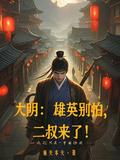 Daming: Don't Be Afraid, Hero, the Second Uncle Is Here!
13.6kReads8.8Score743Shelves
Daming: Don't Be Afraid, Hero, the Second Uncle Is Here!
13.6kReads8.8Score743Shelves
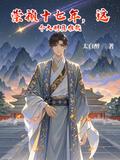 In the Seventeenth Year of Chongzhen, the Ming Dynasty Was Really Hard to Save
1.6kReads8.6Score105Shelves
In the Seventeenth Year of Chongzhen, the Ming Dynasty Was Really Hard to Save
1.6kReads8.6Score105Shelves
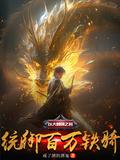 The Dominance of the Late Han Dynasty Started from the Grassland
15.3kReads9.1Score1.3kShelves
The Dominance of the Late Han Dynasty Started from the Grassland
15.3kReads9.1Score1.3kShelves
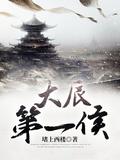 The First Marquis of Dachen
5.8kReads8.8Score567Shelves
The First Marquis of Dachen
5.8kReads8.8Score567Shelves
 Travel Through the Ming Dynasty and Become Lord Hong Wu's Only Younger Brother
45Reads5.8Score—Shelves
Travel Through the Ming Dynasty and Become Lord Hong Wu's Only Younger Brother
45Reads5.8Score—Shelves
 Daming: Killing the Star Prince, Scaring Lao Zhu Crazy at the Beginning
18kReads8.8Score731Shelves
Daming: Killing the Star Prince, Scaring Lao Zhu Crazy at the Beginning
18kReads8.8Score731Shelves
 The Ancient History of Struggle of Zhao Gouzi
12.7kReads9.0Score1.2kShelves
The Ancient History of Struggle of Zhao Gouzi
12.7kReads9.0Score1.2kShelves
 Senior Official of Song Dynasty
1.8kReads8.4Score154Shelves
Senior Official of Song Dynasty
1.8kReads8.4Score154Shelves
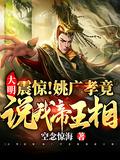 Ming Dynasty: Starting with the Snow Dragon Cavalry, Grandfather Zhu Di!
8.4kReads9.2Score411Shelves
Ming Dynasty: Starting with the Snow Dragon Cavalry, Grandfather Zhu Di!
8.4kReads9.2Score411Shelves
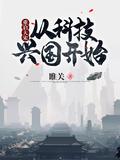 Restarting the Song Dynasty: Starting from the Rejuvenation of the Country Through Science and Technology
177Reads8.2Score—Shelves
Restarting the Song Dynasty: Starting from the Rejuvenation of the Country Through Science and Technology
177Reads8.2Score—Shelves
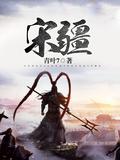 Song Frontier
31Reads5.8Score—Shelves
Song Frontier
31Reads5.8Score—Shelves
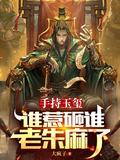 Holding a Jade Seal, Whoever Offends the Other Will Be Ruined.
8.6kReads8.8Score484Shelves
Holding a Jade Seal, Whoever Offends the Other Will Be Ruined.
8.6kReads8.8Score484Shelves
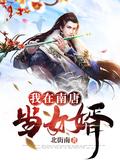 I Am a Son-In-Law in Southern Tang Dynasty
4Reads—Score—Shelves
I Am a Son-In-Law in Southern Tang Dynasty
4Reads—Score—Shelves
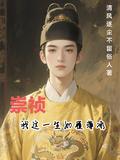 Chongzhen: My Life Is Like Walking on Thin Ice
2.2kReads6.4Score149Shelves
Chongzhen: My Life Is Like Walking on Thin Ice
2.2kReads6.4Score149Shelves
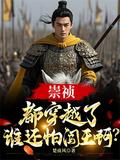 Chongzhen: We Have Traveled Through Time, Who Is Still Afraid of King Chuang?
10.4kReads8.6Score1.1kShelves
Chongzhen: We Have Traveled Through Time, Who Is Still Afraid of King Chuang?
10.4kReads8.6Score1.1kShelves
 The Song Dynasty Rebellious Boy
—Reads—Score—Shelves
The Song Dynasty Rebellious Boy
—Reads—Score—Shelves
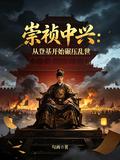 Chongzhen ZTE: Crushing Troubled Times from the Moment He Ascended the Throne
43.9kReads6.5Score4.1kShelves
Chongzhen ZTE: Crushing Troubled Times from the Moment He Ascended the Throne
43.9kReads6.5Score4.1kShelves
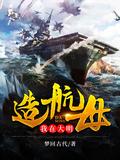 I Am Building an Aircraft Carrier in Ming Dynasty
6.6kReads8.3Score397Shelves
I Am Building an Aircraft Carrier in Ming Dynasty
6.6kReads8.3Score397Shelves
 Royal Gold Magistrate
426.2kReads9.5Score65.9kShelves
Royal Gold Magistrate
426.2kReads9.5Score65.9kShelves
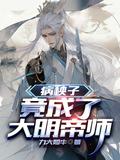 The Sick Man Actually Became the Master of the Ming Dynasty Emperor
3.8kReads8.8Score359Shelves
The Sick Man Actually Became the Master of the Ming Dynasty Emperor
3.8kReads8.8Score359Shelves
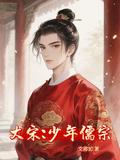 Father Su Dongpo's Wife Li Qingzhao and His Father Song Huizong
23.2kReads8.5Score2.9kShelves
Father Su Dongpo's Wife Li Qingzhao and His Father Song Huizong
23.2kReads8.5Score2.9kShelves
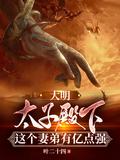 Daming: His Royal Highness, This Brother-In-Law Is Billions of Points Strong
9.7kReads7.1Score478Shelves
Daming: His Royal Highness, This Brother-In-Law Is Billions of Points Strong
9.7kReads7.1Score478Shelves
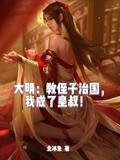 Daming: I Taught My Nephew to Govern the Country, and I Became the Emperor's Uncle!
—Reads5.8Score—Shelves
Daming: I Taught My Nephew to Govern the Country, and I Became the Emperor's Uncle!
—Reads5.8Score—Shelves
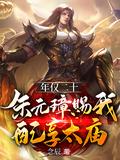 At Only Twenty Years Old, Zhu Yuanzhang Granted Me the Privilege of Enjoying the Imperial Ancestral Temple?
602Reads6.7Score—Shelves
At Only Twenty Years Old, Zhu Yuanzhang Granted Me the Privilege of Enjoying the Imperial Ancestral Temple?
602Reads6.7Score—Shelves
 Rebirth: I Was a Great Power in the 19Th Century
32Reads5.8Score—Shelves
Rebirth: I Was a Great Power in the 19Th Century
32Reads5.8Score—Shelves
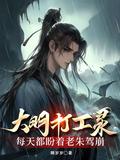 Job Record in Ming Dynasty: I Look Forward to Lao Zhu's Death Every Day
55.4kReads9.1Score4.4kShelves
Job Record in Ming Dynasty: I Look Forward to Lao Zhu's Death Every Day
55.4kReads9.1Score4.4kShelves
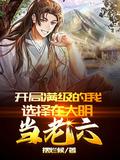 When I Started at Full Level, I Chose to Be the Sixth in Ming Dynasty.
29.2kReads7.9Score1.8kShelves
When I Started at Full Level, I Chose to Be the Sixth in Ming Dynasty.
29.2kReads7.9Score1.8kShelves
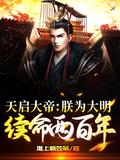 Emperor Qiming
523Reads6.1Score—Shelves
Emperor Qiming
523Reads6.1Score—Shelves
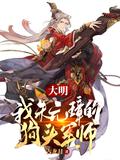 Daming: I, Zhu Yuanzhang's Dog-Headed Military Advisor!
3Reads5.8Score—Shelves
Daming: I, Zhu Yuanzhang's Dog-Headed Military Advisor!
3Reads5.8Score—Shelves
 Datang: Grab Li Bai's Wife at the Beginning
92Reads6.9Score—Shelves
Datang: Grab Li Bai's Wife at the Beginning
92Reads6.9Score—Shelves
 The Wind of Blessing from Ancestors Rises in Ming Dynasty
36Reads—Score—Shelves
The Wind of Blessing from Ancestors Rises in Ming Dynasty
36Reads—Score—Shelves
 Water Margin's Son-In-Law: Madam, Let's Rebel!
9.2kReads8.4Score551Shelves
Water Margin's Son-In-Law: Madam, Let's Rebel!
9.2kReads8.4Score551Shelves
 I Open a Tavern in Jingyanggang
415Reads—Score—Shelves
I Open a Tavern in Jingyanggang
415Reads—Score—Shelves
 The Beginning of Water Margin Becomes Wu Dalang
1.2kReads8.2Score103Shelves
The Beginning of Water Margin Becomes Wu Dalang
1.2kReads8.2Score103Shelves
 Southern Song Dynasty: the Rise of the Empire
656Reads7.4Score—Shelves
Southern Song Dynasty: the Rise of the Empire
656Reads7.4Score—Shelves
 Travel Through the Ming Dynasty and Become Emperor
9.5kReads8.8Score747Shelves
Travel Through the Ming Dynasty and Become Emperor
9.5kReads8.8Score747Shelves
 Without Sun Chuanting, There Is Still Huang Yiming
5.8kReads8.4Score501Shelves
Without Sun Chuanting, There Is Still Huang Yiming
5.8kReads8.4Score501Shelves
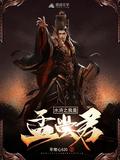 Water Margin: I Am Mengchangjun
140Reads6.6Score—Shelves
Water Margin: I Am Mengchangjun
140Reads6.6Score—Shelves
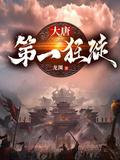 The First Madman of the Tang Dynasty
11.6kReads9.2Score1.4kShelves
The First Madman of the Tang Dynasty
11.6kReads9.2Score1.4kShelves
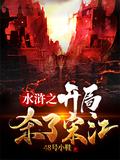 I Captured Chao Gai's Body in Water Margin
608Reads5.8Score—Shelves
I Captured Chao Gai's Body in Water Margin
608Reads5.8Score—Shelves
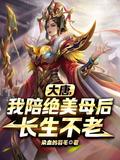 In the Tang Dynasty, I Will Live Forever with My Beautiful Mother
24Reads5.8Score—Shelves
In the Tang Dynasty, I Will Live Forever with My Beautiful Mother
24Reads5.8Score—Shelves
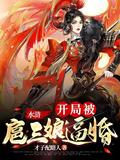 Water Margin: at the Beginning, Hu Sanniang Forced Her into Marriage
5.7kReads8.2Score490Shelves
Water Margin: at the Beginning, Hu Sanniang Forced Her into Marriage
5.7kReads8.2Score490Shelves
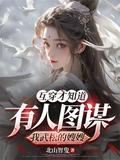 Only After We Passed Each Other Did I Know That Someone Was Plotting Against My Sister-In-Law Wu Song.
54Reads8.2Score—Shelves
Only After We Passed Each Other Did I Know That Someone Was Plotting Against My Sister-In-Law Wu Song.
54Reads8.2Score—Shelves
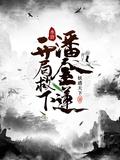 Water Margin: Save Pan Jinlian at the Beginning
6kReads8.1Score601Shelves
Water Margin: Save Pan Jinlian at the Beginning
6kReads8.1Score601Shelves
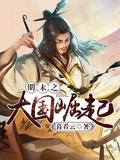 The Rise of Great Powers in the Late Ming Dynasty
1.8kReads8.3Score127Shelves
The Rise of Great Powers in the Late Ming Dynasty
1.8kReads8.3Score127Shelves
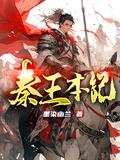 Book of Scholars
5Reads8.9Score—Shelves
Book of Scholars
5Reads8.9Score—Shelves
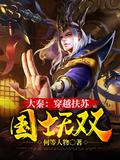 Da Qin: Traveling Through Fusu, the Country's Scholars Are Unparalleled
422Reads8.6Score—Shelves
Da Qin: Traveling Through Fusu, the Country's Scholars Are Unparalleled
422Reads8.6Score—Shelves
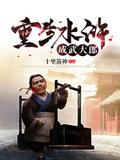 Rebirth of Water Margin as Wu Dalang
31Reads5.8Score—Shelves
Rebirth of Water Margin as Wu Dalang
31Reads5.8Score—Shelves
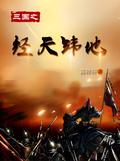 The Three Kingdoms
4.8kReads7.6Score453Shelves
The Three Kingdoms
4.8kReads7.6Score453Shelves