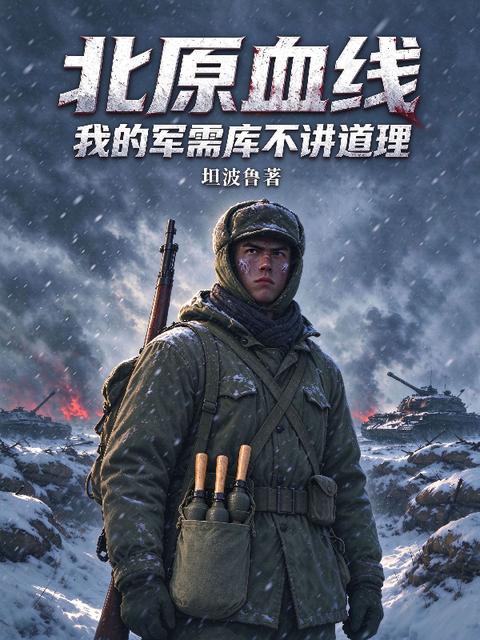
Li Mancang, a road construction worker on a Chinese aid project, was hauling a truckload of stone when he suddenly barreled into a battlefield.
The convoy was bombed, and his coworkers scattered. From a pile of corpses, he picked up an old metal tag engraved with six characters: Quartermaster Depot. Guard. Wang.
It turned out there was an unreasonable quartermaster depot in this world. Win a battle, and it records your merit. Capture the enemy’s guns, and it exchanges them for ammunition. Bullets, bundled grenades, rotary machine guns, land mines: it kept putting them in his hands, along with one cold, unyielding rule: you can borrow in advance, but you must repay double after the war.
Li Mancang had little schooling, but he knew how to do the math.
"Five bullets, and I repay ten?" He crouched in the snow, counting on his fingers. "I know my way around buying on credit."
The Coalition Army occupied the snowy front and transferred all the stock from the quartermaster depot’s Third Storehouse, locking it away in a cave at the end of the northern railway. The cave was the Coalition Army’s lifeline, ten times larger than the depot. Inside, there was someone walking away, their back looking uncannily like the "Wang" on the metal tag.
Li Mancang took four men and traveled 120 miles by night, hiding by day. They crawled through drainage ditches, slipped into storage yards, blew up railcars, and followed the railway into the mountain valley.
"The quartermaster depot’s goods were entrusted by Wang. Wang’s things, I have to bring back."
He was a road builder, and he was a depot guard. The accounts had to be settled one by one, and the people brought back one by one.

Support your continued creation
This book, like a military supply depot, puts everything on a scale. The battles were real, the cigarettes were really fragrant, and the accounts were meticulously detailed. The more you calculate, the heavier it gets, and the laughter eventually stops.