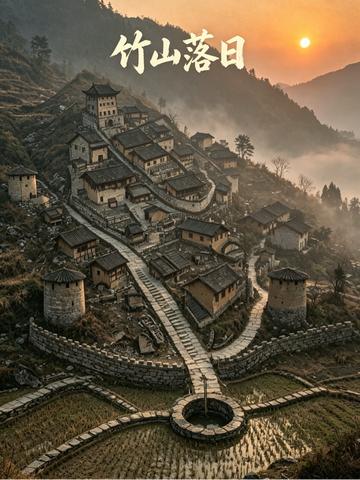
Wu Tian was born in Group Four, Zhushan Village, Machong Township, Fenghuang County, Hunan Province. The village cascades down the mountainside, with four stone-built watchtowers standing at its corners. The houses have stone foundations, mud walls, and gray-tiled roofs, while stone fences enclose each courtyard. Across the valley lie stretches of rice fields, divided by crisscrossing stone embankments, with an ancient well standing quietly in their midst. The local landscape, customs, and daily life in this story are all drawn from the authentic rhythms of everyday life in the mountains of western Hunan.
The boy grows up on the village’s stone paths and among its terraced fields and hills, shaped by the local traditions. When the time comes to choose his future, he gives up on further schooling and joins the army. His years in the military forge him. During an assignment away from camp, he happens to meet Chen Jingshu. One is a soldier from a remote Miao village; the other comes from a prosperous family in Jiangnan. Though mountains and rivers stretch between them, their lives become intertwined.
After weathering half a lifetime of hardships together, Wu Tian returns to his old home in Zhushan in his later years. The setting sun washes over the village. His young grandson reaches out to touch the military merit medals he has treasured, as Wu Tian slowly recounts the story of his life. The mountain breeze is unchanged, and the rice fields remain as they were. After all the ups and downs of a lifetime, he finally returns to the land that raised him.
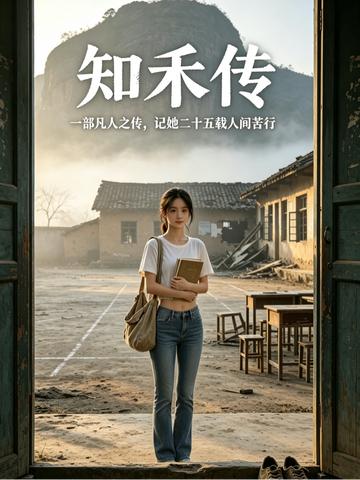
The characters' names in this book are fictional. The village scenery, local customs, and daily life are all based on the real landscape and traditions of the area. This is a record of an ordinary person's lifetime of joys and sorrows, and the things they held fast to.