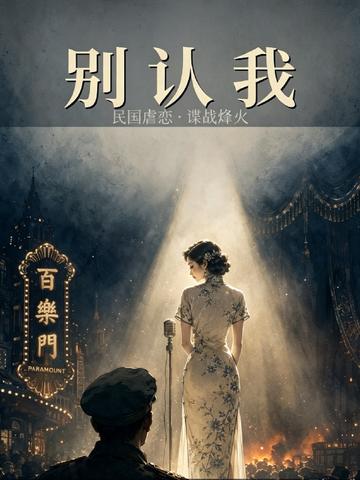
She was a country girl sold by her family for thirty silver dollars to become a rich man's concubine. He was the son of a boat tracker, poor and with nothing but his strength. On the night before the Winter Solstice, he pawned his late father's pocket watch for two boat tickets, whisked her out of town, and brought her to Shanghai.
After ten years of ups and downs, she became Bai Ying, a songstress whose rendition of "Yangliu Qing" made her famous throughout the Paramount. He was still a dock laborer, carrying sacks for a living. The gulf between their stations kept them from voicing their love. The words he'd held back for eleven years never found the right moment to be spoken.
When war erupted, he was conscripted and disappeared. She searched for him in the newspapers for four years, but found no trace. They met again at a Japanese military reception: she smiled through her misery onstage, while he stood below in a uniform of the puppet army, offering her only a note: Don't recognize me.
It turned out the deepest confession was not daring to acknowledge each other when they met again. Their personal love gave way to the greater cause. They came within a step of marrying, but both fell before dawn.