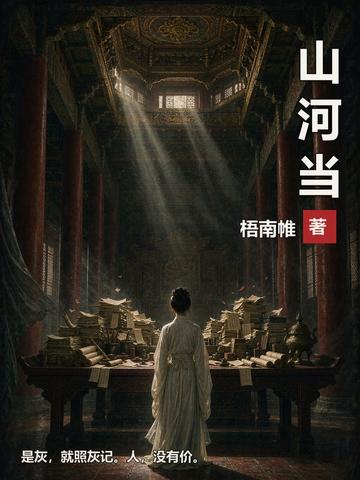
In the fourth year of Yong'an, the Ji family's pawnshop on Shantang Street in Suzhou was wiped out overnight. When fifteen-year-old Ji Pinglan was lowered over the back wall, all she had in her arms was half a bronze medallion.
More than ten years later, she reopened Shanhe Pawnshop, taking in things no one else dared to accept: a broken hairpin belonging to a disgraced palace woman, land deeds from a salt merchant whose estate had been confiscated, and a red-gold bracelet of unknown origin. On the back of every unredeemed pawn ticket, she added another line in tiny writing: its origins, its markings, and the people who had handled it.
Some called her a fence. Some offered sky-high prices for the old things in her storeroom. And some wanted to marry her into the household of their enemy.
On a rainy night in the fourth month, a man came to the shop seeking work as a pawnshop clerk. He was covered in blood, his origins unknown. His monthly wage was three hundred coins, payable later.
She could tell three parts of his story were true and seven were false, but she took him on anyway. He had the other half of the bronze medallion in his arms.
He thought his disguise was flawless, not knowing she'd seen through it on the very first day. She saw through him but said nothing, wanting to see how long he would keep up the act.
Fake pawn tickets, swapped mirrors, privately forged imperial coinage... The rotten accounts of ten years in Jiangnan were brought to light, one by one.
Ten years later, in the Hall of Supreme Harmony, copies of the pawn tickets covered half a desk. With every line she recited, the officials' hearts sank a little further.
On the day he revealed his identity in court, the officials finally understood: the person investigating the case and the person implicated in it were one and the same.
A pawnshop in this world takes in more than legitimate or stolen goods. Most of all, it deals in goods of uncertain origin.
If it's in the gray, record it as gray. People have no price.