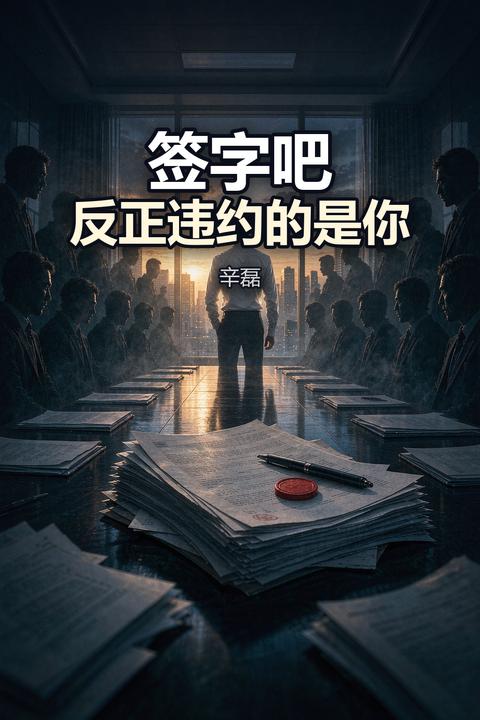
Zhou Ye had spent three years as a “signing machine” at Hengcheng Construction.
Four hundred and twelve contracts, six times taking the blame, eighty thousand yuan lost, and a monthly salary of 6,200.
Every contract that looked likely to go wrong was pushed in front of him.
Until the day he signed a three-million-yuan wager agreement,
and a line of text appeared before his eyes:
[Probability the other party will fulfill this contract: 3%]
The [Breach Settlement Agreement] was now bound to him.
When someone else breached a contract, he took what they had kept by doing so:
unpaid invoices, withheld commissions, evaded compensation, stolen clients.
It wasn’t a payout. The assets themselves changed hands.
There was only one rule: he couldn’t induce anyone to breach a contract.
So he could only watch as the other party stepped into the trap, one step at a time,
while pretending to be concerned and politely reminding them,
“Perhaps you should think it over. This contract is pretty important to your company.”
Then he would glance down at the countdown on his phone.
From that day on, what he hoped for most wasn’t that people would honor their contracts,
but that they would break them.

Civil Engineering Guy's Last Fantasy