In the forty-third year of Wanli, a farmer walked into the prince's palace carrying a jujube stick, and no one stopped him. The majestic crown prince of the Ming Dynasty had only a few old eunuchs guarding the courtyard. The peasants beat anyone they saw and almost killed the prince.
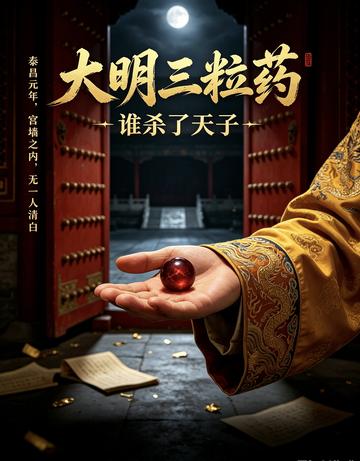
Five years later, he finally ascended the throne and was named Taichang. Thirty-nine years of waiting resulted in twenty-nine days, but on the tenth day, he fell ill.
On the first day of September, at the fifth watch, he died, the shortest-lived emperor of the Ming Dynasty.
The investigators traveled from Beijing to Nanjing and tore through the memorials of the three dynasties.
Finally, they discovered that the three pills came from three people who did not know each other.
One wanted to make him sick, one wanted to make him take a gamble, and the other just wanted to make him comatose for one more day.
They never met, never exchanged a letter, and even had different political opinions.
But together they killed him.
All civil and military officials in the dynasty were asking: Who killed the emperor?
Jishi, Hongwan and Yigong - three major cases in the late Ming Dynasty.
This time, we connected the three major mysteries together to restore the truth behind the gaps in history bit by bit.
Reader comments
Reading history is the fastest way to improve your knowledge. Standing from the perspective of historical figures, you can understand human nature and feel loneliness.
The rhythm of the story is very good. It sets the stage and then unfolds it layer by layer. It is worth recommending.

Reading history is the fastest way to improve your knowledge. Standing from the perspective of historical figures, you can understand human nature and feel loneliness.
The rhythm of the story is very good. It sets the stage and then unfolds it layer by layer. It is worth recommending.