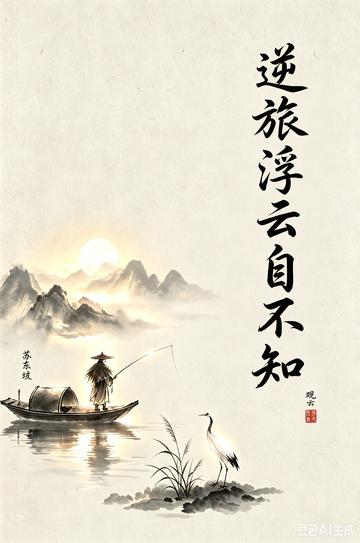
Even the emperor secretly copied the poems he wrote; as an official, he was demoted to the ends of the earth.
Wutai death row, late night interrogation. Forty-three-year-old Su Shi was forced to explain every poem in his life line by line - all of which became incriminating evidence. He recognized all the poems and said only one sentence: "Not a single word is wrong."
The story goes back forty-three years from death row: a baby was born on a snowy night in Shahui, Meishan. His father, Su Xun, did not devote himself to studying until he was twenty-seven years old, and named him "Shi". This name, like a prophecy, followed him throughout his life.
This book retells Su Dongpo's life in the style of a novel: Ouyang Xiu was stunned by the imperial examination, and his famous sentence "No one will talk about me again in thirty years" moved the capital; he had political disagreements with Wang Anshi, and had a face-to-face argument with Sima Guang. The old and new parties were fighting each other. He narrowly escaped death in the Wutai poetry case and was demoted to Huangzhou to farm, but he wrote "Chibi Fu" and "Nian Nujiao" by the river. After that, Huizhou and Danzhou were demoted further and further away, and their lives became more and more transparent. Between the ups and downs of the officialdom, there are three deep feelings - the smart Wang Fu, the housekeeper Runzhi, and Chaoyun who understands him; it is the life-long covenant of brother Su Che's "wind and rain in bed"; it is the world of fireworks nourished by pork, oysters and lychees.
Why was the eternal famous article written? The answer is never in the study, but in a desperate situation: when I was drunk in the Mid-Autumn Festival, I wrote "Shui Tiao Ge Tou" to my younger brother. When I was soaked in the rain on the Shahu Road, I became a drowned rat, so I came up with "One life under the mist and rain". Before he died, he wrote a footnote on his life: "Ask you about your achievements in life, Huangzhou, Huizhou and Danzhou." - Why do you regard suffering as merit? After reading these one hundred chapters, you will find the answer.