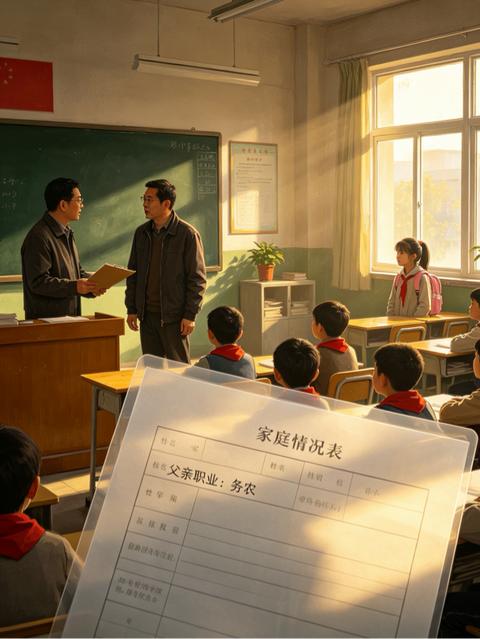
Newly appointed as director of the Education Bureau, Zhou Yuanshan wants to spare his daughter any special treatment. In the "Father's Occupation" field on the family information form, he writes two words: "farmer."
He only wants her to grow up like an ordinary child. But after those two words are submitted, eight-year-old Zhou Xiaoman begins to change. Her seat is moved to the very last row. Even when she raises her hand, the teacher never calls on her. She is replaced as the reading leader and removed as group leader. Her homeroom teacher tells him gently, "Children from farming families have poorer educational conditions. We need to give them extra help where it's needed."
Entering the school as an ordinary parent, Zhou Yuanshan sees with his own eyes how a form becomes a label, and how a child is pushed to the margins in silence. And when the principal recognizes him, a real reckoning over educational equality begins.
This is not a story about a father standing up for his daughter. It is the story of an educator who, in his own way, prunes and treats an apple tree hollowed out by pests, letting the sunlight shine through again. It is also the story of an eight-year-old girl who slowly learns what it means to be seen, stumbling along the way.
Every profession deserves respect, and every child deserves to be seen. The simplest, most fundamental power of education is hidden in the everyday moments no one notices.