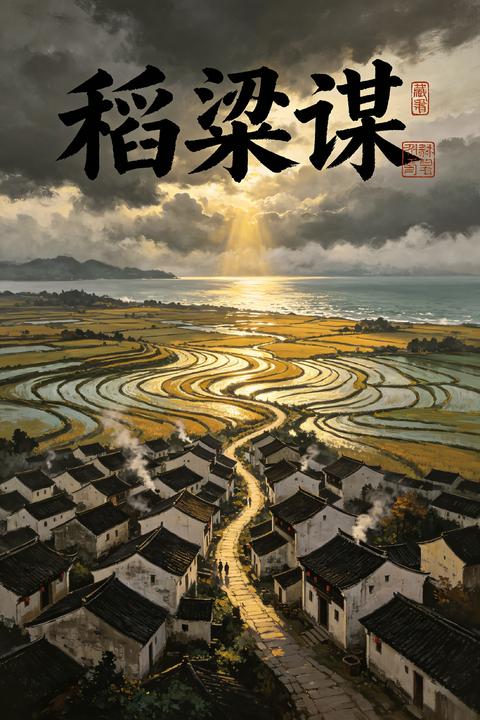
Dynasty: Ming dynasty, the thirteenth year of the Chenghua reign (1477).
Location: Qingxi Village, under the jurisdiction of Changxing County, Huzhou Prefecture, Zhejiang, twenty li south of Lake Tai.
Qingxi Village is surrounded by mountains on three sides and borders the water on the fourth. A clear stream winds down from a spur of the Tianmu Mountains east of the village, flows into a lotus pond in front of it, then joins Lake Tai after three li by water. The village has about eight hundred mu of farmland, mostly paddy fields growing japonica and glutinous rice, with a few dry plots where mulberry trees are grown for silkworms. The post road west of the village leads to Changxing County seat, while the waterways across Lake Tai connect to Huzhou and Suzhou, keeping merchants constantly on the move.
During the Chenghua reign, the realm is largely at peace. More than twenty years have passed since the Tumu Crisis, and the restoration of Emperor Yingzong and the Cao-Shi Rebellion are old stories. The reigning Emperor Xianzong dotes on Consort Wan, while the Western Depot wields power and undercurrents stir at court. Yet Jiangnan lies far from the political maelstrom. The Lake Tai basin is threaded with waterways and blessed with fertile land. It has been the granary of the realm since the Southern Song. Here, learning flourishes and merchants gather, with silk, tea, and porcelain carried along the canals to the capital and even overseas.
Yet beneath the prosperity, the countryside is far from peaceful. Taxes grow heavier during the Chenghua reign, the lijia system is weakening, and powerful families are swallowing up land, leaving many commoners as tenant farmers. Clan power is deeply entrenched in the countryside, with clan heads and grain chiefs controlling public affairs. A small mistake can ruin an ordinary farming household. Water bandits also prowl the Lake Tai region, and merchant ships dare not travel alone at night.