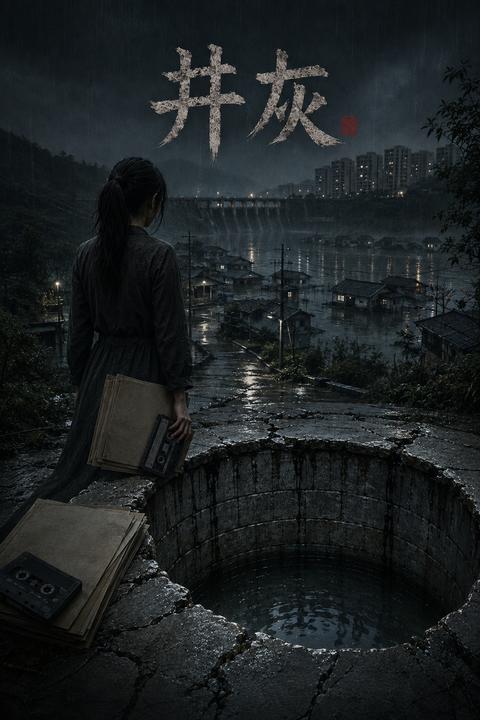
Every night, the woman in the wall asks just one question:
"Where is my name written?"
Fang Lan, an editor of local gazetteers, receives an audio recording sent by a resident. The stranger in the recording comes from a wall with no pipes, yet black water keeps seeping out of it.
When the plaster is stripped away, an old, blue-gray brick engraved with a name is revealed. Soon after, the family who first noticed something strange vanishes from their locked home, and dozens of names erased from local records appear beneath the wall.
Following the trail of the old brick, Fang Lan finds a village that was submerged by a flood, then erased completely from maps and county records.
The area once had an old custom called "Sending Names": the names of the dead who had no remains, no household registration, and no witnesses were carved into bricks, filled in with hearth ash, then sent down a well.
Now the name-bricks have been dug up, broken apart, and built into schools, homes, and river embankments.
People who come into contact with the old bricks begin to forget their loved ones' names.
And Fang Lan discovers that it is not only the village that was erased.
Her own family also took part in erasing names thirty-five years ago.
As the people of the entire county begin to be replaced by the names of unknown dead, Fang Lan must answer the question hidden in the wall before everyone forgets who they are:
Where must a person's name be written for their life to have truly existed?