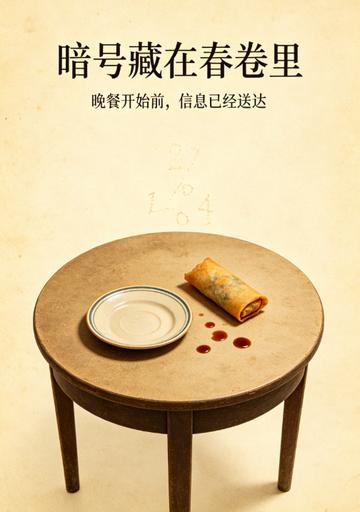
In the first month of 1945, the chief of the Japanese Special Higher Police personally leads his men to seal off Spring Roll Street. Zhou Heng is lowering spring roll wrappers into the wok when the head collaborator kicks over his stall and presses a gun to the back of his head. “Boss Zhou, the Japanese suspect you're hiding a radio operator here. If we don't find him today, you're all dead.” Oil splashes onto Zhou Heng's wrist. He brushes off the flour and smiles. “No need to rush, sir. I've been frying spring rolls for twenty years. I know just how to turn up the heat for each customer.” Before he can finish speaking, he flicks his wrist, scattering crushed flour into the Japanese soldiers' eyes. In the confusion, he kicks over the wok, splashing boiling oil onto the collaborator as he loads his gun. When the chief of the Special Higher Police wipes the oil from his face and raises his pistol, Zhou Heng has vanished. On the cutting board sits a plate of freshly fried spring rolls. Their arrangement on the tabletop spells out a Morse code message: the address of their next meeting point. The most dangerous agent hides in the breakfast stall you pass every day, and the orders that will turn the tide of war are wrapped in a crispy spring roll. Those who rewrite history have no need to carry guns.