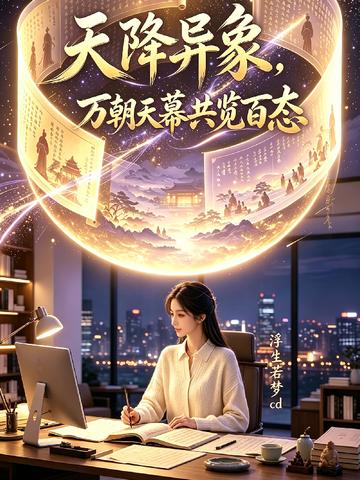
A sky screen hangs above the Nine Provinces, displaying a thousand dynasties in all their variety.
In 2032, history and culture blogger Su Wanhe edits videos as usual, completely unaware that every frame on her screen is silently being projected above the ancient dynasties of every parallel world.
Emperor Yang of Sui sees how later historians judge his reign. Li Shimin copies down the words “light taxes and fewer labor duties” through the night. Displaced people in the Southern Song watch modern children grow up safe and burst into tears.
The sky screen reveals its secrets only once. Once seen, they vanish, with no chance of replay. Thousands stay up all night copying them by hand. Soldiers on the border pass them around in a circle, while historians weep as they rewrite the national histories.
But she doesn’t only talk about emperors and generals.
She tells of the nameless laborers who built the canals at the end of the Sui Dynasty, the old Han farmer kneeling in the furrows to calculate his taxes, and the sixteen-year-old boy conscripted to build Mount Li in the Great Qin. These are the people whose names never made it into the history books.
The sky screen does not choose for anyone.
Whether to change or stay the course, whether to believe or not, each world must decide for itself how to grasp the light.
If there is a ruler, change the ruler. If there is no ruler, change the officials. If there are no officials, change the people. In times of chaos, all must defend their homeland.
And she just happens to have a direct line to the highest levels, the freedom to travel across the land, compassion for the past and present, and a love of history and culture.
A two-way journey across ten thousand years, carried by the enduring spirit of Chinese civilization.
With gentle glimpses of everyday life, she guides the people of ages past through the ages.