In the Great Jing Dynasty, the lives of poor commoners are as fragile as paper.
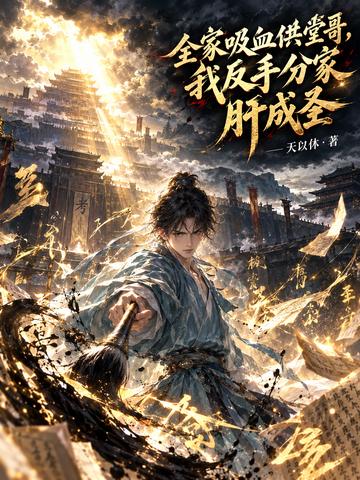
Seven-year-old Lu Jingzhou has barely opened his eyes when he sees his uncle about to smash the rusty iron pot they cook with, all to trade it for a stick of pine-soot ink for his academically hopeless cousin.
The second branch of the family is treated like an ATM: forced to do the hardest farm work and beaten without mercy.
This is the exploitative script handed to the lowest rung of feudal society?
Lu Jingzhou casually picks up a broken bamboo skewer and makes a deep mark in the muddy ground. A glowing screen suddenly appears before his eyes: [Sandbox Writing: Beginner 1/100].
As long as you put in the effort, you make progress!
Other people rely on prestigious families, mentors, and talent to pass the imperial exams?
Sorry, I rely on nothing but grinding like a machine, without a hint of emotion!
Can't afford rough paper?
He dips broken roof tiles in muddy water and grinds his way to [Photographic Memory]. Powerful nobles block his place in the exam?
He writes on stone slabs in the rain and grinds out [Grandmaster-Level Eight-Legged Essays], crushing the competition.
When the family splits, Lu Jingzhou brings out the Great Jing Code and forces the household that never stops preaching virtue to leave with nothing.
Years later, the great clans and aristocratic families of the capital collectively break down as they watch the young chief minister turn the imperial exams and the royal court into a competition of truly horrifying intensity.
Lu Jingzhou rubs his aching wrist and sighs helplessly. "What's a chief minister, anyway? I just want to grind this proficiency... all the way to perfection."
One, it's too weird. Second, the introduction is a scam. The male protagonist's uncle's family never left the house. The one who leaves the house is still the male protagonist, but it's better than the female protagonist's novel, and he is divided into five acres of good land and fifteen taels of silver.