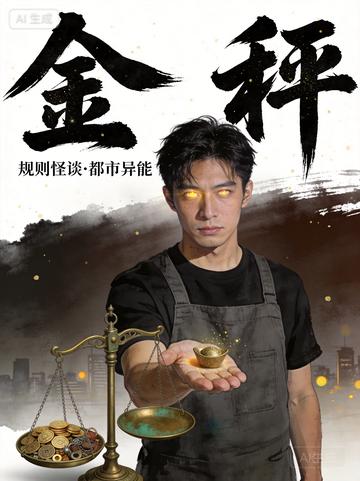
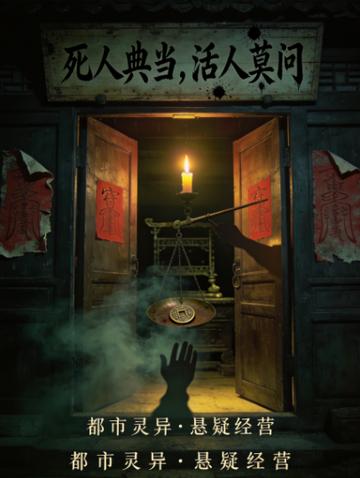
Wang Fei took over Jin Lai Shun, the gold-buying shop his grandfather had left him. In a counter drawer, he found a yellowed notebook covered in crooked handwriting, listing seven “rules for going out” and nine “rules for inside the shop.” He assumed they were just an old man’s peculiar habits, until an elderly woman wearing an antique gold bracelet walked in. The scale’s beam moved without a breeze, and a sigh came from inside the bracelet.
Every piece of old gold accepted without question holds the unfinished business and obsessions of its original owner. Someone pawned their daughter’s dowry for gold. Someone turned their life savings into gold bars, then never came back to claim them. Someone sank their last gold ingot to the bottom of a river and never retrieved it. Wang Fei gradually discovers that he can “hear” the voices of gold and see the fading remnants of memories surface on metal.
Su Wan, heir to Ruifeng Gold Shop on the neighboring street, is forced to take over the old store after her grandmother dies. The two meet over a strange dispute involving a gold artifact. When an unscrupulous dealer known as “Liu the Glasses” floods the market with stolen goods at cut-rate prices, and the two missing “rules for going out” in his grandfather’s notebook point to an old case buried for years, Wang Fei must make a choice: keep running an honest little shop, or seek justice on behalf of the silent gold and settle the debts owed to it.
Rules may be dead, and scales may be alive, but some debts cannot be weighed.




The beginning of the new book is about the feeling of working with gold recycling, it is worth reading