The thing Lu Yunsong regretted most in his previous life was leaving the mountain before he had mastered his teacher’s skills.
In his past life, his master was a renowned barefoot doctor for miles around, eager to pass on everything he had learned.
But Lu Yunsong was young and restless. He thought gathering herbs was hard and learning to identify them was exhausting, so he went to the city to find work.
And what happened? His wife died in childbirth, three of his four daughters were given away, and he couldn’t raise the one he kept either.
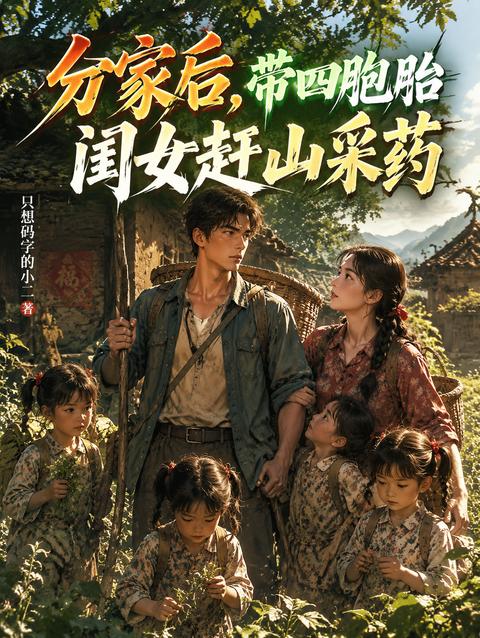
Reborn in 1975, he returned to the day his family split apart.
The Lu family thought his wife had “given birth to four money-losing girls,” so they kicked his family of six out with a written partition agreement.
All he got was a dilapidated tile-roofed house of three rooms at the foot of the back hill.
This time, Lu Yunsong neither cried nor made a scene.
Because something was now in his head: his master’s life’s work, including how to identify, gather, process, and combine 720 kinds of mountain herbs, as well as 180 proven remedies.
Everything he had failed to remember in his previous life was now etched into his mind.
The poor hill that everyone else looked down on was a treasure trove in his eyes.
Wild goldthread in March, Paris polyphylla in May, reishi mushrooms in July, gastrodia in September... There were herbs to gather all year round.
He carried a bamboo basket up the mountain to gather herbs, then came back down to treat the sick, trading herbs for grain, cloth, and milk powder.
His four daughters grew plump and rosy-cheeked, changing by the day.
It took only three months for the villagers to go from “feeling sorry for him” to “envying him.”
The Lu family was sick with regret. How had the family they cast out become the most comfortable household in the village?
With his youngest daughter on his back, Lu Yunsong climbed the mountain and looked out over the medicinal herbs growing everywhere. He thought, This mountain will be the dowries for all four of my daughters.

 My Soul Will Never Die, and the Yandere Sword Immortal Imprisons Me Day and Night to Take What She Wants
 After the Family Split, I Earn One Coin with Every Step I Take
 Snowed In on the Mountain: I Trade with Animals for Meat at Every Meal
 Kicked Out After the Family Split, I Made a Living Gathering Seafood by the Shore
 I Stockpiled a Thousand Tons in Three Days, Then Returned to the 1960s to Become a Tycoon