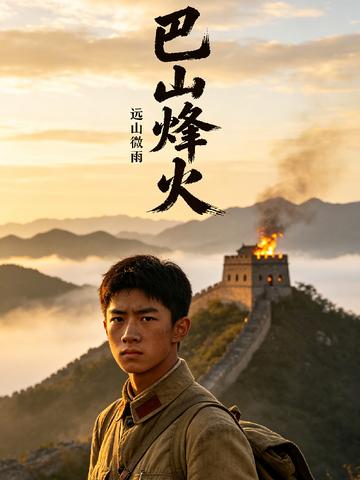
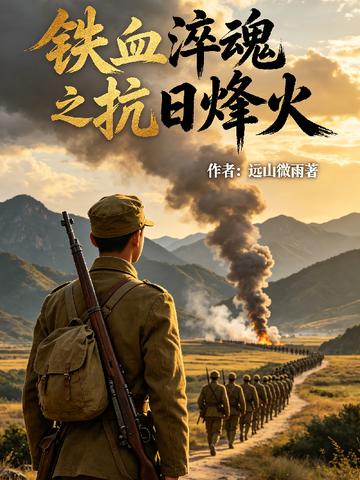
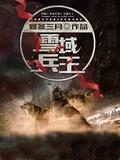
Beacon Fires over Bashan is a full-length novel about the Sichuan Army's resistance against Japan, comprising 280 chapters and about 600,000 words. Beginning with the Battle of Shanghai, it follows the fate of Qin Shixun, a Sichuan Army battalion commander, across both the main front and guerrilla warfare behind enemy lines, ending with his journey home after victory in the War of Resistance.
In the autumn of 1937, Qin Shixun, a graduate of the fourth class of the Whampoa Military Academy, led the Sichuan Army's Second Battalion to Shanghai. Pursued for disobeying an order to burn a village, he withdrew west with the remnants of his unit, taking in scattered soldiers and protecting civilians along the way before retreating into southern Anhui. There he reunited with his older sister and joined forces with a guerrilla unit, venturing behind enemy lines to wage guerrilla warfare. The eighteen-day back-and-forth battle at the Hongyangshu dike, the ambush at Caoxie Ridge, the night raid on the Qingyi River: Qin Shixun suffered seven stitches to his right arm, yet led his unit through rain and snow to hold the entire defensive line.
After victory in the War of Resistance, the army was reorganized. On the registration form, Qin Shixun wrote “Going home,” then walked back to Dazu, Sichuan, with a Zhongzheng rifle on his back. The osmanthus tree still stood at his old home, and Chen Zhaodi had opened a shop called “Zhaodi Woodworking” in the west of town. In the novel's final scene, he pushes open the courtyard gate. Beneath the osmanthus tree, someone sits planing a board, head bowed, with sawdust scattered at their feet like a thin layer of snow.
The weapon models and course of battles are grounded in historical fact, and Sichuan dialect runs throughout. The emotions are restrained and understated. At its heart, the story asks how a person can remain human during wartime: refusing to burn villages, never abandoning the wounded, remembering the names of fallen brothers, and going home to live an ordinary life when the fighting is done. A tribute to the fallen. Remember history, and never forget national humiliation!