After being laid off, Lin Yu, a former project manager at a major tech company, uses his severance pay to take over a nearly bankrupt bay aquaculture farm. His dream is simple: raise some swimming crabs, sea bass, and grouper; start a little livestream; mend his nets in the sun by day and drink congee at night. Best of all, he hopes never to hear the words “requirements change” again.
But on his very first day on the island, he rescues a little sea otter with its foot stuck in an abandoned drainage ditch, then gives it a king crab leg to eat.
The little sea otter is deeply touched.
That very night, it swims into the deep sea and gathers its friends and family, telling them it has met “the biped who’s best at taking care of little ones in the whole ocean.” The next morning, Lin Yu stares at a baby Chinese white dolphin in his own hatchery pond, his toothbrush dropping straight into the water.
The little sea otter lies by the pond, looking expectant. “Do you like it? I picked the prettiest one!”
Lin Yu immediately pulls out his phone to call the police. “Officer, I’m turning myself in. No, wait, I can report myself too.”
Even more absurdly, he awakens the ability [Tidal Affinity]. He can understand the thoughts of marine creatures, and injured, lost, or driven-away animals instinctively come to him. The white dolphin won’t leave; sea turtles come to heal; orcas help him chase fish; and a humpback whale sings at night to lull the baby dolphin to sleep. Lin Yu’s ordinary aquaculture farm gradually becomes a “temporary rescue center” visited in turn by the coast guard, the marine affairs bureau, and teams of experts.
He only wants to pay off his debts by selling swimming crabs, but in the farm’s special water, they grow plump with roe and rich meat, and each one sells for a fortune. The sea otter works every day diving for sea urchins, the orcas chase away boats stealing his fish, and the sea turtles bring back porcelain shards from a shipwreck. Lin Yu gets rich while constantly explaining to law enforcement officers, “I really didn’t keep them illegally. They came and lined up on their own.”

 My Ex-Wife Wants to Remarry Me, but I'm Already a Live-In Son-in-Law of a Wealthy Family
 I Understood Animal Speech from the Start, and National Treasures Lined Up to Follow Me
 After My Seafood Shop Went Under, a Whale Started Delivering Food to Me
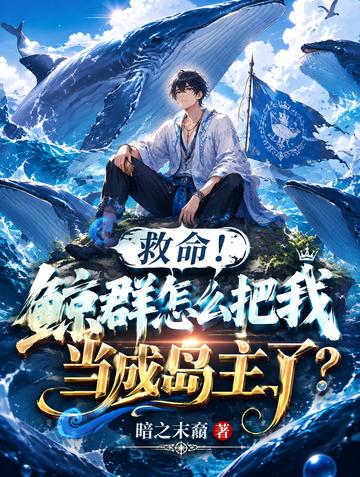 Help! Why Does the Whale Pod Think I’m the Island’s Chief?
 Card Game: From Rusty Nail to Mechanical God
The detail control is well received. The protagonist is the kind of person who has to register everything. The detail control is also more realistic, but it is very interesting. It is shallow, but it is beautiful. Those who like farming can come in and have a look. Those who like marine life can also come in and have a look. I will give it five stars after it is finished. I have no idea. I like the subject matter and the plot, but the way it is written is as if the protagonist is a prisoner. So far, there is no improvement in the last one. If you write too detailed, it will be watery, or you may write too detailed, but your writing is not very good. It is like a data log. Let's stay for a while and see if there is any improvement in the future. Some people say that there are similar books. If there are similar books, I will go and check them out. The two sides have been leveled, and it's getting worse and worse. Why is it still like this? I suffered a loss after reading it, I suffered a loss, I suffered a loss, I suffered a loss for almost 30 to 50 pieces. The author is a genius. The author really didn't discover it. Has the reading dropped to single digits?
How should I put it? I feel that there is a lot of data recorded, which is very consistent with real life, but I feel a little anxious when I look at it.
There is no system or obvious cheats. It is really like a daily life. The author's writing is very good. The protagonist is very rational, serious and sober. It has live broadcast elements but has a very bottom line.
The writing is smooth and the protagonist is sane.