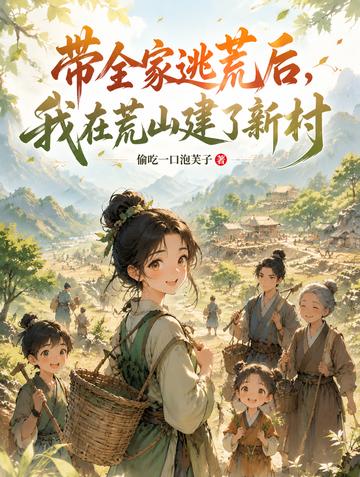
Jiang Guizhi died in the last winter of the famine.
In her previous life, she listened to her uncle’s family and stayed in the village to wait for relief. Instead, the granary was looted, the wells dried up, her parents starved to death, her younger siblings were separated from her, and she was sold for two sacks of sorghum.
When she opened her eyes again, she had returned to one month before the drought began.
One night, she dreamed that her late grandmother was sitting by the stove, stitching the sole of a shoe as she said, “Thirty li southwest, there’s an abandoned kiln cave with a spring behind it. Silver dollars your grandfather hid are buried beneath the old locust tree on North Mountain. On the eighth day of the seventh month, the main road will be cut off.”
When she woke, she found that the pattern of stitches from her dream had appeared on her own shoe sole, forming a map.
She didn’t hesitate. First, she forced her parents to split from the extended family, then used the weaving, pickling, and tofu-making skills she had learned in her previous life to trade for food and salt.
The villagers laughed at her and called her crazy, saying the Jiang family girl had been so frightened by hunger that she’d lost her mind.
But a month later, the drought worsened, and the riverbed ran dry.
By then, Jiang Guizhi was already pushing a cart with her parents, younger siblings, and the villagers willing to trust her, heading toward the way to survival her grandmother had shown her in the dream.
There were refugees, bandits, and fake relief teams along the road.
She relied on dreams to warn her of danger, on her skills to barter for travel permits, and on hidden silver to buy seeds.
In the end, she dug up a spring beside an abandoned kiln in the barren hills and settled her family there to reclaim the land.
When her uncle’s family came chasing after her, disheveled and begging for shelter, Jiang Guizhi stood at the entrance to the new village. “You can come in, but first you’ll have to repay the debt of the lives my family lost.”
 I Went Down the Mountain at Three, and My Dad Is the Alliance's Most Wanted Criminal
 Marrying an Island Garrison Officer in the 1960s, I Grow Medicinal Herbs on the Island
 A Substitute Bride on a Snowy Night: The Commander Discovers I Can Lead a Wolf Pack
 Reborn in the 1970s: I Head to the Countryside with Billions in Supplies!
Are you writing about the Republic of China period or ancient times?? Did you invent the ocean and start using it in ancient times?