[Personal interpretation + collecting them all + daily life + no aptitude + no levels]
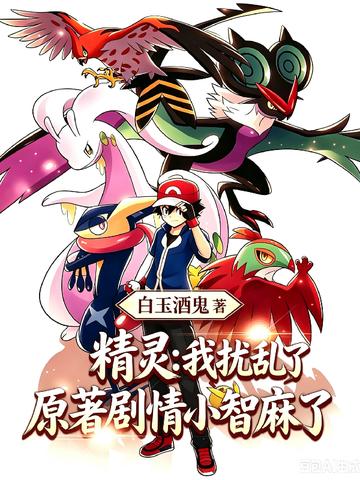
Xia Jie transmigrates to the Pokemon world. After becoming a Trainer, he meets Xiaozhi and travels with him.
From that point on, the story changes beyond recognition. Xiaozhi gains a new companion, and a new rival.
Starting with a Butterfree, Xia Jie catches all kinds of Pokemon he likes. They grow together and form lasting bonds.
This novel is also known as Pokemon: My Happy Co-op Adventures with Xiaozhi!, Xiaozhi: Why Are My Pokemon Different Now?!, and Team Rocket: Why Aren't We Getting Any Screen Time?!
At first glance, it seems that it was hand-made, otherwise it would have been in the last two chapters, and I would have entered the house long ago.
It's really good-looking. The author doesn't stick to the original work, the plot is highly innovative, and he can also write descriptions that restore the characters' personalities. It can be said that he is very careful.
The only drawback is that the combat power in this book is a bit vague. It can be seen that it is an animated version of the battle. However, I personally think that the animated version is not suitable for the novel narrative.
It is recommended that the author use animation mode to deal with low-intensity battles and elves in the early stage, and specially set levels to divide the middle and high-level combat power.
For example, the elf leader at the starting point does a good job of distinguishing between low-end games and high-end games. Among the bosses, the early and middle stages are almost based on the animation style. The difference is that the animation levels are blurred, while the bosses are clearly divided.
As for the mid-term plot, a genius idea appeared in that book - the kingdom guardian level among the elf levels. The combat power of the book began to explode. The combat power of the broken level was divided, and it almost had the power of a single elf to destroy a city. Finally, the protagonist returned to the original world and found that this level is called the king level!
It can be said to be the most logical book. After all, it makes sense no matter how you think about it. For an urban elf novel that only started a few hundred years ago, it is normal for the upper limit to be King-level. Only the knowledge system of the original Pokémon world that has been developed for countless years can there be champions and even battle legends.
Of course, to be honest, this is not to attract disfavor, but to really suggest that the author should consider distinguishing between low-end games and mid-to-high-end games. This is for logical reasons.
If you think about it carefully, the reaction speed of high-level elves is impossible for most trainers to keep up with. They can explode at several times the speed of sound at every turn, and your eyes may not be able to see clearly.
The higher-end games in the later stages are basically about cultivating the independent fighting ability of elves. At most, they have superpowers with others, or the trainers themselves are Pokémon with ordinary attributes. When the level is high, although the combat ability is not good, they can keep up with the rhythm.
The writing is okay, as long as there are no monsters in the subsequent plot, it can still achieve good results if it is so plain.
At first glance, it seems that it was hand-made, otherwise it would have been in the last two chapters, and I would have entered the house long ago. It's really good-looking. The author doesn't stick to the original work, the plot is highly innovative, and he can also write descriptions that restore the characters' personalities. It can be said that he is very careful. The only drawback is that the combat power in this book is a bit vague. It can be seen that it is an animated version of the battle. However, I personally think that the animated version is not suitable for the novel narrative. It is recommended that the author use animation mode to deal with low-intensity battles and elves in the early stage, and specially set levels to divide the middle and high-level combat power. For example, the elf leader at the starting point does a good job of distinguishing between low-end games and high-end games. Among the bosses, the early and middle stages are almost based on the animation style. The difference is that the animation levels are blurred, while the bosses are clearly divided. As for the mid-term plot, a genius idea appeared in that book - the kingdom guardian level among the elf levels. The combat power of the book began to explode. The combat power of the broken level was divided, and it almost had the power of a single elf to destroy a city. Finally, the protagonist returned to the original world and found that this level is called the king level! It can be said to be the most logical book. After all, it makes sense no matter how you think about it. For an urban elf novel that only started a few hundred years ago, it is normal for the upper limit to be King-level. Only the knowledge system of the original Pokémon world that has been developed for countless years can there be champions and even battle legends. Of course, to be honest, this is not to attract disfavor, but to really suggest that the author should consider distinguishing between low-end games and mid-to-high-end games. This is for logical reasons. If you think about it carefully, the reaction speed of high-level elves is impossible for most trainers to keep up with. They can explode at several times the speed of sound at every turn, and your eyes may not be able to see clearly. The higher-end games in the later stages are basically about cultivating the independent fighting ability of elves. At most, they have superpowers with others, or the trainers themselves are Pokémon with ordinary attributes. When the level is high, although the combat ability is not good, they can keep up with the rhythm.
The writing is okay, as long as there are no monsters in the subsequent plot, it can still achieve good results if it is so plain.