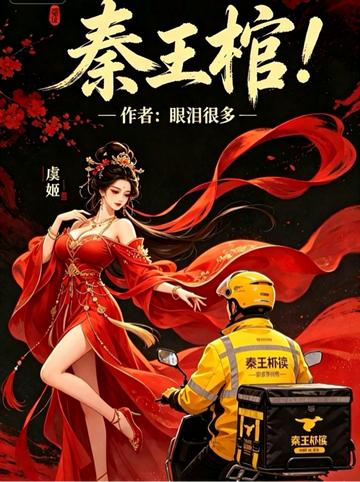
The thing Qin Feng regrets most in his life is accepting that delivery order on the stormy night.
Not because of a bad review, and not because the customer was difficult, but because the delivery address read:
“Qin Shi Huang’s Mausoleum, western side hall, beside the third coffin.”
The note was highlighted in bold red: Extra chili, no cilantro, two portions of rice, bad review if late.
“What the heck?” Qin Feng stared at his phone, nearly spitting the soup from his pickled-cabbage instant noodles onto the screen protector.
Qin Feng, male, twenty-two years old, delivery rider for three years and four months. His positive rating was 98.7 percent, with three bad reviews: two customers thought he wasn’t handsome enough, and one said he was too blunt.
As he put it: “I don’t rely on my looks to deliver food. I rely on speed. You place an order, I deliver it. No feelings involved. That’s called being professional.”
But there was no way he could handle this order “professionally.”
Qin Shi Huang’s Mausoleum lies at the northern foot of Mount Li. It is the tomb of the first emperor in Chinese history, said to contain countless bronze mechanisms, rivers of mercury, and an army of thousands of terracotta soldiers.
More importantly, the mausoleum has never truly been opened.
Since the founding of the People’s Republic, archaeological teams had tried to excavate it three times.
On the first attempt, six archaeologists went down into the tomb passage. Three came back up, and three went mad. All three shared the same symptoms: they kowtowed whenever they saw anyone and kept chanting, “Long live His Majesty, ten thousand times ten thousand years!”
On the second attempt, every excavator broke down three hundred meters from the tomb entrance.
On the third, an old professor went mad…