In her whole life, she saw him only nine times.
The first time, he was a young general walking toward her against the light at a corner of Weiyang Palace.
The last time, he was the peerless hero in a coffin, never to awaken again.
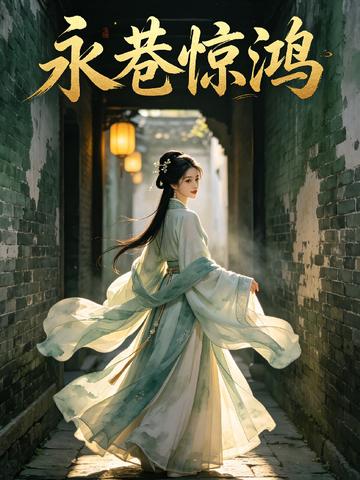
A Yao entered the palace at fourteen as a maid assigned to sweep and scrub. Day after day, she wiped the green bricks in the humblest corner of the Yongxiang. She thought her life would be like those tiles she could never finish cleaning: gray and dull, with no end in sight.
One autumn day in the sixth year of Yuanshuo, she collided with a young man at a corner of Weiyang Palace.
He wore a dark robe and a jade-inlaid belt. He was like a sword freshly tempered in fire. The table fell to the ground. She knelt to apologize, but he merely crouched down, set it back in her arms, and said:
“You’ve cleaned it well.”
He asked, “What’s your name?”
At that moment, sixteen-year-old A Yao didn’t yet know she would say that name for the rest of her life.
He was Huo Qubing. At eighteen, he was made Marquis of Champion; at twenty-one, he became a cavalry general. With eight hundred horsemen, he rode deep into the desert. With fifty thousand cavalrymen, he reached Langjuxu. He was the sharpest sword of the Han Dynasty, the emperor’s favorite, and the star the whole city of Chang’an looked up to.
And she was merely a lowly palace maid, one whose name was not even meant to be remembered.
The warmth of his palm when he gave her a fox-fur cloak on a snowy night burned through her whole life. The flowers from Mount Yanzhi withered, but she still treasured them, keeping them beneath her pillow. He placed his riding crop in her hands and said, “Wait for me to come back for it.” Then he rode north beyond the frontier and never returned.
At twenty-four, the cavalry general passed away.
She cracked her forehead against the ground before his memorial, then buried the fox-fur cloak, the dried flowers, and the riding crop beneath the old locust tree,