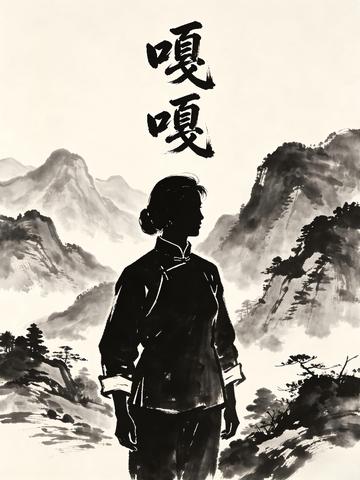
Part One: Keeping the Lamp Beneath a Lonely Eave
This part chronicles the years from 1924 to 1978. Over those fifty-four years, Gaga was born in a drafty earthen house in a river bend in eastern Sichuan. Warlords' armies marched back and forth, her parents died in an epidemic, and she begged in the streets with her younger siblings. At eleven, she sold herself into a landlord's household as a child bride. Fourteen years of endless hard labor and abuse behind those high walls shaped her into a woman who would remain stoic and silent all her life. Land reform confiscated the family's property, the Cultural Revolution shattered its clan, and amid class oppression and material scarcity, she gave birth to five children in succession. In 1970, her husband died suddenly by electrocution while saving someone. She was left a widow, and disaster soon struck the family: they were penniless, with no one to help. Gritting her teeth, she used her frail body to haul manure and plow fields, risking her life for food, and somehow raised all five children through famine and upheaval.
Her life was like the cogon grass on the slopes by the river bend: battered again and again by the winds of turmoil and the rains of history, burned by fire, trampled by cattle, and crushed by snow, yet always holding fast to the earth with its roots. There were no earth-shaking cries, and nobody cared whether she lived or died. All the chaos of war and upheaval, all the changes that turned the world upside down, played out in the daily routines of eating, working, and supporting her family. With the simple resilience of a woman at the bottom of society, she weathered half a century of turbulent times and held together a home on the verge of falling apart.
This is the story of a woman who gritted her teeth and kept on living. It begins with a cry no one heard, and ends with her finally waiting out the winter and welcoming the spring breeze.