The full-length historical novel "Fire Lotus" takes the process of the unification of the Mongolian and Yuan Empire as the grand historical background, takes Soba Rangmu's suffering love and life pursuit as the main line, and unfolds the narrative around key historical nodes such as the fall of Xixia, the fall of the Jin Kingdom, the Liangzhou Alliance, and the official inclusion of Tibet into the territory of the motherland. The story follows Soba Rangmu's search for the lost sheepskin scriptures of the old Sakya King in the Hexi Corridor, covering Xiacheng, Huizhou, Xiliang, Kangzang and other places; by depicting the protagonist's three ups and downs of love experience in Xiacheng, Huizhou City and other places, it profoundly reveals the deep suffering that the war has brought to people of all ethnic groups. As the Mongolian cavalry destroyed Xixia and began to penetrate deeper into Tibet, tribal disputes, sectarian games, personal love and hate, and family grievances were deeply intertwined. The plot advanced layer by layer and conflicts continued to intensify. The climax of the story focused on the landmark historical event of the Liangzhou League. Individual fate and family entanglements faced the ultimate test in the choice between national unity and national justice, vividly restoring the historical picture of the unification of the Mongolian and Yuan Dynasties. In the end, the dust has settled, the grudges of the past have been resolved with the tide of time, and the civilizations of Mongolia and Tibet have blended and coexisted. The whole book focuses on shaping a number of historical figures with distinctive personalities such as Sobrangmu, Kuaduan, and Saban. Their individual destiny reflects the situation of the times, and it has both delicate literary appeal and rich historical heritage.
Reader comments
The novel "Fire Lotus" can be said to be a masterpiece in the Liangzhou context! Taking the search for the Parchment Sutra as a clue, the three suffering love stories of Soba Rangmu as the main theme, and the Sakya Temple and Vajra Haim Temple as the soul, the epic of plateau faith is drawn, with perseverance seen in suffering, and the text is hot and warm. This is also a long historical volume that is reborn from the ashes! Focusing on Sopa Rangmu's practice and perseverance, Tibetan customs and human nature are deeply integrated, which is shocking to read. This kind of spiritual echo that spans thousands of years! Human nature is illuminated through historical figures. The words are powerful, the story is warm, and the literary tension is fully demonstrated. It is also a historical novel with a soul! Jia Shuanglin digs deep into Tibetan culture.
I had a lot of feelings while reading the long historical novel "Fire Lotus":
From the perspective of focusing on the suspense of the story: First, the fate of family and country is intertwined with the obsession of the world, and the plot is ups and downs and exciting. The second is based on the past in the West. Destiny is entangled in war-love-religion. It is spread out layer by layer and full of suspense. You can't bear to put it down after reading the book.
From the perspective of focusing on cultural heritage: First, it integrates the folk customs of the Western Regions, Silk Road history, and religious culture into one book. The writing style is simple and thick. If you understand Fire Lotus, you will understand the thousand-year-old cultural context of the West. Second, it deeply explores the humanities, customs, beliefs, and history of Liangzhou and Tibet, which is a rare regional historical literature.
This novel seemed highly literary at the beginning, and it was a culturally rich and engaging work. I began to listen carefully.
The love writing in this work completely breaks away from the clichéd paradigm of popular historical novels that are romantic and divorced from reality. Every emotional bond, every separation of love and hate, every joy and sorrow is firmly anchored in the true historical context of the Mongol extermination of the Xia Dynasty, the bloody battle in Huizhou, the tribal disputes in Kangzang, and the Liangzhou Alliance. , Uses individual love to reflect the vicissitudes of the times, and uses the sorrows and joys of the world to illustrate the righteousness of the family and the country, forming a narrative with clear main lines, full group portraits, tragic undertones, and lofty themes. It not only gives the historical narrative an emotional temperature that directly touches people's hearts, but also allows the love narrative to carry a historical weight and spiritual connotation that transcends the personal relationship between children. The work takes the life of the heroine Soba Rangmu as the emotional core, and unfolds three tragic love stories that progress layer by layer, become tragic step by step, and are deeply bound to historical changes. Every relationship corresponds to the turmoil of an era, and every parting stems from the torrent of troubled times. There is no love born out of thin air, and there is no perfection divorced from reality. It completely presents the tragic fate of women's love and destiny in troubled times.
After listening to the book one after another, I felt that the plot of this novel was not only gripping, but also the language was good, which made people feel like they had a poetic mood when reading it.
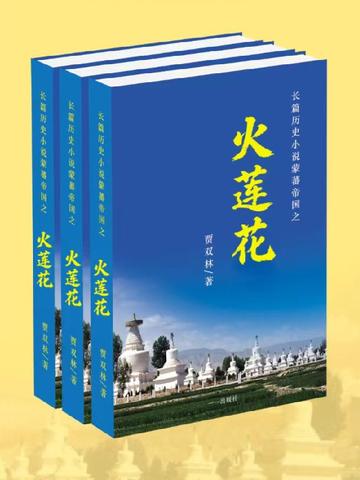


The novel "Fire Lotus" can be said to be a masterpiece in the Liangzhou context! Taking the search for the Parchment Sutra as a clue, the three suffering love stories of Soba Rangmu as the main theme, and the Sakya Temple and Vajra Haim Temple as the soul, the epic of plateau faith is drawn, with perseverance seen in suffering, and the text is hot and warm. This is also a long historical volume that is reborn from the ashes! Focusing on Sopa Rangmu's practice and perseverance, Tibetan customs and human nature are deeply integrated, which is shocking to read. This kind of spiritual echo that spans thousands of years! Human nature is illuminated through historical figures. The words are powerful, the story is warm, and the literary tension is fully demonstrated. It is also a historical novel with a soul! Jia Shuanglin digs deep into Tibetan culture. I had a lot of feelings while reading the long historical novel "Fire Lotus": From the perspective of focusing on the suspense of the story: First, the fate of family and country is intertwined with the obsession of the world, and the plot is ups and downs and exciting. The second is based on the past in the West. Destiny is entangled in war-love-religion. It is spread out layer by layer and full of suspense. You can't bear to put it down after reading the book. From the perspective of focusing on cultural heritage: First, it integrates the folk customs of the Western Regions, Silk Road history, and religious culture into one book. The writing style is simple and thick. If you understand Fire Lotus, you will understand the thousand-year-old cultural context of the West. Second, it deeply explores the humanities, customs, beliefs, and history of Liangzhou and Tibet, which is a rare regional historical literature.
This novel seemed highly literary at the beginning, and it was a culturally rich and engaging work. I began to listen carefully. The love writing in this work completely breaks away from the clichéd paradigm of popular historical novels that are romantic and divorced from reality. Every emotional bond, every separation of love and hate, every joy and sorrow is firmly anchored in the true historical context of the Mongol extermination of the Xia Dynasty, the bloody battle in Huizhou, the tribal disputes in Kangzang, and the Liangzhou Alliance. , Uses individual love to reflect the vicissitudes of the times, and uses the sorrows and joys of the world to illustrate the righteousness of the family and the country, forming a narrative with clear main lines, full group portraits, tragic undertones, and lofty themes. It not only gives the historical narrative an emotional temperature that directly touches people's hearts, but also allows the love narrative to carry a historical weight and spiritual connotation that transcends the personal relationship between children. The work takes the life of the heroine Soba Rangmu as the emotional core, and unfolds three tragic love stories that progress layer by layer, become tragic step by step, and are deeply bound to historical changes. Every relationship corresponds to the turmoil of an era, and every parting stems from the torrent of troubled times. There is no love born out of thin air, and there is no perfection divorced from reality. It completely presents the tragic fate of women's love and destiny in troubled times. After listening to the book one after another, I felt that the plot of this novel was not only gripping, but also the language was good, which made people feel like they had a poetic mood when reading it.