An ideological epic that uses institutions to reshape China
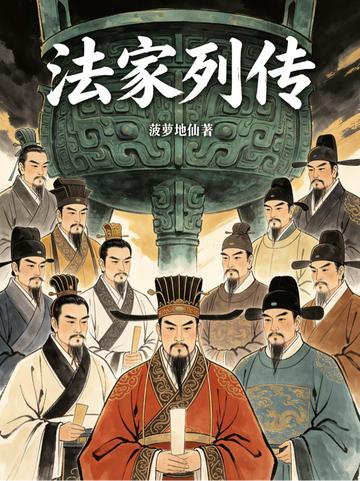
What is Legalism? It's not harsh punishments, it's not power and conspiracy. Its essence is: establishing predictable order with clear rules.
From Guan Zhong's "Three Kingdoms and Five Their Desires" established the administrative grid, to Shang Yang's military merit and nobility system to break the hereditary; from Han Fei, Shu, and power to the unification of China, to Li Si's county system to unify China; from Sang Hongyang's salt and iron monopoly to create national economic management Preliminary, to Yang Yan's two tax laws to complete the tax revolution; from Wang Anshi's courageous reform and "no fear of changes in nature" to Zhang Juzheng's peak performance after passing the law - every prosperity after troubled times has Legalist logic behind it.
This book selects more than a dozen core figures in the Legalist genealogy and writes about their lives, systems and destiny in the style of historical novels:
Guan Zhong, Zi Chan, Li Kui, Wu Qi, Shang Yang, Shen Buhai, Shen Dao, King Zhao Wuling, Han Fei, Li Si, Wang Meng, Wang Anshi, Zhang Juzheng, Yongzheng...
Among them are theorists and practitioners; there are chief engineers of the empire and traders in troubled times; there are reformers who have sacrificed their lives, and there are monarchs who rule the country with an iron fist. Everyone has contributed answers to "how to organize a large-scale complex society" at a critical juncture.
These answers have shaped the institutional genes of Chinese civilization.
Dedicated to everyone who believes in the power of rules
Dedicated to this era of great power that requires order and efficiency


Very beautiful, super beautiful