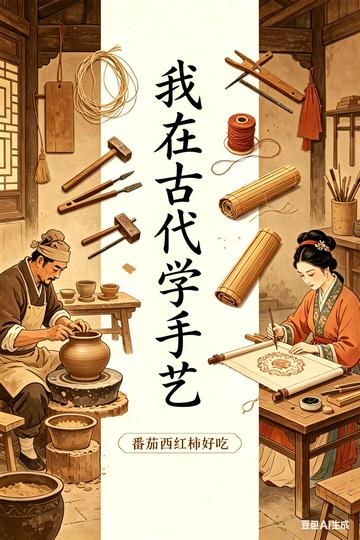
When Fang Yan was twenty-eight, his company laid him off. That same day, his landlord demanded the rent, his girlfriend deleted him, and his account balance was 2,136 yuan. With nowhere else to turn, he opened the sandalwood box his grandfather had left behind. Inside were only a bronze tally, a sharpening stone, and a slip of paper. It read: Hold it tight and think of the dynasty you want to visit. He gripped it. The thought in his mind was: Things from the Qin Dynasty are valuable.
From a wounded-soldier camp at the end of the Qin Dynasty to an office of documents during the Three Kingdoms, from the Stone Cliff at Caishiji in the Tang Dynasty to a construction site in Yancheng during the Southern Song, Fang Yan traveled across two thousand years and met a group of people whose names never appeared in the history books: an old scout who risked his life to chart a tunnel, the clerk Chen Ping who burned to death in a grain cart, Zhao Desheng, who ground ink for Li Bai for ten years, Chen Da, who spent his whole life measuring trenches with a crooked ruler, and Old Yu, who repaired books at the Liuli Factory for forty-one years. They put sharpening stones, bamboo slips, rulers, and tape into Fang Yan’s hands and said, “As long as the stone remains, so do we.”
Fang Yan brought the objects back one by one and documented them one by one. From the “Museum of the Nameless” to the “Craftsmanship Training Center,” from being driven into a corner by life to shouldering the weight of two thousand years, he found where dedication truly belonged.
This isn’t a time-travel novel. It’s the story of one person touching, with his own hands, the hands of someone from two thousand years ago. From roots to tip, no step is skipped.