After transmigrating into Zhu Qiyu following the Tumu Crisis, he faces a nightmare from the start.
His elder brother has been captured, the army destroyed, the capital left undefended, and a powerful enemy is at the gates.
The Empress Dowager wants him to take the blame, while the civil officials want to make him their puppet.
But he will claim the throne with full legitimacy, beyond anyone’s control!
During the Meridian Gate massacre, he turns the tables and imprisons the “loyal ministers,” raising the banner of law and order.
When the officials urge him to take the throne, he invites his uncle, Prince Xiang, to step forward instead, retreating to advance and stirring up a storm.
When the Oirat cavalry comes pounding at the gates, he is no longer the puppet emperor the civil officials pushed onto the throne.
He is the Jingtai Emperor, supported by the imperial clan, defended to the death by the nobles, and enthroned with unquestioned legitimacy.
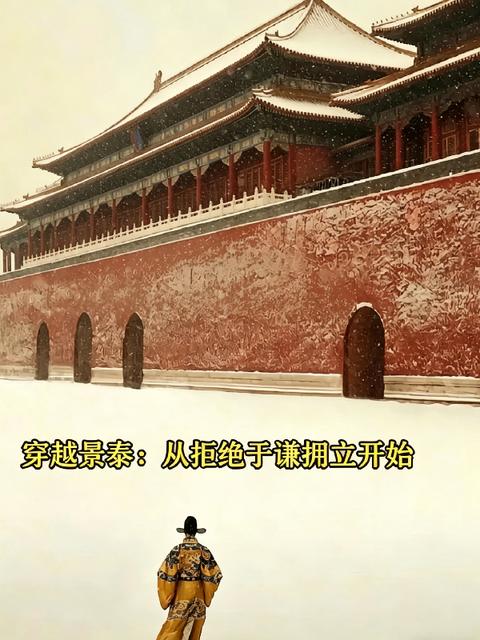



This is written with a lot of humanity, and the handling of events is very delicate... Other characters, like Zhu Qiyu who transmigrated and directly beheaded Zhu Qizhen in the ancestral temple... I want to say that he was truly jeopardizing his own position... It's not that it couldn't be handled, but rather that decisive follow-up action was needed.
I've read all 100 chapters carefully. The author's writing is very logical and well-supported, which suits my taste perfectly. Previous books I've read mostly lavishly praised Yu Qian's achievements, but this book offers insightful perspectives on some of Yu Qian's actions, giving me a different view of him.
So far, the pacing is tight, the protagonist's goals are clear, and he progresses step by step logically, making it a satisfying read. I finished it in one go and highly recommend it! I'm also curious about how the author plans the protagonist's ultimate goal—will he become a great emperor or begin capitalist colonization? What about the Little Ice Age? These natural disasters are too difficult to handle; even with today's productivity, they would cause significant disruption.
It's well-written, even more impeccable than the historical Zhu Qiyu, making the author a master of time travel. However, this Zhu Qiyu story is a beginner's script; the key to a time traveler's success is to have many good sons. As long as the sons grow up safely, the legitimacy cannot be changed back to Zhu Qizhen's lineage.
Watching it all in one go is great. Those who want to see the emperor show off his skills should just quit. This guy was a saint, working for Zhu Qizhen's lineage for nothing, and finally returning power to Zhu Jianshen.
Well written. After reading so many time-travel stories about Emperor Chongzhen, this is a refreshing change. Keep up the good work, author!
Well written; people are multifaceted. History is a mix of truth and fiction; any guess or writing style can be plausible.
Great idea, great concept, good pacing, and a smooth reading experience. The author also has a broad perspective; seeing the two brothers' "Golden Alliance" was quite impressive, hence this comment. I hope you all will give it a try and give it a thumbs up!
Overall, it's a well-made work with heart. Its flaw is that it idealizes the Oirat students; someone educated by emperors from a young age, even if not inherently bad, can't necessarily be a good person.
The protagonist of this book has a grand vision, which is excellent. Of course, the main reason is that the author has brought a fresh perspective to the story of Zhu Qiyu and Zhu Qizhen.