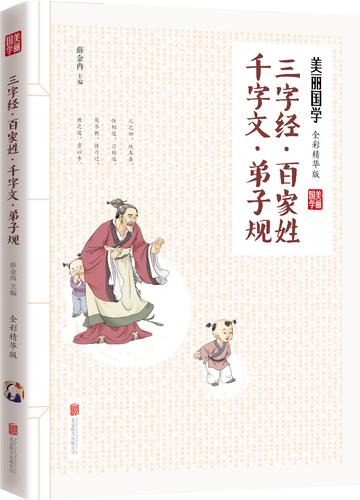
The "Three Character Classic" has rhymed three to three sentences, is concise and easy to remember, catchy and rich in content. It covers the development of Chinese civilization over five thousand years, changes in dynasties, interpersonal communication, history, geography, astronomy, ethics and morals, ideals and beliefs, etc.
The four-character rhyme of "Hundred Family Surnames" is easy to read and can be appreciated by both refined and popular people. The origin of the surnames and the origin of the ancestors reflect the Chinese people's strong sense of identification with ancestry and blood ties. "The Thousand-Character Essay" is a short and wonderful article, cleverly constructed and full of meaning; Tian
Literature, geography, agriculture, meteorology, minerals, history, and cultural contents are all covered. Its beautiful writing style and gorgeous rhetoric have been praised throughout the ages. "Disciple Regulations" talks about the school education and family education of "disciples"
The norms and contents of family education are based on the "The Analects of Confucius·Xue Er Pian" "Disciples should be filial to others, to be younger brothers when they go out, to be sincere and trustworthy, to love others universally, to be kind and to be kind, and to have spare capacity in action, to learn literature" as the center, and specifically lists the disciples' behavior at home, when going out, and
The rules and regulations that should be abided by when dealing with people, things, and learning are essential classics in traditional Chinese studies for enlightenment and raising children, educating children, cultivating moral character, and developing a strong family tradition.