The day I transmigrated, people were falling from the sky.
One flash of white light for each person: all 138 transmigrators were dropped into the same ancient world at once.
And I was the last one.
Of the 137 who came before me, some died the moment they landed, some were hunted down despite having Systems, and some thought they were the chosen protagonists, only to fail to survive until the next day.
I should have died too.
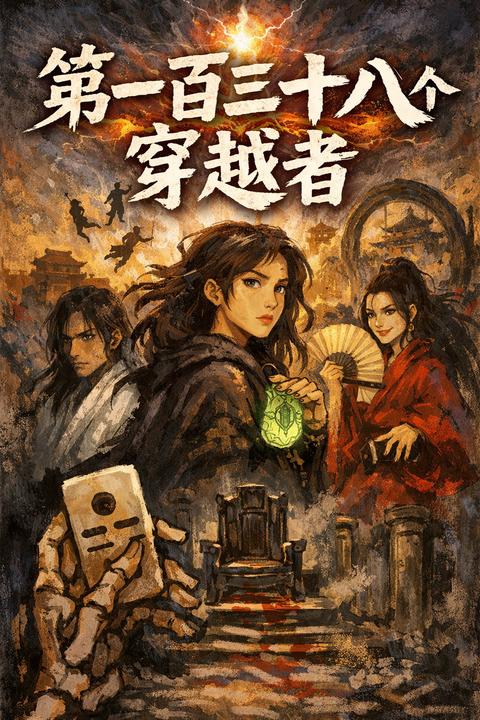
Until I found a jade pendant in a mass grave, one that should never have belonged to me.
When the System started up, it gave me just one instruction:
Assist the 138th transmigrator in ascending the throne and becoming emperor.
But there was a problem: who exactly was the real 138th transmigrator?
The modern man the domino first pointed to?
The red-clad girl who smiled as she snatched lives away?
The gentle, calculating candidate who advanced one careful step at a time?
Or Xie Heng, who should have died long ago, yet stubbornly refused to leave the game?
Only later did I learn that the so-called “138th” was never a person at all.
It was a “position” that would determine which way the world collapsed.
And I wasn’t the protagonist.
I was the one everyone had their eyes on: the holder of the tile.
They wanted to use me, force me to choose, and seize the right to make the first selection from my hands.
But what if I refused to give them what they wanted?
Then I’d smash the game first.
I’d overturn the candidates, the Systems, the old gates, the truth, and every self-proclaimed destiny along with them.
In this game, I don’t believe in protagonists.
I only believe in whoever survives to the end.


What moved me most about this book, "The 138th Time Traveler," wasn't its grand scale, but rather the precise question it posed at the end: should people be written as a "standard answer"? At first glance, it resembles a suspenseful ghost story; the middle section delves into the interplay of rules; and the further you go, the more you realize that the book's true brilliance lies not in its plot…