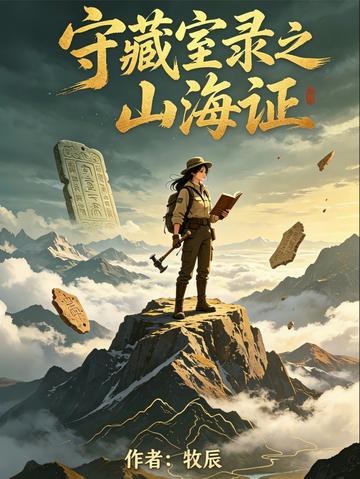
Before my grandfather died, he left behind a cloth bundle. Inside was a manuscript. On the title page, he had written: “The Classic of Mountains and Seas is not mythology. It is a system of real geographic coordinates. I found the evidence, but I didn’t have time to finish writing it.”
Shen Yun is a doctor of archaeology. She didn’t believe him.
But when she turned to the first page, she read: “Mount Zhaoyao, now Mount Huping in Shimen County, Hunan.” She compared the mountain’s contours with satellite maps. They matched exactly.
The second page read: “Zhuyu, shaped like a leek, with blue flowers. Eating it staves off hunger.” She checked a botanical reference and found broadleaf Chinese chives. Carbonized seeds dating back four thousand years had been unearthed at the Chengtoushan site.
The third page read: “Dusheng, shaped like a macaque with white ears, crawls but can run like a human.” She recalled the Asian elephant fossils at the Xianren Cave site. Their ears did indeed have white patches along the edges.
Every page said the same thing: every word in the ancient texts was true.
Her advisor urged her to give up. “Your grandfather became obsessed in his later years.” Shen Yun didn’t argue. She packed her things and set off alone.
From Mount Huping to Mount Taifu, from Mount Lu to Mount Hua. At Mount Heli, she encountered a snow leopard, known in the ancient texts as “Lu Wu.” In the Taihang Mountains, she found carbonized millet grains dating back eight thousand years. Along an ancient road in the Hexi Corridor, she picked up scraps of jade left behind four thousand years ago.
She crossed more than a hundred mountains and verified over three hundred records. Every step proved that her grandfather hadn’t been obsessed. It was those who refused to believe their ancestors who were obsessed.
This is no book of myths. It is a record of every inch of land in China that its ancient people walked, lived on, mined, and worshipped.
It is one archaeology student’s journey to trace the origins of the past, and a chance to rediscover a book misunderstood for three thousand years.