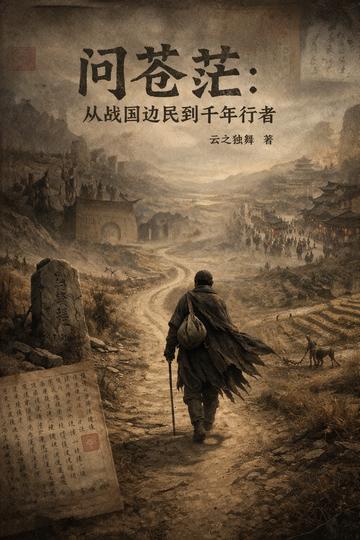
A border dweller from the Korean state of Han, casually named “Bei” by a landlord, carries an old stone tablet from the Warring States era all the way to the Ming dynasty, asking only whether there is any justice in this world.
At the end of the Warring States era, in Niqiu Village on Han’s border, a boy who herds cattle for a landlord is casually named “Bei.” His father dies from forced labor; his mother dies in childbirth. He should have lived like dust and scattered like dust.
But he is afflicted with a strange condition: whenever he sees someone suffering, he can no longer pretend not to notice.
From Qin’s conquest of the Six States, through the Han, Tang, Song, and Ming dynasties; from refugees, physicians, artisans, and servants to scholars, cultivators, and the rise and fall of dynasties, Fan Bei carries an old stone tablet through more than a thousand years. He has no destiny to fulfill, no sect willing to take him under its wing, and he is no cleverer than anyone else. He simply refuses to believe that the world has to be this way.
This is the story of an ordinary man crossing the long span of human history, asking the vast world for answers.