She waited for 170 years, wearing a bright red wedding gown as she sat on the roof of the City God Temple, facing north. She was waiting to hear the rest of a sentence.
She was locked in a funeral home and beaten to death with a stick because she was ill. Among her belongings was a letter: “Xiuying, your mother and I will come get you in a few days.”
When she died, she was clutching half a steamed bun. She was four years old, starved to death in a ruined temple. Her father came to identify the body, took one look, and said, “That’s not my son.”
She was abducted from the mountains of Hunan, held captive for eight years, gave birth to two children, had her skull smashed with a hammer, and was thrown into a dry well. Her name was Lin Xiaohe. Shen Yanzhou carried her ashes for eight hundred li to take her home.
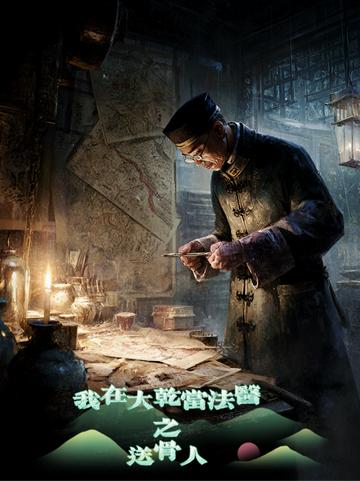
He was a coroner. He examined their bodies, sought justice for them, and spoke their final words. His assistant was a female ghost, his navigation device was a phone with a shattered screen, and his weapon was a scalpel.
He traveled through the mountains of Yongzhou, beneath the locust trees of Tanzhou, to the funeral homes of Ezhou, the City God Temple of Xinyang Prefecture, and the basements of the capital. He sent 184 dead souls home. He remembered every one of their names.
There are ghosts in this story, but they make more sense than the living. There are tears, but they are warmer than laughter. And there is cabbage, the cheapest kind, which tastes especially good stewed with tofu.