Side Paths and Unorthodox Arts in Uncle Jiu's World: Full Synopsis
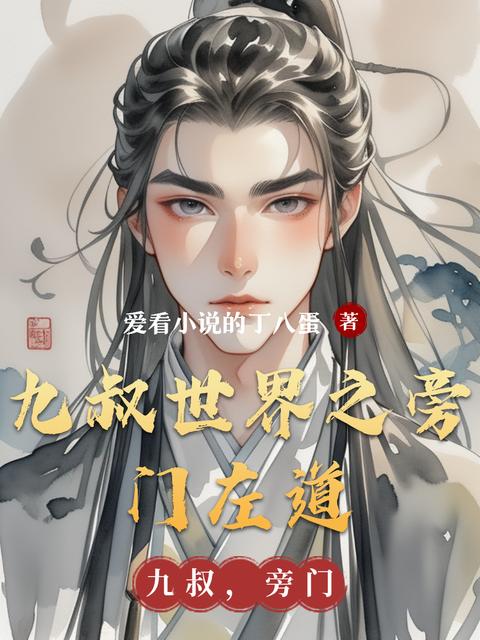
In the sixth year of the Republic of China, Ding Sichao, a researcher of supernatural films and television, is reborn as the son of a farming family in Renjia Town. Eager to join Uncle Jiu's school, he is rejected on the grounds that his “natural aptitude is too poor, and he's not destined to practice orthodox Taoist arts.” He is also tormented in every way by Qiusheng and Wencai.
At that moment, he understands: the righteous path of this world leaves no way forward for those without talent.
If the righteous path won't accept him, he'll make his own.
With no System and no golden finger, all he has are memories of his past life and an unwilling heart. Starting with a fragment of The Lu Ban Manual, he teaches himself curse arts, raises ghosts, and refines walking corpses, combining Nanyang black magic with Western exorcism. In these troubled times, he establishes the Corpse Path Sect, builds his foundation with corpse energy, and proves the Dao through corpse cores, gradually becoming the overlord of the supernatural world in eastern Guangdong.
This is a story about a villain. Ding Yue stops at nothing and shows no mercy, slaughtering villages to refine corpses and sacrificing thousands of people in blood rituals to break through. But he has one line he won't cross: he will never become a traitor. When the Japanese invade and Japanese onmyoji arrive with their army, he leads the Corpse Path Sect into battle and joins forces with the righteous sects to defend China.
This is a story of prejudice and turning the tables. Uncle Jiu's words, “Your natural aptitude is predetermined,” drove a master of the Corpse Path into being. When Ding Sichao stands before Uncle Jiu and proves through his strength that unorthodox arts can also reach the heavens, who was right and who was wrong?
From the chaos of Republican-era China to the turbulent world of Hong Kong, from the Nanyang black magic convention to proving the Dao in the immortal realm. Three thousand years of cultivation, all to prove one thing:
The Dao is neither righteous nor evil; it is people who differ in rank. Even unorthodox arts can lead to ascension.

I'd give myself five stars.