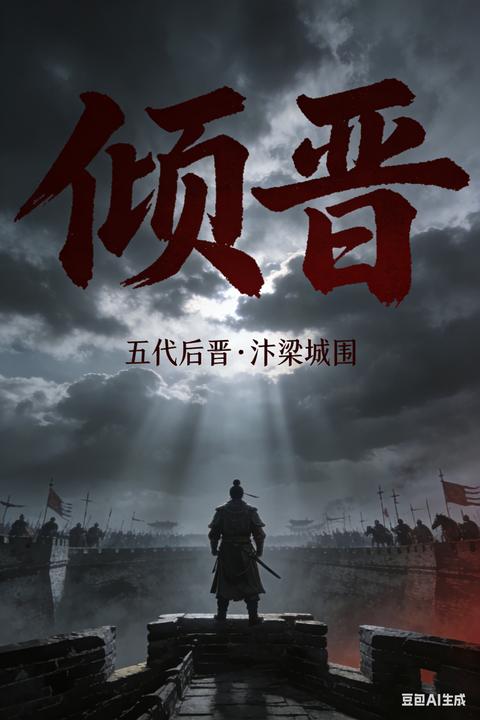
The protagonist, a modern office worker with a formal background in history, transmigrates as Shi Chonggui, the last emperor of the Later Jin. On the eve of the dynasty’s collapse, with Du Chongwei poised to rebel, the Khitans moving south, and the capital of Dongjing on the brink of falling, he is forced to take responsibility for saving a doomed city and a failing regime.
With AI constantly calculating the “optimal solution,” he successively puts the court in order, gathers grain and defends the city, settles the people and contains an epidemic, and implements the “Five Equalization Policy.” Yet as refugees flood the city, rumors spark purges, disease spreads, and generals quarrel amid grinding street battles, he must repeatedly revise his judgments.
But every effort is pushed back toward the historical outcome by errors in execution, resistance from the people, and the momentum of the times. Bianliang ultimately falls, Lady of Chu is killed, and the protagonist surrenders bare-chested. He is taken north by the Liao, then, after Yelü Deguang dies suddenly and Liu Zhiyuan founds the Han, history casts him back into a world utterly transformed.
The novel weaves a fictional historical text, The Account of Bianjing’s Fall to the Enemy, into the main story, adding a third narrative of the troubled era beyond the protagonist’s view. Through this doomed struggle, in which the course is rewritten even as the ending draws near, it explores the ideal state, ordinary people’s responsibility for history, and the limits of cooperation between humans and AI.