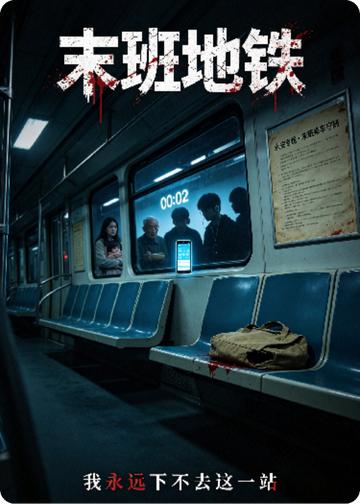
The Last Subway: I Can Never Get Off at This Stop
末班地铁:我永远下不去这一站
- Status
- Completed
- Length
- 17k Words
- Genre
- –
- Subgenre
- –
- Updated
- 7mo ago
- Source
- Fanqie
Synopsis
1Chapters
37Reads
1Listens
51Reads · all time
More by this author
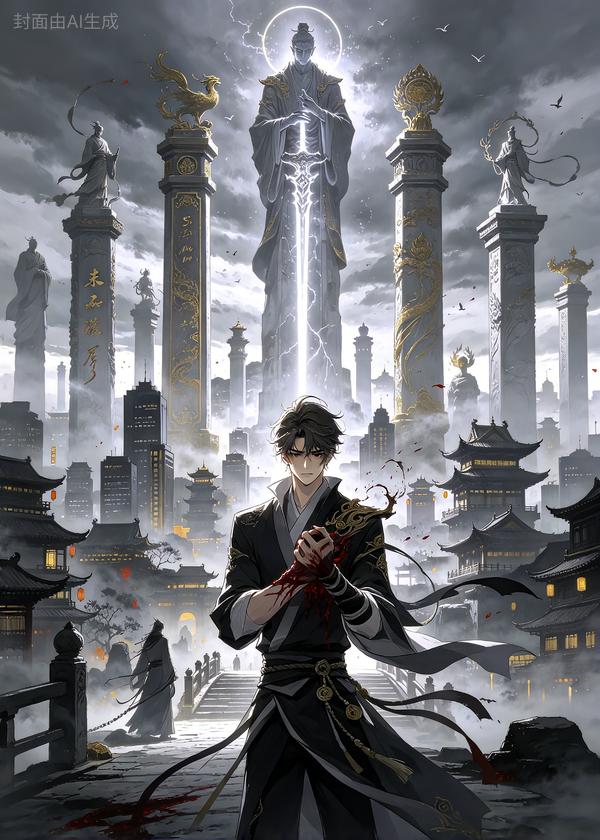 The Nineteenth Trial
 I Restored the Scumbag’s Cloud Drive, and Found 23 “Wives” Inside
 After the CEO Mistook Me for His White Moonlight's Double, I Exposed His Scam
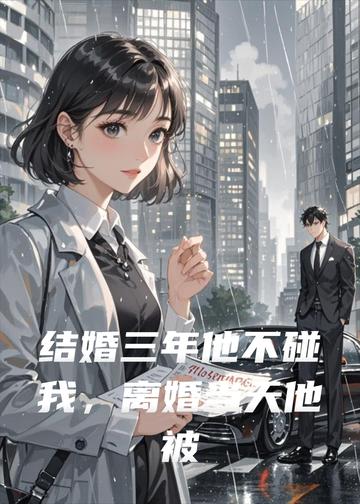 He Wouldn't Touch Me in Three Years of Marriage, Then He Was Rushed to the ICU on Our Divorce Day
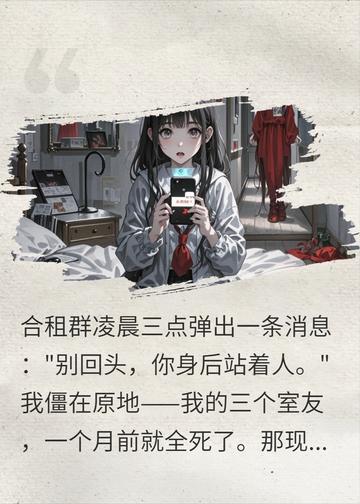 After My Three Roommates Died, Messages Kept Appearing in the Group Chat
 After Becoming a Death Row Inmate, I Solved Cases Through Autopsies and Went on a Killing Spree
 After I Died, They All Laughed
 The Seven-Day Ferry
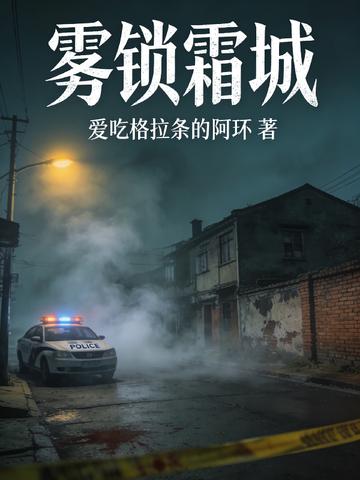 Frost City Shrouded in Mist
 Chen Zhu at Daybreak
 Upper Reaches of the Songhua River
 Her 101st Escape
In booklists 6

Top-Tier Reads for the Deeply Picky: No Masterpieces, No Entry
2kBooks301.5MViews16hUpdated


A 9.9-Rated Masterpiece, Absolutely Amazing
825Books62.9MViews23hUpdated





A Book I’ve Never Been Willing to Delete From My Bookshelf
I want to read something similar to Rose Life: La Vie en Rose. Something like Rose Life: La Vie en Rose, with beautiful writing, high quality, and the kind of story that completely hooks you!
834Books2.1MViews1dUpdated
Recommendations for Novels That Can Rightly Be Called Classics
Guys, please recommend some books!
1.3kBooks27MViews1dUpdated

Short Stories and Novellas That Leave a Lasting Impression
@Strategy Fan, Be Happy! @Strategy Fan V66
732Books539.5kViews1dUpdated
High-IQ Protagonists, Intricate Plots, No Harem, Dark and Scheming, Not Goody-Two-Shoes
734Books43.6MViews1dUpdated
Reader comments 3
Translated by Google Translate
When I read the line "The person in the cab is your mother", I felt numb all over. All the sense of horror established in the previous four chapters - the old man eating noodles, the running shadow outside the window, the invisible dent in the seat - were all redefined at that moment. It turns out that those horror elements are all disguised memories. The old man's enamel jar is a memory of childhood, the broken helmet flashing outside the window is the scene of the accident, and the fifth passenger is five-year-old Lin Xiaotang herself. Every horrifying detail corresponds to a layer of repressed memory. When readers look back, all the fright turns into heartbreak. This kind of "horror-to-emotional" treatment is the real ceiling of rule ghost stories. It is easy to scare people, but it is so difficult to make people cry after being scared!
The most clever thing about this weird rules story is that the "rules" themselves are turned into a narrative trick. Each of the seven rules seems to be a life-saving guide, but in fact it is a cage set by the protagonist's subconscious for himself. Readers followed Lin Xiaotang to interpret each item one by one and judge whether it was true or false. They thought they were playing a "room escape with weird rules", but only after reading to the end did they realize that those rules were not for escape at all, but for escaping the truth. This design is very recognizable in the Tomato Rules and Monsters track. In most similar works, the rules are set by external forces, and the protagonist only needs to abide by or break them; in this article, the rules are generated by internal forces, and the process of breaking the rules is the process of the protagonist's self-reconciliation. This idea directly increases the thickness of the entire story to a higher level.
The most clever thing about this weird rules story is that the "rules" themselves are turned into a narrative trick. Each of the seven rules seems to be a life-saving guide, but in fact it is a cage set by the protagonist's subconscious for himself. Readers followed Lin Xiaotang to interpret each item one by one and judge whether it was true or false. They thought they were playing a "room escape with weird rules", but only after reading to the end did they realize that those rules were not for escape at all, but for escaping the truth. This design is very recognizable in the Tomato Rules and Monsters track. In most similar works, the rules are set by external forces, and the protagonist only needs to abide by or break them; in this article, the rules are generated by internal forces, and the process of breaking the rules is the process of the protagonist's self-reconciliation. This idea directly increases the thickness of the entire story to a higher level. I've finished watching it, it's great!