3:07 a.m.
Words appeared simultaneously on walls all over the world.
Hospital corridor: "Do not look directly at the end of the corridor after midnight." Subway platform: "If a train arrives with no one inside, do not get on." Apartment elevator: "If the elevator stops on the fourth floor when no one pressed the button, leave immediately."
There were ten rules in every location. Those who followed them stayed alive. Those who didn't... disappeared.
The government designated areas governed by these rules as "Anomalous Zones." Experts studied the rules. The military sealed off their borders. Everyone learned, memorized, and obeyed them.
Only Lin Bei saw something different.
In his left eye, there weren't ten rules on each wall. There were eleven.
No one else could see the eleventh rule. Sometimes, it overturned all the rules before it. Sometimes, it was the only way to survive.
He was a convenience store night-shift cashier. No connections. No special abilities. No powerful backers. Just one eye that could see the truth.
And the truth was this: some of those ten rules were traps to begin with.
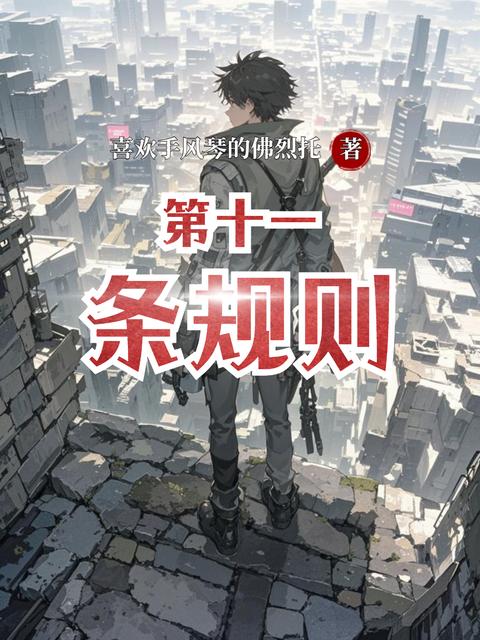

This is my second book. After finishing my first war-themed book, I had a sudden inspiration: the current genre of "rule-based fantasy" seems like a very promising creative field. So, I thoroughly studied existing rule-based novels and used those ideas to create this new story. I poured a great deal of effort into building the world and developing the characters.
I just finished reading the first volume. I always skim through the rules, I guess I'm just not good at thinking. The writing felt rather bland, not in terms of plot, but in the way the characters spoke, like Kapibala, with occasional humor, which I quite liked. The first volume currently features the protagonist and two girls forming a three-person team.
I can guarantee that the novel is logically sound.
It's very well written, with clear logic and well-thought-out rules.
Excellent! This is the first time I've felt such a strong urge to give it five stars, it's a pity it's not finished yet.
A decent AI-generated article; there are minor flaws in the details, but they don't affect the reading experience.
It was quite interesting, but the ending of each chapter felt a bit like a human-machine interaction.
I've read about 100,000 words so far, and I feel it's quite well-written. It's not the kind of novel that's just background music; it's the kind of novel worth reading carefully.
It's pretty good. Those who enjoy high-IQ text-based mystery plots should check it out.