Gender bender + yuri + infinite worlds + pure villain
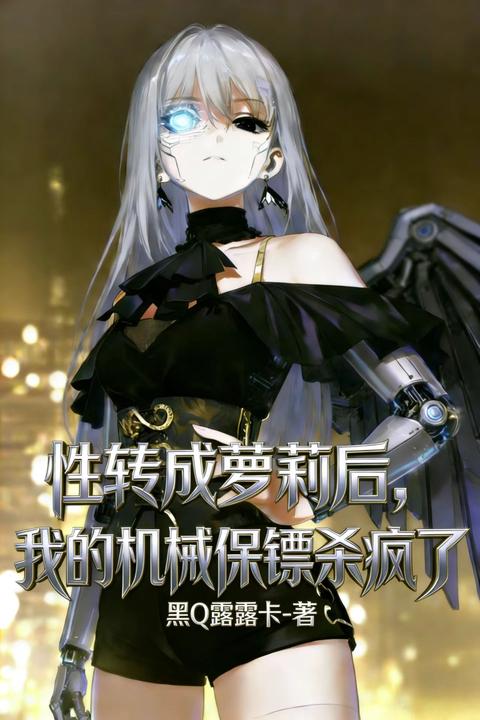
Who could have guessed that the cute-looking black-haired little girl was once a hassle-averse male engineering student, and is now the ultimate villain feared by the entire server?
Who could have guessed that the 178-cm-tall, cool and beautiful mech big sister, with maxed-out combat skills and no hesitation about killing, would be devoted to just one little girl?
All the buffs, stacked!
No saintly kindness, no soft heart, no redemption arc. She screws over teammates, wipes out guilds, exploits the rules, and slaughters her way through the entire server!
“Zero, clear out everyone in our way.”
“Understood, Master.”
This villainous duo is going to turn the Infinite Game into their own backyard.
“Master, my output frequency is stable at 80 Hz. This is a calibrated human-machine interaction safety setting.”
“Master, I have learned a variety of commonly used human care skills and health routines from the database.”
“Master, my nanostructure modules can be reconfigured into forms suited to different care tasks as needed.”






It takes them ages to kill someone, can't they be a little more efficient?
Excellent! I give it a full five stars. I can't see a single flaw so far. Since the beginning of 2026, I've searched for so long and haven't found a single novel I could actually finish reading. This "transformation into a woman" novel, however, has given me the desire to keep reading. Keep it up, handsome! Aim for 100 chapters a day! Time for a break.
Having read over ten chapters, I actually quite like this AI guardian theme, but based on the chapters I've read so far, there are many flaws: The novel includes far too many unnecessary psychological and verbal descriptions, repeatedly emphasizing the protagonist's cold-blooded selfishness, and repeatedly spending considerable time describing the deep bond between the protagonist and his…
It's passable, I suppose. The main issue is that most readers don't really like the "playing the victim" trope. If they do like it, it requires top-tier strategic thinking, but the werewolf game in the second instance didn't quite capture that essence, you know? So it's better to present yourself to other players in a more sophisticated way. There's no need to keep playing the victim.
6. If someone insults you, and you don't kill them, but they say they want to spread the news that you have a virus across all channels so that others can target you, and you say you're afraid of trouble, then you say you'd better let them all know so you can wipe them all out in one fell swoop? Am I misunderstanding the word "trouble"?
A handsome lone wolf with a mechanical wife who is decisive, self-serving, and not a saint. She transmigrates into a game instance as a delicate, frail woman who is easily swayed by a little girl, but possesses mental strength and relies on her brain. Her innate skill is summoning a loyal, mature mechanical wife. She's quite well-rounded; when fighting while holding a little girl, she's definitely a strong fighter.
I don't know if the current trend of "power fantasy" novels has changed its flavor. In chapters 7 and 8, that woman insulted the protagonist so much, yet the protagonist still didn't kill her. This made me laugh. The protagonist himself says several times that he's abandoned morality and principles of kindness. I don't know where he's abandoned them?
The initial description of the trust relationship with the robot is one thing, but the player count is inconsistent, fluctuating wildly from around forty to a hundred, then suddenly five veteran players appearing. The task requires three sample pieces and a third of the total number of players to die, and then the sample pieces are only for one person – it's truly ridiculous.
Generally, if you leave someone to die, and then encounter two survivors later, you don't kill them but keep them alive for the New Year. Once you've made an enemy, don't leave any survivors alive. Being ugly only adds to the trouble. In a survival game, this is already called having a saintly heart. The problem persists, like weeds that keep growing back after being cut down. The tags in the description don't match.
The characters are well-developed, and the narrative flows smoothly, but it's addictive. If you can accept the slow, drawn-out process and the fact that you spare the lives of some annoying bystanders and villains several times, then you can watch this.