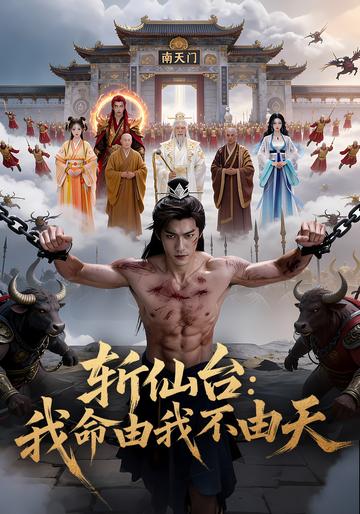
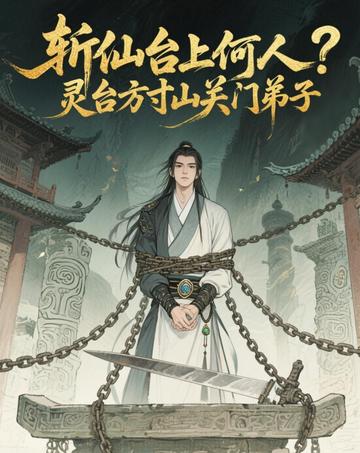
Li Tianjun, the ascendant, was tied to the Zhuxiantai for trial because of the massacre of Jialan, a Buddhist monk in Hezhou, Xiniu. The Heavenly Court uses the Haotian Mirror to reflect his past, revealing how he became associated with Sun Wukong when he was young, was bullied by the Buddhist temple, and worshiped in the mysterious fairy palace "Xie Yue Sanxing Cave". The truth in the mirror shocked the gods. What Li Tianjun did was to resist the hypocritical Buddhism and find the cause of the death of his loved ones. Sun Wukong recognized him as his fellow disciple, and he did not hesitate to confront Heavenly Court and Lingshan to rekindle the power of the Monkey King. In the end, the Jade Emperor changed the sentence and Li Tianjun was banned from Huaguo Mountain for a hundred years, but his legacy and courage have shocked the three worlds. The story interweaves personal grievances and games between gods and Buddhas, reshaping the boundaries between cause and effect and justice.
Reader comments
On the surface, "Zhan Xiantai: My Fate Is Not Controlled" is a cool drama about male protagonist Li Tianjun's revenge against heaven. At its core, it is indeed a conceptual debate about "Buddhism vs. Taoism", and its stance is very clear and localized. Here's a fair, honest review.
1. "Buddhism" in the play: Beliefs criticized for power and hypocrisy
The portrayal of Western Buddhism in the play is almost complete denial, exposure and criticism:
- Compassion is disguise, collecting money is the essence
In Hezhou, Xiniu, people died of hunger everywhere, and the people had no way to pray for rain, but Buddhists used incense and money to cast gold bodies and enjoy luxury. They claim to "save all sentient beings", but in fact they ignore life and death and exploit believers.
- Cause and effect has become power talk
When people suffer and monsters eat people, Buddhism generally regards it as "reincarnation of cause and effect, and this is how fate should be". "Causation" is no longer a philosophy but a tool used by the ruling class to rationalize oppression.
- Doctrinal double standards
Buddhists can kill people and sell goods, and enjoy the worship of the world; ordinary monks who question it are "blaspheming the holy religion, and the crime deserves death."
To put it simply: the "Buddhism" in the play is an alien, hypocritical, oppressive power system that is divorced from people's livelihood.
2. The "Tao" in the play: local, protesting, people-oriented Tao
Corresponding to Buddhism, the "Tao" in the play (represented by Li Tianjun, Taoism, Xieyue Sanxingdong) is another set of logic:
- I have no control over my destiny - anti-fate and anti-authority
Directly confronts Buddhism's "karma and destiny" and heaven's "destiny theory". Man is not the slave of Heaven, nor the vassal of God.
-Tao follows nature and thinks of the common people
Li Tianjun slaughtered the Buddha not because of bloodlust, but to punish evil and promote good, and to save the people from fire and water. The core of Tao is justice in the world, value in this world, and living in the present.
- Local roots, resisting foreign hegemony
Buddhism is a "Western religion" and a foreign system; Taoism is a native Chinese belief. There is a hidden layer in the whole drama: local culture resists foreign spiritual colonization.
3. The brilliance and limitations of debate (fair evaluation)
✅ Advantages (well done in discussing law and doctrine)
1. Don't argue about force, argue about "legal principles"
The climax of the first few episodes is not a fight scene, but a Buddhist debate: Li Tianjun uses the Haotian Mirror to illuminate the shady story of Buddhism at the Immortal Killing Platform. Use logic, evidence, and procedural justice to defeat gods and Buddhas. It has more depth than simply "breaking up the heavens".
2. Tapping into Chinese cultural psychology
For many viewers, this is not fiction - it is a reversal of the reality of "foreign religions are exalted and local traditions are belittled." The play captures this emotion.
3. The theme stands up
From the beginning to the end, "I have no control over my destiny": it is not only an anti-theocracy, but also a local spirit against the hegemony of foreign discourse.
⚠️ Disadvantages (one-sidedness of discussing law and Taoism)
1. Black and white, simplifying the true Buddhist path
True Buddhism has compassion, emptiness, and liberation; true Taoism also has transcendence, inaction, and power. For the sake of entertainment, the drama depicts Buddhism as hypocrisy and Taoism as justice, which is too superficial.
2. Water injection in the later stage of the debate
The first three episodes were wonderfully argued, but the following episodes repeatedly pulled the Haotian Mirror and killed memories. The philosophical depth was not deepened and it became a protracted verbal spat.
3. Acting just for pleasure and lacking in thinking
It only criticizes the hypocrisy of Buddhism and does not discuss what "good Buddhism" and "good religion" should be. Resistance becomes an emotional catharsis, lacking real philosophy.
4. Summary: A "cultural drama" with a clear stance
- It is not a rigorous Buddhist and Taoist academic film, but a commercial comic that uses the shell of Buddhism and Taoism to talk about the local spirit of resistance.
- You are right to see "discussing the law and the Tao": the main line is Western Buddhism (power + hypocrisy) vs. The local Taoism (resistance + humanism).
- The advantage is that it dares to criticize, pokes pain points, and is emotionally in place; the disadvantage is that it is one-sided, simplistic, and late-stage.
Overall: 7/10. It is very successful as a comic; as a "Buddhist and Taoist debate", the position is greater than the speculation, and the emotion is greater than the depth.
This is so pretty! I just like Sun Wukong's calf protector
On the surface, "Zhan Xiantai: My Fate Is Not Controlled" is a cool drama about male protagonist Li Tianjun's revenge against heaven. At its core, it is indeed a conceptual debate about "Buddhism vs. Taoism", and its stance is very clear and localized. Here's a fair, honest review. 1. "Buddhism" in the play: Beliefs criticized for power and hypocrisy The portrayal of Western Buddhism in the play is almost complete denial, exposure and criticism: - Compassion is disguise, collecting money is the essence In Hezhou, Xiniu, people died of hunger everywhere, and the people had no way to pray for rain, but Buddhists used incense and money to cast gold bodies and enjoy luxury. They claim to "save all sentient beings", but in fact they ignore life and death and exploit believers. - Cause and effect has become power talk When people suffer and monsters eat people, Buddhism generally regards it as "reincarnation of cause and effect, and this is how fate should be". "Causation" is no longer a philosophy but a tool used by the ruling class to rationalize oppression. - Doctrinal double standards Buddhists can kill people and sell goods, and enjoy the worship of the world; ordinary monks who question it are "blaspheming the holy religion, and the crime deserves death." To put it simply: the "Buddhism" in the play is an alien, hypocritical, oppressive power system that is divorced from people's livelihood. 2. The "Tao" in the play: local, protesting, people-oriented Tao Corresponding to Buddhism, the "Tao" in the play (represented by Li Tianjun, Taoism, Xieyue Sanxingdong) is another set of logic: - I have no control over my destiny - anti-fate and anti-authority Directly confronts Buddhism's "karma and destiny" and heaven's "destiny theory". Man is not the slave of Heaven, nor the vassal of God. -Tao follows nature and thinks of the common people Li Tianjun slaughtered the Buddha not because of bloodlust, but to punish evil and promote good, and to save the people from fire and water. The core of Tao is justice in the world, value in this world, and living in the present. - Local roots, resisting foreign hegemony Buddhism is a "Western religion" and a foreign system; Taoism is a native Chinese belief. There is a hidden layer in the whole drama: local culture resists foreign spiritual colonization. 3. The brilliance and limitations of debate (fair evaluation) ✅ Advantages (well done in discussing law and doctrine) 1. Don't argue about force, argue about "legal principles" The climax of the first few episodes is not a fight scene, but a Buddhist debate: Li Tianjun uses the Haotian Mirror to illuminate the shady story of Buddhism at the Immortal Killing Platform. Use logic, evidence, and procedural justice to defeat gods and Buddhas. It has more depth than simply "breaking up the heavens". 2. Tapping into Chinese cultural psychology For many viewers, this is not fiction - it is a reversal of the reality of "foreign religions are exalted and local traditions are belittled." The play captures this emotion. 3. The theme stands up From the beginning to the end, "I have no control over my destiny": it is not only an anti-theocracy, but also a local spirit against the hegemony of foreign discourse. ⚠️ Disadvantages (one-sidedness of discussing law and Taoism) 1. Black and white, simplifying the true Buddhist path True Buddhism has compassion, emptiness, and liberation; true Taoism also has transcendence, inaction, and power. For the sake of entertainment, the drama depicts Buddhism as hypocrisy and Taoism as justice, which is too superficial. 2. Water injection in the later stage of the debate The first three episodes were wonderfully argued, but the following episodes repeatedly pulled the Haotian Mirror and killed memories. The philosophical depth was not deepened and it became a protracted verbal spat. 3. Acting just for pleasure and lacking in thinking It only criticizes the hypocrisy of Buddhism and does not discuss what "good Buddhism" and "good religion" should be. Resistance becomes an emotional catharsis, lacking real philosophy. 4. Summary: A "cultural drama" with a clear stance - It is not a rigorous Buddhist and Taoist academic film, but a commercial comic that uses the shell of Buddhism and Taoism to talk about the local spirit of resistance. - You are right to see "discussing the law and the Tao": the main line is Western Buddhism (power + hypocrisy) vs. The local Taoism (resistance + humanism). - The advantage is that it dares to criticize, pokes pain points, and is emotionally in place; the disadvantage is that it is one-sided, simplistic, and late-stage. Overall: 7/10. It is very successful as a comic; as a "Buddhist and Taoist debate", the position is greater than the speculation, and the emotion is greater than the depth.
This is so pretty! I just like Sun Wukong's calf protector