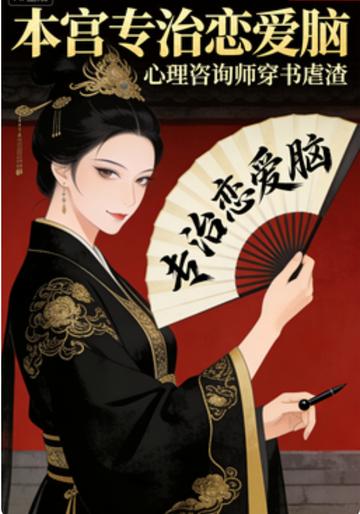
Xiao Sui, a top psychological counselor, transmigrates into a cruel-romance novel as the villainous empress dowager, driven mad by love.
In the original story, she kills her own child for the useless emperor, harms loyal officials, and is reviled for generations. In the end, her own son orders her execution.
She opens her eyes to a famous scene: her three-year-old son stands beside a well, and the useless emperor is walking toward her.
The original owner would have pushed the child to win his favor. Xiao Sui raises her hand
and pushes the emperor in instead.
A splash. Screams. Chaos.
Xiao Sui picks up her son and walks away.
Someone behind her shouts, “The empress did it!” She doesn’t look back.
Other people transmigrate into a book and defy fate.
She transmigrates into a book and changes the script outright.
No romance, no fighting for favor, no redemption arc.
She doesn’t want to be empress dowager or anyone’s pawn. She just wants to stay alive and clock out.
The court is her clinic, and the human heart is her subject.
The emperor has narcissistic personality disorder, the empress dowager has histrionic personality disorder, and the ministers fall into the paranoid or people-pleasing categories.
She builds case files on them in her mind, guides them with carefully chosen words, and reads their microexpressions.
She destroys their resolve without taking their lives, and deposes the emperor without shedding blood.
She raises an emperor and stabilizes the realm.
In the end, she sweeps out of the palace and retires to Jiangnan.
She never loved anyone in her life.
Yet she taught one child to grow into a wise ruler beloved by all.
Years later, someone asks, “What kind of person was the empress dowager?”
An old man replies, “A madwoman. But that madwoman gave us decades of good days.”