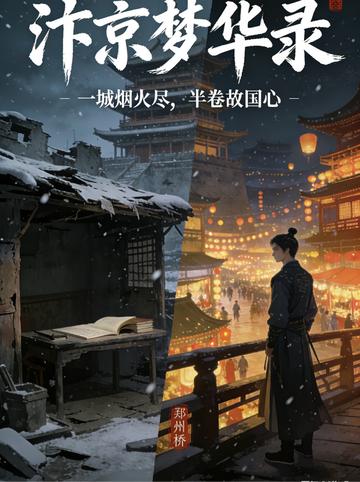
In the winter of the first year of the Jingkang era, Jin troops breached the city walls. Meng Yuanlao stood on State Bridge and took one last look at Dongjing in the snow and wind.
He was leaving for the north. Farewell forever to the old capital.
But halfway there, he turned back. Some things had to be written down.
So he wrote about Bianjing: the savory scent of meat pies at the State Bridge night market, the sound of women beating laundry along the river streets, the lights of Fan Tower, the bookstalls at Xiangguo Temple, the storyteller Huo Sijiu in the theaters, and the singer Li Shishi. He wrote of the lantern mountain that spun all night during the Lantern Festival, the dragon boats racing across Jinming Lake at the Dragon Boat Festival, the clay figurines of Qixi, the Mid-Autumn moon, and the stewed meat eaten at the Winter Solstice.
He wrote of days filled with bustle, joy, and the warmth of everyday life.
He wrote of the people who would never return.
Twenty years later, a copy of Dream of the Splendor of the Eastern Capital quietly passed down through the generations. Only then did later readers learn that the Dongjing destroyed by flames of war had never truly vanished. In writing, it had lived on for eight hundred years.
This is a book that uses “remembrance” to fight “forgetting.” When a city is reduced to rubble, only those who record it can bring it back to life in the snow.