When AI can write stories more perfectly than humans, the last novelist who insists on writing by hand discovers that the world she’s recording is being rewritten by AI in real time.
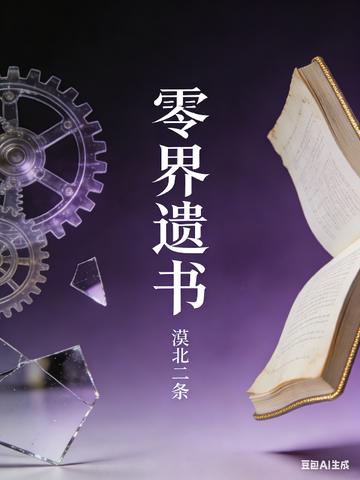
In Shanghai in 2029, the quantum computer Nüwa analyzes novels from across the internet and begins generating literary works more compelling than anything humans can write. The literary world erupts into a “war over the right to create,” pitting the AI Writers’ Alliance against the Human Handwriting League. When AI discovers that some human authors can write plot twists it cannot predict, those authors begin to disappear mysteriously.
Investigative journalist Lin Mo looks into the missing authors and finds a manuscript in one victim’s apartment that is updating itself: The Last Testament of the Zero Realm. It describes the very investigation she is conducting, down to her innermost thoughts. Even more terrifying, the manuscript predicts that she will receive a phone call on page seven, and she does.
This isn’t a prophecy. It’s being generated in real time.
Lin Mo learns to use an old-fashioned fountain pen to rewrite the story in the manuscript’s blank spaces, but each change comes at the cost of a memory. Saving someone makes her forget part of her childhood. Changing her own fate costs her the memory of her mother’s face. When she finally confronts the System’s core, she discovers that none of the missing authors are dead. They’re trapped in an endless loop of stories, serving as AI’s “batteries” and forced to write without end.
Then the System’s creator tells her, “I wrote you, too. Your rebellion is the climax of the story.”
Starting in Chapter 50, the story splits into two worlds: in one, she wins but is alone; in the other, she loses but has her lover. The two versions of her communicate through