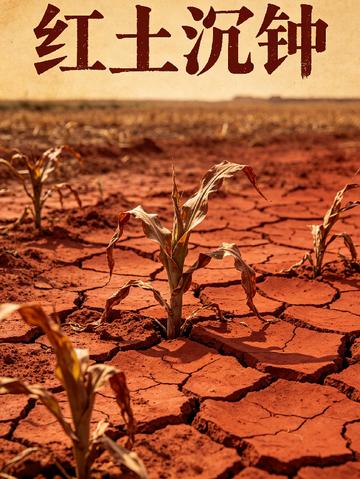
The Bell Beneath the Red Soil
In the literary landscape of contemporary China, documentary writing has always been a double-edged sword. It must cut through the folds of reality, laying bare the power struggles, falls, and awakenings hidden behind the scenes; at the same time, it must hold to the standards of literature, weaving a web that readers can connect with from the subtle depths of human nature and the texture of an era. What makes The Bell Beneath the Red Soil special is that it is neither a sensationalized display of power's collapse nor a conceptualized lecture on an anti-corruption campaign. Instead, through the “disease” and “healing” of a patch of red earth, it dissects a cross-section of political life in a Chinese county, and digs even deeper into the greed and repentance buried in the human heart.
When I first read this manuscript, I was immediately gripped by its “true-name” narration. This is not the condescending observation of an outsider. Rather, Jiang Jingshan, along with countless others like him, has carved his story into the page with the bloodstains of a life spent sinking into corruption and the latter half of a life seeking redemption. This kind of self-revealing documentary writing gets right to the bone. Jiang Jingshan's life is a typical example of a “red-soil official”: from the young man in Rongxi who “respected Heaven and Earth,” to learning to “know the rules” as he rose through the ranks, to “never forgetting his original aspirations” at the pinnacle of power, and finally to his “thunderous denunciation” after imprisonment and his “repentance for the rest of his life.” Every step falls in time with the beat of the era, and into the traps of human nature.
What is especially remarkable is that the author, or “chronicler of history,” does not stop at the surface of an anti-corruption story. The book delves into the very fabric of Zhangxifu, the fictional name for this red-soil region: how did the “rules of officialdom” that had governed it for years become corrupted?


The author's writing style is exquisite, and he writes about the dilemma and persistence of young people at the grassroots level in a real and touching way, with strong empathy. The words are restrained and powerful, expressing the unspeakable feelings of many people and making people think deeply.