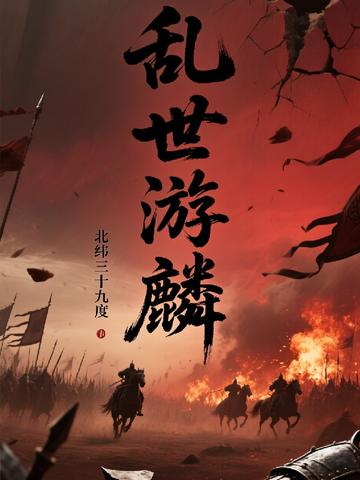
On the fifth day of the twelfth month of the first year of Guangming, Huang Chao's army broke through Chang'an's Golden Light Gate. Seven-year-old Cui Yan huddled in a drain on Vermilion Bird Avenue, watching helplessly as Chancellor Cui Hang was beheaded by the rebel troops, his blood staining the snow. The Kaiyuan Tongbao coin he had picked up in his panic would bear witness to the most turbulent sixty years of the Five Dynasties and Ten Kingdoms period.
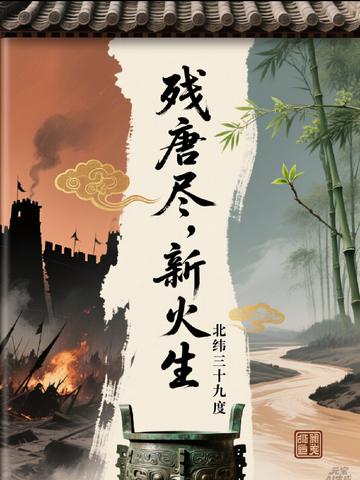
From a lowly scribe drafting the abdication edict during Zhu Wen's “White Horse Incident” to a white-haired strategist serving Emperor Shizong of Zhou during the northern campaign against the Khitan, Cui Yan was present at every historic event that changed China's fate.
- In the fourth month of the fourth year of Tianyou, he witnessed Zhu Wen's enthronement ceremony at the “Altar of Abdication” in Bianliang and saw the last emperor of the Tang dynasty deposed.
- In the tenth month of the first year of Tongguang, he witnessed Li Cunxu establish the Later Tang in Jinyang and recorded the complete “Oath of the Three Arrows.”
- In the eleventh month of the third year of Qingtai, braving a hail of arrows, he delivered the “Memorial Against the Northern Campaign” to Shi Jingtang's camp, but could not stop the cession of the Sixteen Prefectures of Yanyun.
- In the third month of the first year of Xiande, he stood on the battlefield at Gaoping and watched Zhao Kuangyin lead his troops into battle, changing the fate of the Later Zhou.
With epic grandeur, this novel recreates an age when “Was the Son of Heaven born to rule? Whoever has the strongest army and the finest horses should rule.” When the flames of the Chenqiao Mutiny rose, Cui Yan's lifelong work, Essentials for Governing in Troubled Times, had already become the new dynasty's handbook of statecraft. The Kaiyuan Tongbao coin, weathered by the passage of time, eventually sank into the Bian River, like the indelible memories of this nation.