On the third day of the seventh month in the sixth year of the Chenghua reign, the cry of an infant in Anle Hall, in the western corner of the Forbidden City, was drowned out by the rainstorm. His mother was Ji, the daughter of a local official from Guangxi; his father was the reigning Emperor Xianzong. Yet from the moment he was born, the child was declared nonexistent, because there was a woman in the palace, Noble Consort Wan, who would not tolerate any prince living.
For the next five years, secretly cared for by Empress Wu, who had been deposed, and his birth mother, he lived in the shadows of the imperial palace. He saw no daylight and no one spoke his name. Like a cub lurking in a corner, he learned the most important rule of survival: keep silent.
At six, he was named crown prince. That same year, his birth mother died suddenly. At eighteen, he ascended the throne, and the following year he began the Hongzhi reign.
This was Zhu Youtang, Emperor Xiaozong of Ming: the only emperor in Chinese history to rise from an abandoned child in the Cold Palace to the pinnacle of imperial power, and a brief, bright light in the middle period of the Ming dynasty.
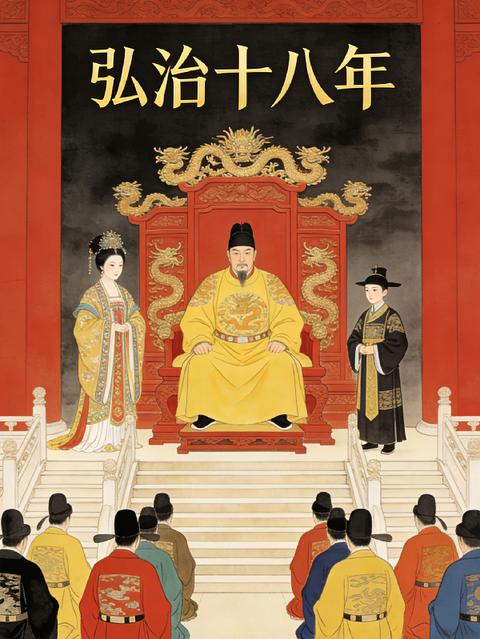
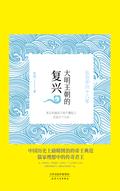
Hongzhi: Eighteen Years traces the course of his eighteen-year reign, telling how a soul that emerged from the shadows made peace with its past at the height of power. Based on historical sources, including the History of Ming, the Veritable Records of Ming, and Ming-era notebooks, the novel brings to life a Hongzhi Emperor of flesh and blood: diligent in government, he held court at the palace gates every morning; frugal, he refused to replace his imperial robes even when they had been washed until they turned white; benevolent, he took only one empress and no concubines in his lifetime; and lonely, he would weep alone at night over his mother's keepsakes, unseen by anyone.
Eighteen years is a short time for an emperor. But for a child who once lived in the shadows, those eighteen years were the light he spent his whole life striving to reach