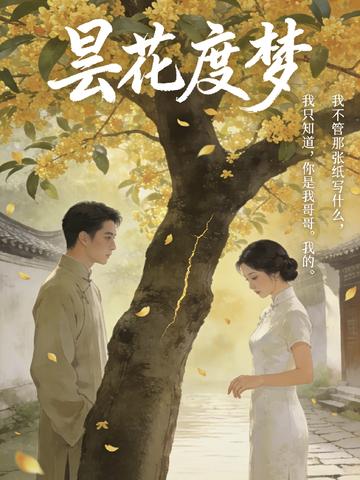
In the winter of 1935, six-year-old Jingtang was adopted by the Lin family.
The way his adoptive mother wiped her hands told him everything: he was only a “womb-borrowing” tool. Once she had a child of her own, they could get rid of him.
For twelve years, he was invisible in the Lin household. At meals, he only took food from the dishes in front of him. He walked close to the walls and found his own medicine when he had a fever. No one cared whether he lived or died.
Only one person treated him like a human being.
Hengjun, the precious daughter the Lin family had hoped for over eight years.
She called him “Brother” for the first time, slipped candy into his pocket, and drew suns for him. She took the blame when he broke a bowl, cried for him, and hurt for him. She held him and said, “You’re my brother.” He believed her.
When he was eighteen, he found a slip of jade paper.
“Adopted son Jingtang. In recognition of the kindness shown in raising him, upon reaching adulthood he is to be given five silver taels, after which all ties are settled.”
Twelve years. Five taels.
He knelt in the attic, trembling all over. So all those years, he had never been family.
Hatred grew from the marrow of his bones. He wanted revenge: to make her fall in love with him, then destroy the most precious thing the Lin family had.
But he forgot that she knew nothing about it.
She only looked at him with bright eyes and said:
“I don’t care what that paper says. I only know you’re my brother. Mine.”
From Gusu to Linjiang, through war and peace, from five silver taels to a ring. It took him twenty-four years to finally become the place she could call home.
The osmanthus bloomed and faded, then bloomed again.
The two rings on her hand, one engraved with “Jing” and the other with “Tang,” rested side by side.
Just like the people who wore them.
“I don’t care what that paper says. I only know you’re my brother. Mine.”