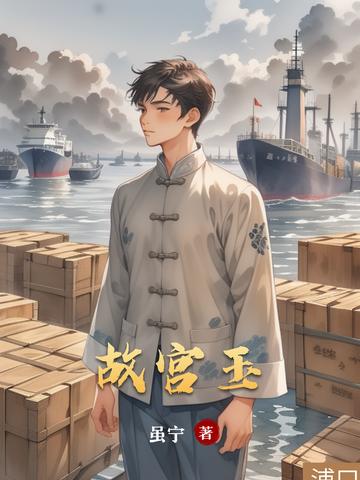
In 1933, Shen Moyan, a young employee of the Palace Museum in Beiping, found himself at odds with his mentor amid the nationwide debate over whether the Palace Museum's treasures should stay or be moved. His mentor insisted that keeping them in place would reassure the people, but Shen resolutely joined the team transporting the relics south.
On the eve of Nanjing's fall in 1937, Shen faced the cruelest choice of his life by the river:
On one side was a cargo ship about to set sail west, carrying ten stone drums engraved with a thousand years of Chinese history;
On the other were his wife and young son, who had been waiting for days, still nowhere to be found.
In the end, he chose to board the ship.
For the next eight years, he followed the stone drums from Xuzhou to Zhengzhou, Baoji, and Hanzhong, crossing the snowbound Qinling Mountains before finally lying low in a dilapidated ancestral hall in the countryside of Emei, Sichuan.
Cut off from the world, he spent each day airing out relics in a damp storeroom, battling pests, termites, and loneliness.
The jade thumb ring his wife slipped him when they parted became his only keepsake of home and family.
When children in the Emei mountains asked him, "What are these broken rocks?" he answered, "They're our roots."
As the Japanese army drew near, he wrote a farewell letter, ready to perish with the relics.
When the war ended in victory, he returned to Nanjing with all ten stone drums intact. In the storeroom of the Chaotian Palace, standing before the wooden chest that had been preserved for twelve years, he finally understood:
From the moment he stepped aboard the ship, his fate had become one with the ten stone drums.
To protect them was to protect the future his wife and son had set out toward.