


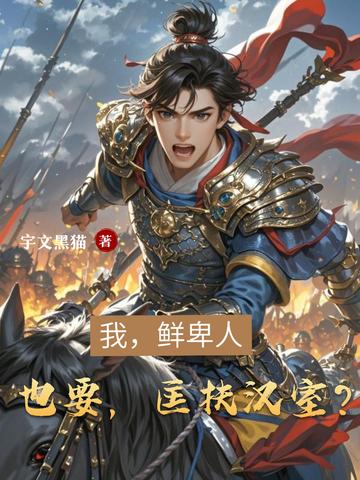
From Frontier Barbarian to Lord of Guanzhong: My Rise in the Three Kingdoms
三国从边地杂胡到关陇霸主
- Status
- Ongoing
- Length
- 1.4M Words
- Genre
- Historical
- Subgenre
- Historical & Ancient
- Updated
- 13h ago
- Source
- Fanqie
Stats
308Chapters
9.4kReads
6.7Score
530Shelves
348Listens
146.9kReads · all time
Tags
Synopsis
In booklists 2
Three Kingdoms Stories About a Faction Rising from Nothing
There must be a System and no female lead, with the protagonist building up a power base from an ordinary civilian. At least five million words, though there’s no word limit if it’s good.
459Books16.6MViews4dUpdated
Any Stories Where the Protagonist Is a Nomad Living on the Grasslands?
Looking for books similar to *I Was Just Born, and Mother Is Already Using Me to Fight for the Throne!* I really want to read this kind of novel. Please, authors, I’m not asking for much, just something readable. The protagonist should be part of a nomadic people and unite the steppe, with a Mongolian kind of feel.
84Books1.4MViews29dUpdated
Reader comments 55
Google Translate
The story about the emperor's flight to the east is very true, and it can be seen that the author has a thorough understanding of the contradiction between Hu and Han. The protagonist's sinicization method also retains the original taste of Xianbei. The change of nationality to grant sex made my eyes light up. The author really put his thoughts into it.
It's quite interesting. The ethnic minorities fought for hegemony in the late Han Dynasty. The perspective is very novel, which is a highlight [laughs][Please update][Please update]
It is a very novel angle to use the two fundamentals of the Sui and Tang Dynasties, the government army and the Guanlong clan, to solve the problems of the late Han Dynasty. It's just that the system of the Sui and Tang Dynasties was a bit too dimensionally reducing in the late Han Dynasty. After all, compared to the Eastern Han Dynasty, this system could unite the largest number of forces, and no matter how powerful the aristocratic family was, it could not withstand it. There is so much to write about in this book, including the struggle to seize the heir, the struggle within the Guanlong clan, and the struggle between the old and new aristocratic camps of Guanlong and Guandong. There are many Hu and Han leaders in the government army. How to control the struggle for military power can also be explored in depth. Once these are over, we will begin the Second Empire era and the grand narrative of the great achievements of the Sui and Tang Dynasties. If you can't survive it, the Northern Zhou Dynasty's Nankeyimeng is a pity. Come on, author, I will keep following up. Good quality book! ! !
The angle is novel and interesting. It integrates the first three kingdoms and the last three kingdoms (Zhou Qiliang). Haha, it is worth following. Let's talk about some flaws. During the Three Kingdoms period of the Eastern Han Dynasty, the Han Dynasty was strong and the Hu was weak. The Hu people were willing to give themselves Chinese names, such as Liu Bao, Liu Yuan, etc. It is really insulting and illogical for the protagonist to give the Hu surname to the descendants of the family. In addition, the official names of later generations are not suitable to be used in the Three Kingdoms period. Since the military government appeared in an imaginary way, it can be used as the official position at that time. Xiang Yitong evolved from Kaifu Yitong Sansi. In the Eastern Han Dynasty, Kaifu Yitong Sansi was a high-ranking official. At this time, Yitong Taila appeared. In fact, the official positions of the Eastern Han Dynasty can be used. The commander of the army can be called xxjunfuzhonglangjiang. In addition, the reform of the six officials is the same. Taifu, Taibao, Taishi, Situ and Sikong Taiwei can be the six officials. There is no need for heavenly officials and earthly officials. Finally, I hope that the protagonist will have more famous generals and counselors from the Eastern Han Dynasty. Original post-Three Kingdoms characters are good, but the role of historical figures must also be played. People like Xu Huang, Zhong Yao, etc. Were all in the protagonist's camp before, but they all left inexplicably later. Zhang Xiu, Hu Che, Ma Xiu, Ma Tie, etc. Don't have much role.
This book has been sitting with me for almost half a year. The writing is still very good 👍🏻. However, a lot of people in the comment area said that they want the protagonist to die and then watch the palace fight to see the son win over. I don't know what other people think. I just came to watch the Three Kingdoms Conquest and Unification [laughs awkwardly]. I hope these messy palace battles can be written after the protagonists are unified. I didn't come to see the Three Kingdoms Conquest to see that. [Pouts]
There are very few indigenous protagonists that I read now. The one I can read is this one, but I think the one in it is about the emotional problems of the heroine. I want to watch more fights for hegemony, not to mention that there cannot be no emotional drama, but I personally don't like to see emotional entanglements. Otherwise, it's just two people, without any interludes. Although the quarrel between the two was solved by competing for the horse, but you have a description later, and I feel that it will break out because of this. According to what I see now, there should be battles for heirs and clan battles. It's okay to write these, but these must all be under the control of the protagonist. You have to admit now that this is the era of cool writing. If the protagonist is too frustrated, he will be passive in everything, and there will be fewer readers. Moreover, these will show up too quickly. You should at least write it out after the founding of the country. The main thing now is to fight for hegemony. Otherwise, if you have too much content, it will make you very irritable. Don't think about other content now. Just fight for hegemony and unify to be the emperor, and then go on to seize the direct descendants. The party can earn everything.
It's nice to look at, but it still hasn't changed my view of Hu people. They're still messy.
There is an indigenous protagonist, and the whole book is more biased toward the Romance of the Three Kingdoms than historical facts, and the lack of details is serious. But the protagonist is better portrayed and the writing is also very good. It's a pretty good article on Tomato.
The topic is quite novel. I don't have much objection to the idea of ethnic minorities being bosses. The main reason is that even the most benevolent Liu Bei during the Three Kingdoms period did wrong things (he robbed Yizhou and printed money crazily to collect Yizhou's wealth). So I almost always look at history from the perspective of those ordinary people, and I know that I may not be able to cross over to their realm. I think this is better than the last novel I read about a minority being the boss, at least the background is really a troubled time. (I hope the author can persist, that one seems to have been criticized by others as eunuchs) To be honest, I don't understand why those people worshiped the ancient emperors. I just want to know that if they were allowed to travel through the past and become ordinary people, they would not be willing. Finally, I want to say that whether you are reading novels or history, as long as its logic does not collapse, you can just enjoy reading it, why bother to go online.
I think this novel is quite interesting, relatively real, and I can understand the difficulty of the generals and leaders at that time. They had to take care of everything, including military affairs, politics, and people's livelihood. It made me feel a little sad (I worked hard for half my life but was not recognized, just because of my identity)